
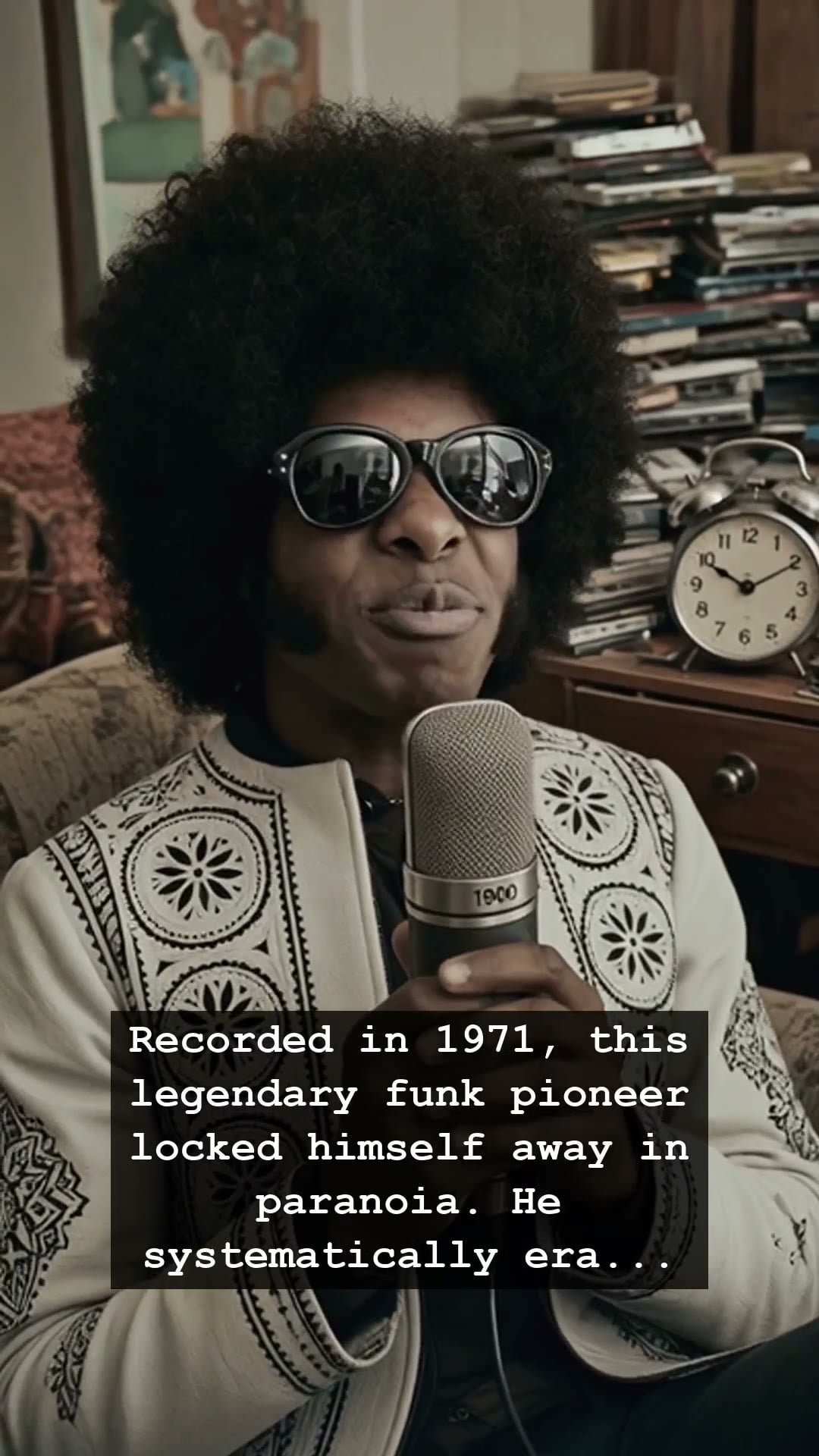
The year was 1971. The golden era of funk was reaching its zenith, yet behind the closed doors of a high-tech studio, a musical revolution was being systematically dismantled from within. Sly and the Family Stone, the vibrant, multi-racial collective that had once unified America with their infectious grooves and Woodstock-era optimism, were crumbling under the weight of their own leader’s descent into darkness. It was a descent that would leave a permanent scar on the history of 20th-century music, turning a once-celebrated brotherhood into a haunting ghost story of fame and isolation.
Sly Stone, the creative genius behind iconic anthems like Dance to the Music and Everyday People, had retreated into a world of intense paranoia. He stopped being a band leader and started becoming an island. Instead of the soulful interplay between his sisters, brother, and friends, the studio became a fortress of solitude guarded by armed sentries. During the creation of the album There’s a Riot Goin’ On, the bright, psychedelic sunshine of the late sixties had completely evaporated, replaced by a cold, mechanical aesthetic. Sly Stone began using a primitive drum machine, effectively replacing his bandmates with cold, rhythmic precision. He was erasing their voices, their spirit, and their presence, one track at a time.
This era was the antithesis of the communal spirit that had defined the late 1960s. While fans across the nation were listening to the radio and imagining a world of unity, Sly and the Family Stone were fracturing. The camaraderie that once made their live performances legendary—those electric nights where the music felt like a living, breathing entity—was being sacrificed on the altar of a personal breakdown. The band members waited in the hallways, hoping for a shred of the old creative flame, but Sly remained locked away. He was fueled by substances and a deepening distrust of the industry that had chewed him up and spit him out.
What makes this story so visceral is the contrast between the final result and the human cost. There’s a Riot Goin’ On was released to critical acclaim, yet it serves as a stark, cynical epitaph for the group. It is a masterpiece of funk, yes, but it is a hollow, hollowed-out version of what Sly and the Family Stone once stood for. It captures the sound of a man hiding from the world, peering out through curtains, seeing ghosts where there were only his closest companions. It remains one of the most chilling portraits of artistic isolation ever recorded.
Today, we look back at this period as a sobering reminder of the dark side of the music industry. The bright lights of fame often cast long, suffocating shadows, and Sly Stone was caught in the longest, deepest one of all. Even decades later, the echo of that drum machine rings out like a warning. It is a testament to how quickly greatness can curdle when loneliness takes the wheel. As we revisit these classic tracks, we are not just hearing the evolution of funk; we are hearing the sound of a dream dissolving, leaving behind a legacy that is as tragic as it is brilliant.