
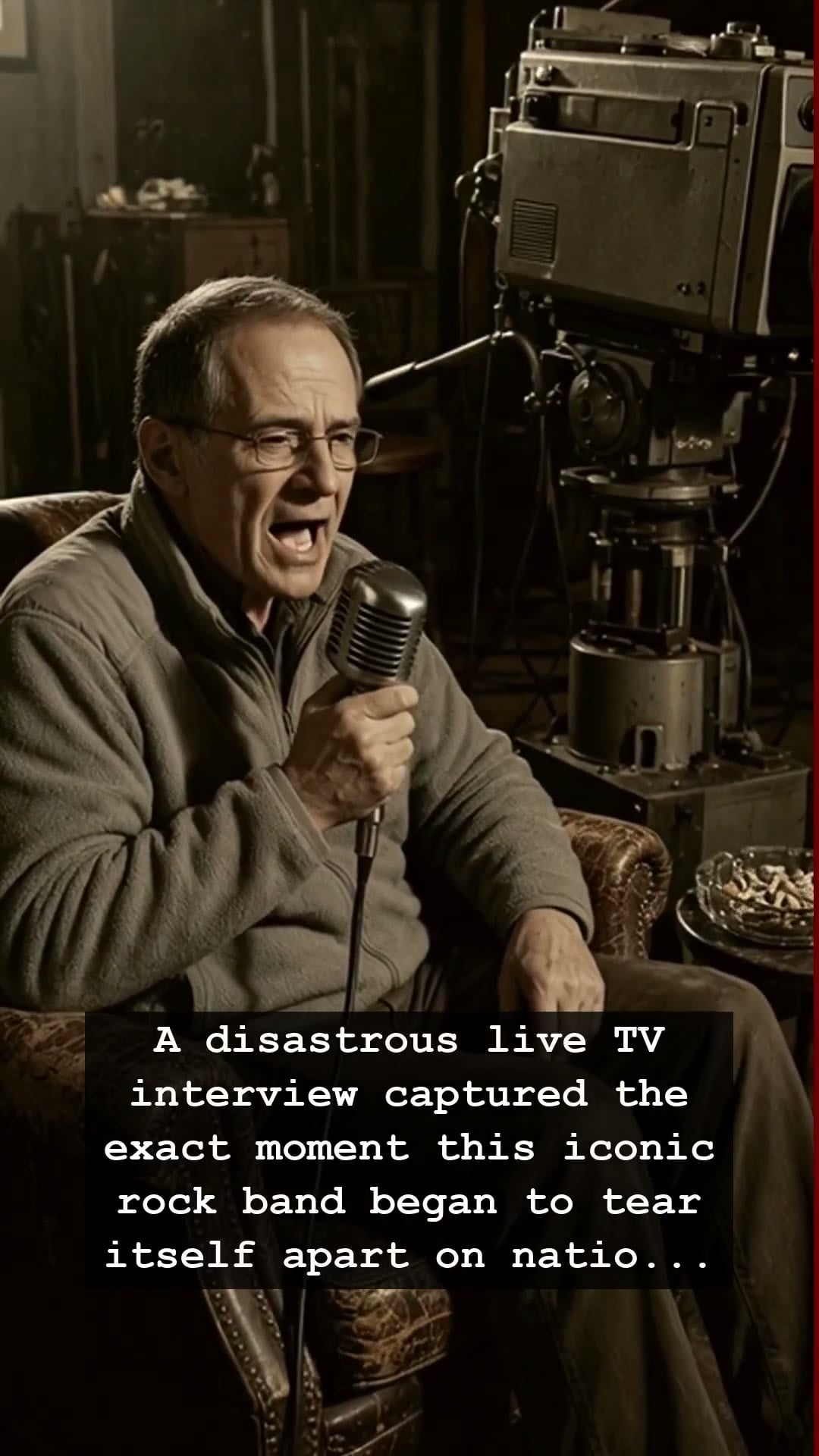
The year was 1979. The air was thick with the scent of hairspray, cheap beer, and the frantic, synthetic pulse of an era obsessed with excess. While the disco craze roared at Studio 54, the kings of arena rock were busy setting their own house on fire. To the millions watching at home, the band KISS was an impenetrable fortress of comic-book personas, face paint, and pyrotechnics. But behind the curtain, the cracks in the foundation were becoming cavernous. The moment it all truly began to crumble was captured in real-time, broadcast directly into American living rooms during a live TV appearance that remains the stuff of rock legends.
As the cameras rolled, the facade didn’t just slip; it disintegrated. While Ace Frehley and Peter Criss arrived in a state of erratic, chemically fueled bravado, the other founding members sat in a chilling, stony silence. It was a masterclass in passive-aggressive tension. The interview, intended to promote their latest project, quickly devolved into a chaotic spectacle that left the hosts bewildered and the fans shocked. It was not just a bad night for public relations; it was the precise second the KISS empire began to tear itself apart from within. The chemistry that once defined the band had soured into a bitter, resentful collision of ego and substance abuse.
This wasn’t just a band falling apart; it was the death of an illusion. In an age before the curated perfection of modern social media, audiences were witnessing something raw, uncomfortable, and devastatingly real. For the Gen Xers and Boomers tuning in, this moment felt like the end of an era. The giants they had worshipped—men who transformed into gods on stage—were revealed to be deeply flawed, fragile, and utterly exhausted. The spectacle of their decline mirrored the broader burnout of the late seventies, where the initial spark of the rock dream was being smothered by the cold, hard weight of industry pressure.
Years later, that 1979 broadcast stands as a haunting relic. It is a stark reminder of the dark side of fame, where the relentless grind of touring and the pressure to perpetually reinvent oneself can destroy the very bonds that brought a group of musicians together in the first place. The silence of the founders spoke volumes, a precursor to the legal battles and lineup changes that would follow for decades. It was the moment that the myth of KISS was humanized, stripped of its makeup, and exposed to the harsh light of reality.
Today, we look back at this incident not just as a piece of rock history, but as a cautionary tale of creative combustion. The story of KISS remains a cornerstone of the classic rock canon, reminding us that even the most legendary entities are prone to the fragility of the human spirit. While the music lives on, the memory of that disastrous night serves as a poignant, nostalgic anchor for anyone who ever believed that their favorite rock stars were immortal. It is a story of how empires fall, one chaotic broadcast at a time, leaving us to wonder what might have been if the fire had burned a little less bright.