
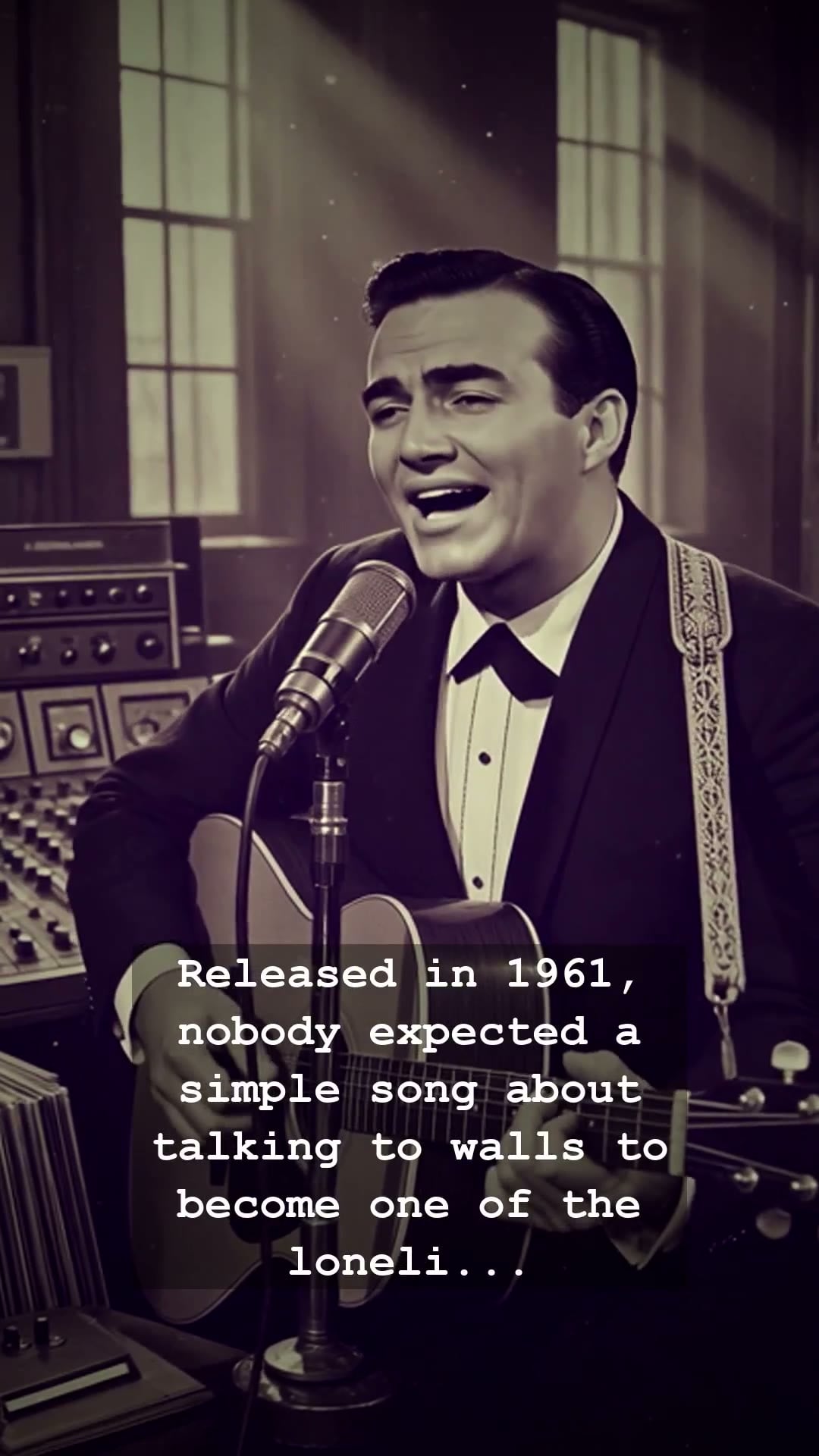
In 1961, the sound of a crackling Jukebox often promised upbeat honky-tonk anthems, but one song silenced the crowded bars of America. Faron Young released Hello Walls, a track that felt less like a country radio hit and more like a whispered confession from the edge of sanity. While listeners at the time were swept up in the polished production of the era, few realized that the song was digging into a deep, hollow well of isolation. It was a masterpiece of simplicity, yet behind its chart-topping success lay the complex, often turbulent life of the man who breathed soul into those empty, echoing lines.
Faron Young was never just another singer in a Nudie suit; he was a man who lived at the epicenter of the Nashville transition. Known as the Hillbilly Heartthrob, he carried a persona that was as charismatic as it was fragile. The song Hello Walls, famously penned by a young Willie Nelson, became the defining track of Young’s career precisely because it mirrored his own internal contradictions. While the public saw a star performing under the bright lights of the Grand Ole Opry, Faron Young often found himself grappling with the shadows that fame cast upon his personal life. The song forced a nation to confront the reality that you can be surrounded by millions of fans and still feel entirely alone in a crowded room.
There is a specific, haunting quality to the way Faron Young delivers the lyrics. When he talks to the walls and the ceiling, you can almost feel the cold air of a deserted house. This wasn’t just a performance; it was an embodiment of the era’s hidden melancholy. In the early 1960s, as the world transitioned from the post-war boom toward the social upheavals of the decade, Faron Young provided a soundtrack for the quiet moments of despair that people rarely discussed. The track serves as a time capsule, capturing an atmosphere of longing that predates the digital distractions of our modern age.
Beyond the studio sessions, the legend of Faron Young was marked by a volatile temper and a reputation for being a true maverick. His career was a rollercoaster of hit records, Hollywood film roles, and run-ins with the industry establishment. Yet, even during his most erratic periods, the emotional honesty of his vocal delivery remained untouched. He understood pain, and he understood how to sell it to an audience that was hungry for music that felt authentic rather than manufactured. That raw connection is exactly why collectors still hunt for his original vinyl pressings today.
Decades later, we still reach for these records when the silence of a room becomes too heavy to bear. Faron Young left behind more than just a catalog of hits; he left a blueprint for the lonely country soul. Whether you are discovering him through the crackle of an old record player or through a digital archive, the message of Hello Walls remains as sharp as ever. It reminds us that even at the height of stardom, the most human experience is the one shared with nobody but ourselves. Do you remember the first time you heard Faron Young, and how it felt to realize that the walls were listening back?