
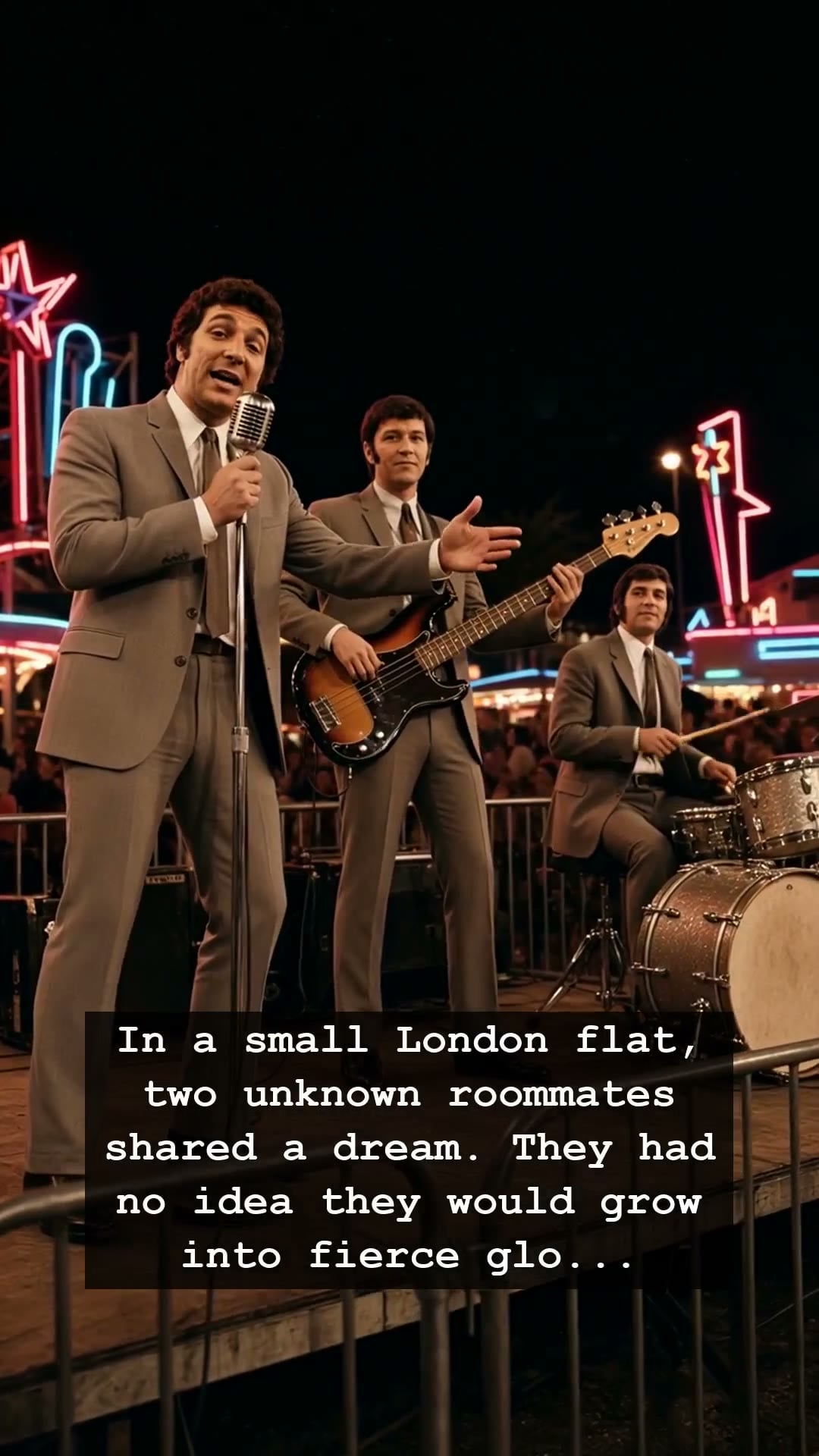
In 1965, the swinging streets of London were teeming with hungry artists, but few lived as closely as the two men who would eventually define the sound of a generation. Before the sold-out stadiums and the screams of thousands, Tom Jones and Engelbert Humperdinck were just struggling roommates sharing a cramped, modest flat. They were two hopeful talents dreaming of fame, unaware that the same manager, Gordon Mills, would soon manufacture a fierce, unspoken rivalry that would turn them into global superstars. Their shared roof in London became the birthplace of a competition that mirrored the seismic shifts of the music industry in the mid-sixties.
At the time, the world was on the cusp of a cultural revolution, shifting from the intimate echoes of the jukebox era toward the glitzy, high-octane spectacle of television stardom. Tom Jones, with his raw, explosive power, and Engelbert Humperdinck, the master of the smooth, romantic ballad, were two sides of the same coin. Under the guidance of Mills, they were strategically positioned to capture the hearts of the public. While they began as flatmates bonded by the grind of auditions and near-empty pockets, their meteoric rise transformed them into inevitable adversaries. The press loved the tension, and the fans loved the drama, fueling a dynamic where one’s success often felt like the other’s defeat.
The air in their early London home was thick with ambition. One could easily imagine the scene: the smell of cheap coffee, the sound of a record needle scratching across a vinyl disc, and the relentless practice sessions. Engelbert Humperdinck, born Arnold Dorsey, adopted his iconic name at the suggestion of his manager to sound more sophisticated, while Tom Jones leaned into his rugged, working-class charisma. They were marketed to satisfy different romantic fantasies, yet they occupied the same stage in the national consciousness. Every hit song released by one felt like a gauntlet thrown down before the other, creating a narrative of discord that defined their professional lives for decades.
What makes their story so hauntingly relatable is the fragility of their brotherhood. As they ascended to the top of the charts, the proximity of the flat was replaced by the cold distance of stardom. The pressures of the limelight, the touring schedules that spanned continents, and the constant comparisons by the media eroded the bonds they had forged during those lean years in London. It was the classic rock and roll tragedy: two men who had climbed the mountain together, only to realize there was barely enough room for both at the summit.
Even today, the legacy of this rivalry resonates with those who remember the golden age of pop. Whether it was the smooth melody of Release Me or the thunderous energy of It’s Not Unusual, these men provided the soundtrack to an entire era. Their story remains a poignant reminder of the price of fame and how even the strongest friendships can fracture under the weight of global expectation. As we look back, we see not just two icons, but two men who lived, struggled, and fought to leave their mark on history. Their journey, which began in a simple flat, turned into a legendary collision that still captivates the soul of anyone who loves the echoes of the past.