
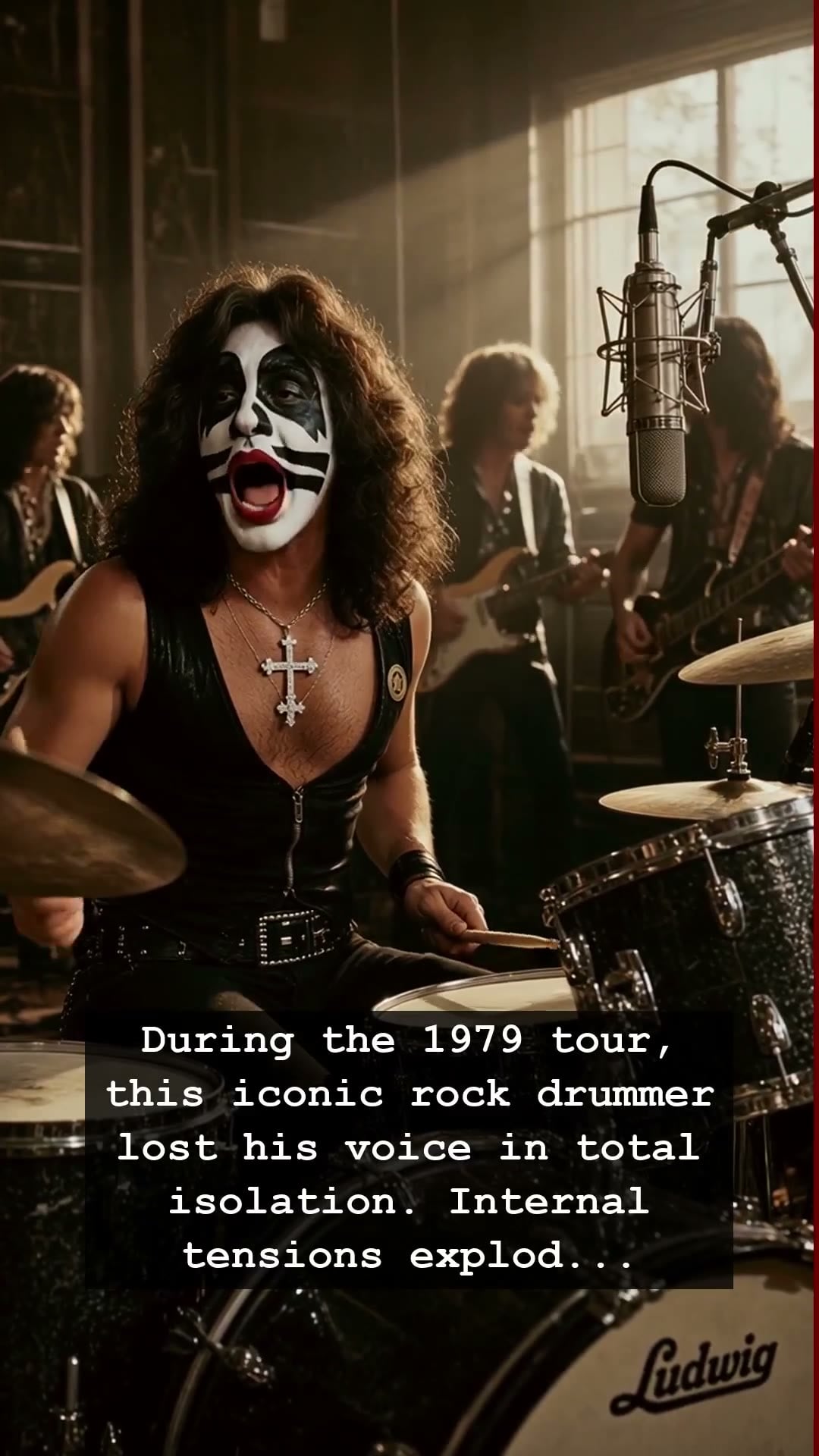
The greasepaint was supposed to hide the man, but for Peter Criss, it ended up feeling like a suffocating mask. It was 1979, the height of the disco era, and the band that had once conquered the world was slowly unraveling from within. Amidst the pyrotechnics, the blinding lights of arena rock, and the deafening roar of sold-out crowds, the drummer known as The Catman was reaching a breaking point. Behind the drum kit, Peter Criss wasn’t just losing his rhythm; he was losing himself, retreating into a shell of silence and isolation that would ultimately signal the end of his time with KISS.
The Dynasty tour was intended to be the pinnacle of their success, but backstage, the atmosphere was suffocating. While fans clamored for more, the internal friction between band members had reached a fever pitch. Peter Criss, once the heart and soul of the group’s rhythmic drive, found himself increasingly estranged from his bandmates. Drug dependency, exhaustion, and long-standing creative disagreements acted like a slow-burning fuse. As the tour progressed, the camaraderie that had once defined their rise from the clubs of New York to the global stage was replaced by a cold, clinical distance. He was a man performing in a goldfish bowl, feeling every bit of the pressure while shielded from any real connection.
There is a haunting quality to the footage from that era. You can almost see the exhaustion in the way he strikes his drums. During performances, Peter Criss would often remain isolated, his voice failing him not just physically, but metaphorically. He was a silent sentinel in a band built on loud, brash noise. By the time they reached the end of the tour, the tension had boiled over into something irreparable. It wasn’t just a professional departure; it was a psychological exodus. The man who had provided the heartbeat for tracks like Beth had simply hit a wall that no amount of fame could help him scale.
Why does this story still resonate with us today? Perhaps it is because it captures the dark, often hidden cost of rock and roll stardom in the late 70s. We romanticize the leather, the makeup, and the sold-out stadium shows, but we often forget the human toll required to maintain that image. Peter Criss was a victim of his own success, caught in the gears of a machine that demanded everything while offering very little in the way of emotional support. The tragedy of his departure is a mirror for every artist who discovers that the stage, once a sanctuary, has become a prison.
Looking back at that era, when the airwaves were dominated by stadium anthems and the culture was shifting toward the synthetic pop of the 80s, the exit of Peter Criss remains a pivotal moment. It marks the day the magic of the original lineup cracked beyond repair. Even decades later, when we hear those iconic drum fills, we aren’t just listening to music; we are listening to the echoes of a man struggling to find his way home. Does the music still move you the same way it did back then?