
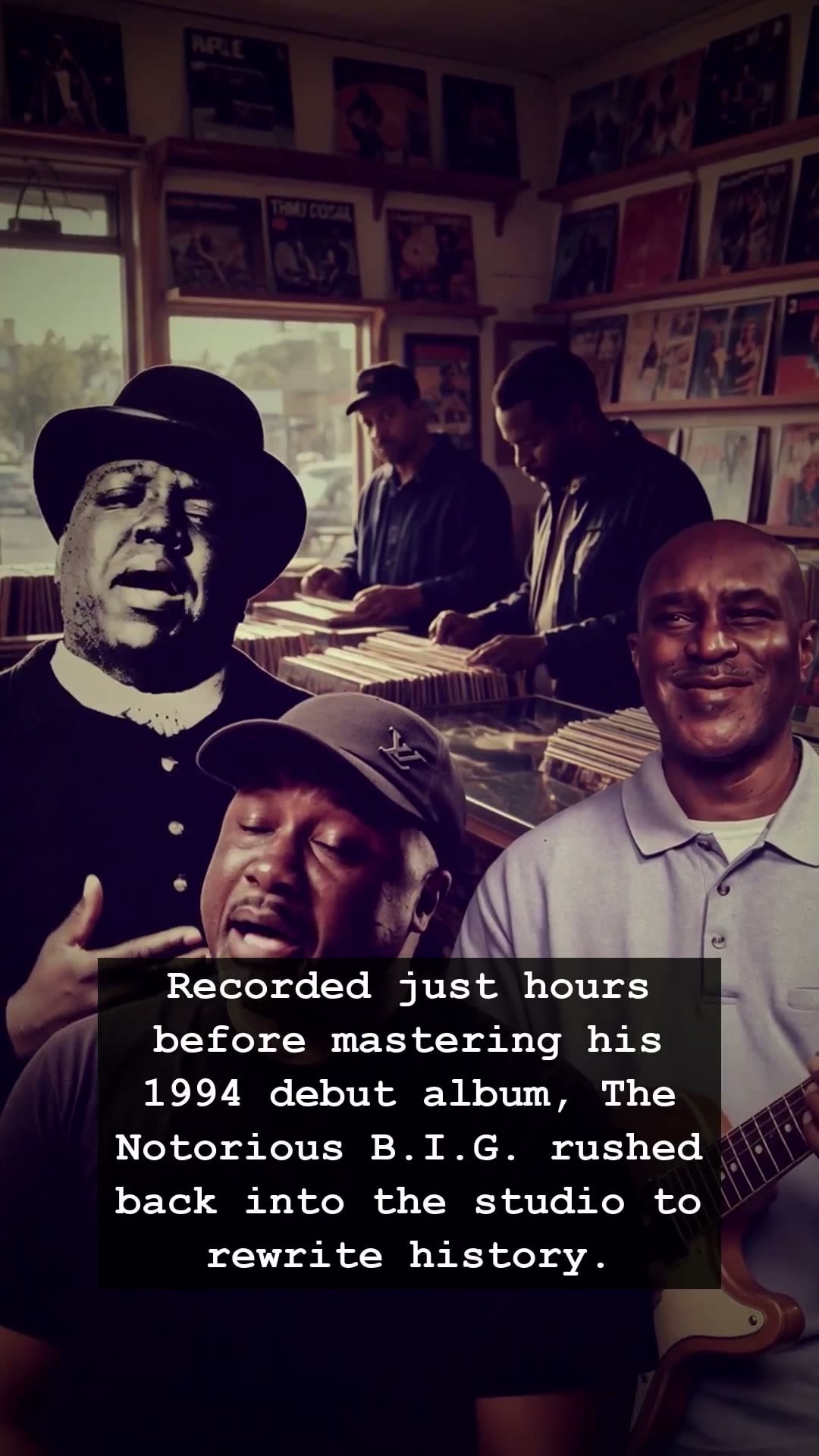
It was 1994, and the air in the studio was thick with the scent of cheap cigarettes and the palpable anxiety of a looming deadline. The music industry was still reeling from the cultural shift sparked by the Golden Age of Hip-Hop, a time when lyrical prowess was the only currency that mattered. Christopher Wallace, better known to the world as The Notorious B.I.G., stood before the microphone. His debut album, Ready to Die, was already supposed to be finished. The mastering process was scheduled to begin in mere hours, yet Biggie felt something was missing. He didn’t just want a hit; he wanted a testament to his life on the Brooklyn streets, a narrative that felt as gritty and real as the pavement beneath his feet.
In a moment of sudden, frantic inspiration, he called for the engineer to roll the tape back one more time. The Notorious B.I.G. rushed to rewrite a single verse, his hands scribbling furiously on a notepad while the beat looped relentlessly. Nobody in the room realized it at the time, but those feverish minutes were not just a technical correction; they were the birth of a rap immortal. He was channeling the ghosts of his past, the pressure of a label expecting a miracle, and the raw, unfiltered reality of a young man caught between poverty and the impending glitz of superstardom. That rushed verse became the anchor for a record that would go on to define East Coast hip-hop.
Looking back, it is staggering to realize how close the world came to never hearing those lines. The 1990s were a turbulent time, a decade defined by the rise of the Walkman, the dominance of MTV, and the escalating, tragic tensions between the East and West Coast factions. In that high-stakes environment, The Notorious B.I.G. stood as a titan, his voice a rich, baritone command that could cut through the noise of any club or radio broadcast. He carried the weight of Bed-Stuy with him, turning the isolation of his upbringing into stories that resonated with millions who saw their own struggles mirrored in his rhymes.
Beyond the glitz of the charts, Biggie was a man operating under immense psychological pressure. The fame brought with it the dark side of the industry—the paranoia, the substance abuse that plagued many of his peers, and the constant threat of violence that followed the rap game in those volatile years. Yet, when he was in the booth, the chaos faded. He possessed a supernatural ability to inhabit his own stories, making the listener feel every ounce of his ambition and vulnerability. That last-minute addition to his debut wasn’t just clever wordplay; it was an emotional autopsy performed in real-time.
Decades later, the legacy of The Notorious B.I.G. remains untouchable. We still spin his vinyl, searching for the flickers of brilliance in every line, haunted by the tragedy of a career cut far too short. That frantic night in 1994 remains a legendary piece of music history, a reminder that genius often arrives in the quiet, desperate moments just before the curtain rises. As we revisit the soundscape of the nineties, we are reminded that some artists don’t just record songs—they capture the heartbeat of an entire generation, leaving behind a rhythm that never truly stops playing.