
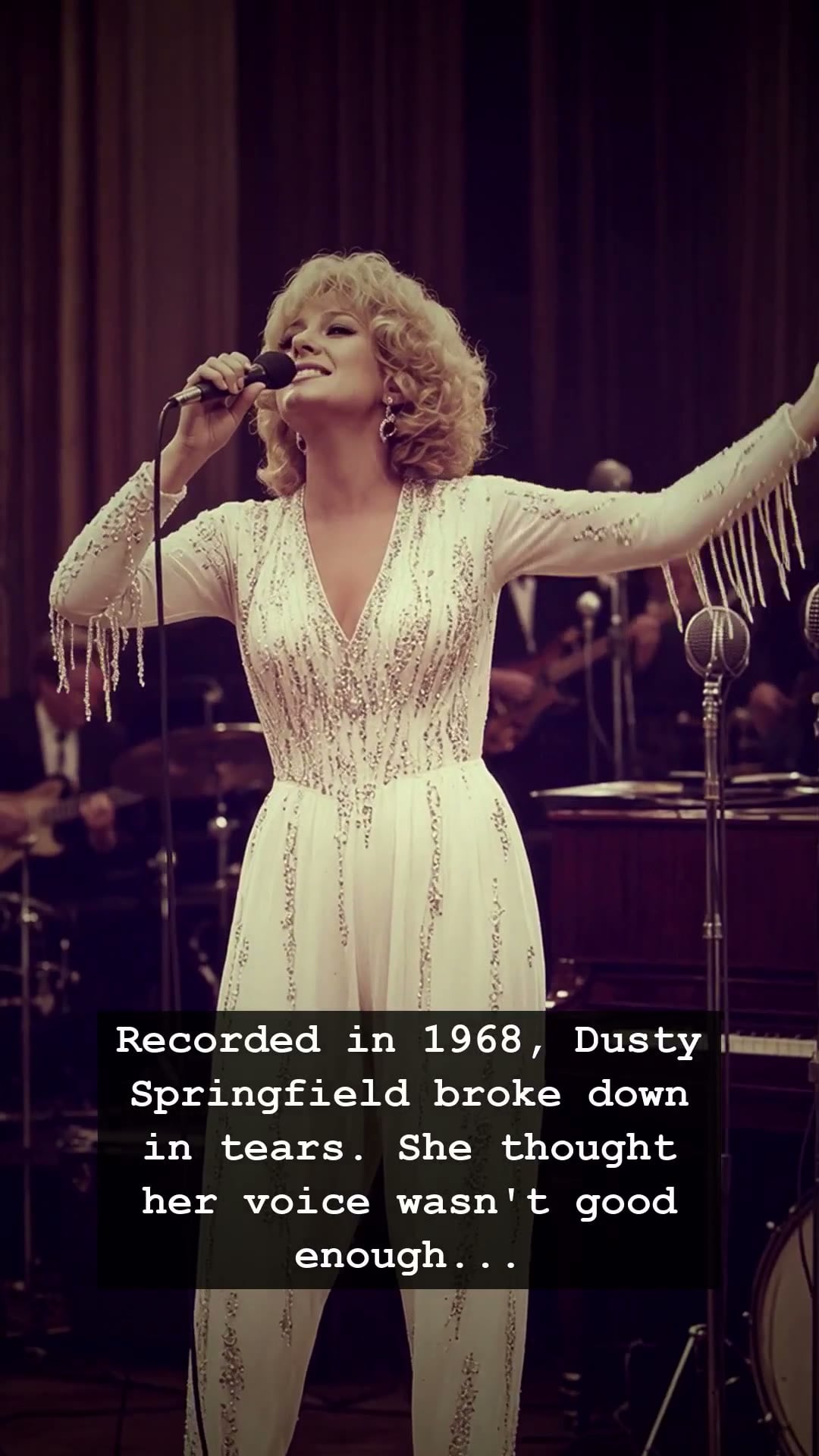
The year was 1968, and the air inside the recording studio was thick with a palpable, crushing anxiety. Outside, the world was shifting, caught between the tail end of the Swinging Sixties and the looming uncertainty of a new decade. Inside, a woman stood before the microphone, her heart pounding against her ribs. Dusty Springfield, the blue-eyed soul icon with the towering blonde beehive, was at a breaking point. As the tape rolled, she didn’t just sing; she shattered. She broke down in tears, convinced that her vocal performance was hollow, lacking the deep, earthy grit of the American soul legends she so desperately idolized. She truly believed her voice was not good enough for the greatness she was attempting to capture.
She had traveled all the way from the United Kingdom to the legendary American Sound Studio in Memphis, seeking a rebirth. Dusty Springfield wanted to strip away the pop sheen that had defined her earlier career and find the raw, gospel-infused sound that lived in her soul. Yet, under the harsh studio lights and the pressure of producers, her legendary confidence evaporated. She felt like an intruder in the birthplace of soul, a pop star playing dress-up in the house of rhythm and blues. This moment of vulnerability was not a sign of weakness, but the exact catalyst that birthed the perfection found on her masterpiece album, Dusty in Memphis.
The track that would eventually define her career was more than just a melody; it was a confession. As Dusty Springfield poured her insecurities into the microphone, she unintentionally channeled the exact raw, soulful yearning that her producers were craving. She was terrified that she was failing, yet she was actually crafting a performance of a lifetime. The resulting songs, particularly the hauntingly beautiful Son of a Preacher Man, became the bridge between British invasion pop and the gritty heart of Memphis soul. It was a sound that would soon echo from every jukebox across the country, turning her anxiety into an enduring musical legacy.
Looking back, it is impossible to divorce the brilliance of that 1968 recording session from the human struggle that fueled it. Dusty Springfield was navigating a world of rigid music industry expectations, fighting for artistic validity while struggling with the internal shadows that often accompany immense fame. Her story remains a powerful reminder of how the most authentic art often emerges from our moments of deepest doubt. She didn’t just record a song; she captured the sound of a woman finding her truth under the most intense pressure imaginable.
Today, the legacy of Dusty Springfield continues to resonate with anyone who has ever felt like an outsider looking for their own sound. Her music survives as a testament to the idea that perfection is often found not in technical flawlessness, but in the crack of a voice and the honesty of a tear. Whether you first heard her on a crackling vinyl record or through the modern glow of a digital playlist, her influence remains undeniable. Next time you listen to her iconic soul records, remember the trembling hands and the quiet tears in that Memphis studio that turned a terrified singer into an immortal legend.