
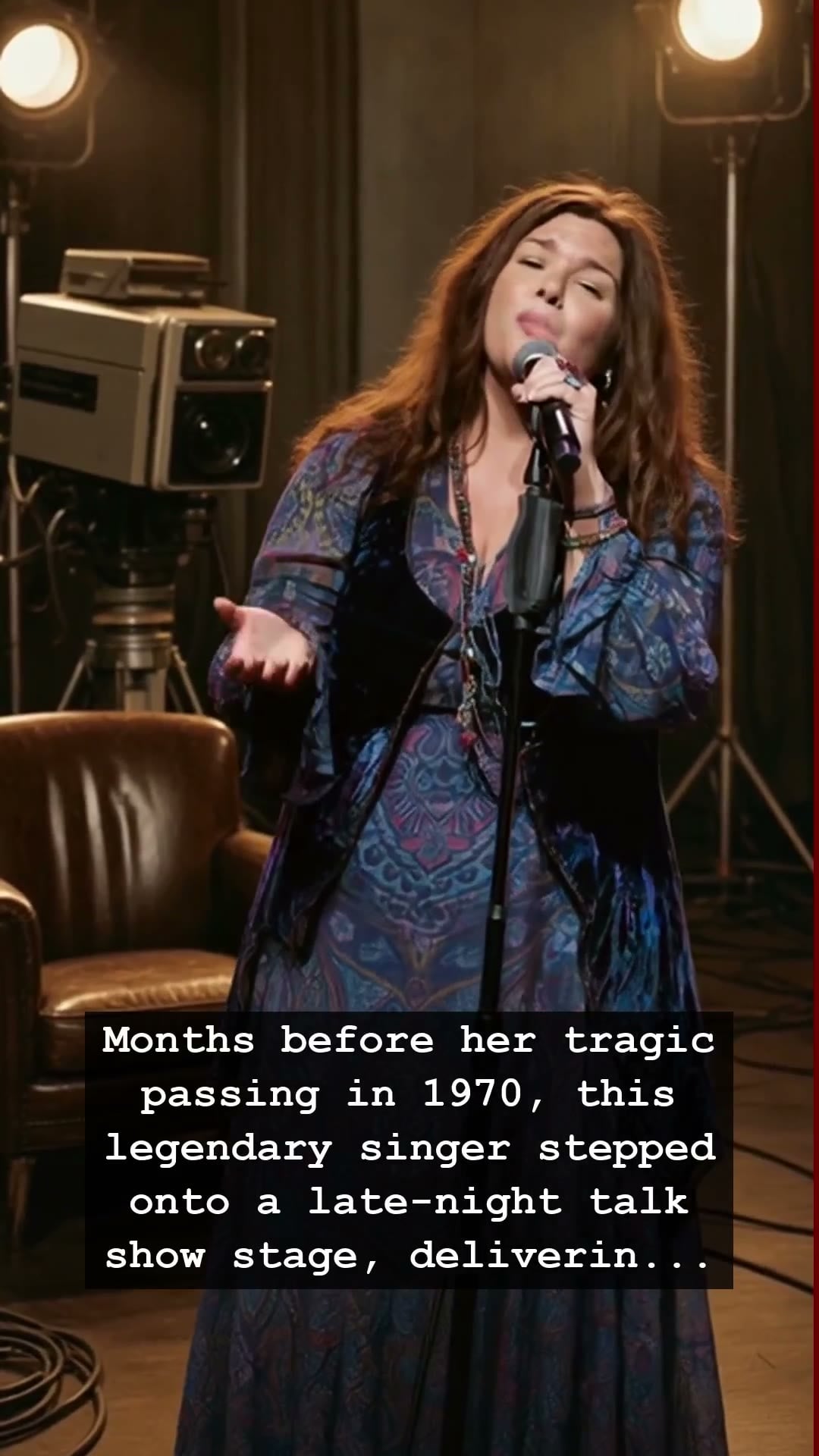
The year was 1970, a time when the world was shifting from the idealism of Woodstock into the harsher, cold light of a new decade. In the dim, smoky air of a late-night talk show set, a woman stepped onto the stage who redefined what it meant to be a rock star. Janis Joplin did not just sing; she bled through her microphone, turning every note into a visceral confession of pain and longing. Millions watched through the flickering glow of their television sets, unaware that they were witnessing one of the final public breaths of a generational icon. Months later, the silence that followed her sudden passing would echo forever in the halls of rock history.
Janis Joplin was a force of nature, a blues-drenched hurricane in an era dominated by the polished sounds of the Top 40. Her presence on that late-night stage was raw and untamed, a sharp contrast to the carefully curated personas of the time. To understand her impact, you have to look at the landscape of the late sixties. While disco was beginning to stir in the underground clubs and the psychedelic haze of San Francisco was thinning, Janis Joplin remained a permanent fixture of authentic suffering and ecstasy. She was the queen of the soulful scream, a woman whose voice carried the weight of every heartache she had ever endured, resonating deeply with a generation searching for truth in their music.
Behind the magnetic charisma and the feather boas lay a soul constantly battling the pressures of fame and the suffocating grip of loneliness. The contrast between the vibrant, electric Janis Joplin seen under the stage lights and the vulnerable woman in the shadows was a tragedy hidden in plain sight. Her addiction was not a secret, but it was a demon that the public often ignored, choosing instead to worship the vessel of her talent. Watching that footage today, one cannot help but notice the intensity in her eyes—a haunting combination of defiance and profound exhaustion that makes her performance feel like a final, desperate plea for understanding.
Her legacy remains etched in the psyche of anyone who has ever felt like an outsider. Janis Joplin didn’t belong to the mainstream; she belonged to the broken, the restless, and the dreamers who found solace in the grit of her delivery. Even decades later, when we hear her iconic rasp, we aren’t just listening to a song; we are transported back to a time where music felt dangerous, essential, and entirely human. She bridged the gap between the raw honesty of the blues and the rebellious spirit of the rock revolution, proving that true art often demands the highest price from its creator.
As the years pass and technology evolves—from the crackle of a vinyl record on a turntable to the digital clarity of today’s streaming platforms—the voice of Janis Joplin remains timeless. She reminds us that beneath the glamour of the stage, the artist is always searching for a connection that transcends the material world. We keep playing her records not because she is gone, but because, for three minutes at a time, she makes us feel less alone in the dark. Do you remember the first time her voice stopped you in your tracks, or are you just beginning to discover the legend she left behind?