
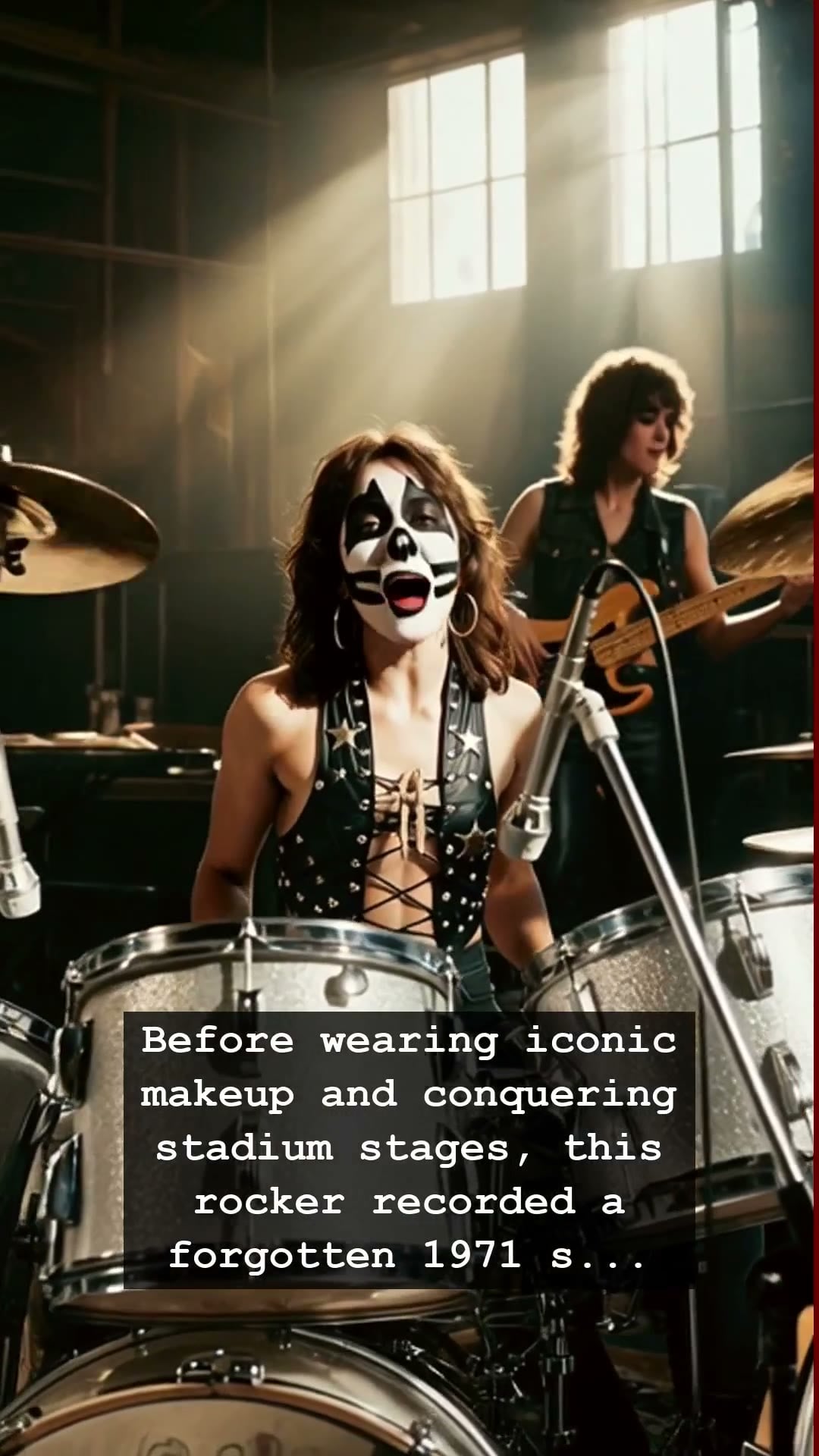
Before the world knew the face of the Catman, before the pyrotechnics of sold-out arena rock tours, and before the greasepaint became a permanent fixture of rock and roll mythology, Peter Criss was just another struggling musician in the concrete maze of 1971 New York City. While millions of fans later associated Peter Criss with the thunderous drum beats and heavy metal anthems of Kiss, his early career was defined by an entirely different rhythm. Tucked away in the grit of local clubs, Peter Criss was navigating the soulful, polished sound of R&B and Motown, a stark contrast to the leather and studs that would eventually make him a household name.
Most fans who came of age during the height of the MTV era or collected vinyl hits from the late seventies struggle to imagine Peter Criss without his feline makeup. Yet, in the quiet years before his ascent to stardom, he was honing his craft in the shadows. He spent his nights behind the drum kit, chasing the groove rather than the spectacle. This forgotten chapter of his life feels like a ghost story from a bygone era, a time when jukeboxes hummed with the smooth vibrations of soul music and a young drummer was simply looking for his break in a town that never slept.
It is deeply fascinating to realize that Peter Criss, who would eventually command massive stages, was once deeply embedded in the soul scene. The emotional weight of his later ballads, like Beth, carries a residue of this early influence. That specific song, which propelled Kiss to unprecedented commercial success, is essentially a piece of pop-soul disguised in a rock arrangement. Understanding the history of Peter Criss reveals that his artistic DNA was never strictly about hard rock rebellion; it was always anchored in a deep, melodic appreciation for the soul and R&B traditions that permeated New York in the late sixties and early seventies.
As the industry began to shift toward the stadium-filling excess of the late seventies, many artists buried their early experiments to fit the evolving image of the era. The transition for Peter Criss was radical. The man who once played with the subtlety of a soul percussionist had to adapt to the bombastic, theatrical requirements of rock stardom. It is a testament to his adaptability that he managed to hold his own in such a demanding environment, even as the internal pressures and the crushing weight of fame began to fracture the band from within.
Today, revisiting these early, lesser-known recordings offers a rare, humanizing glimpse at a man who became a caricature for millions. Looking back at the trajectory of Peter Criss, we are reminded that beneath the layers of performance art and the corporate machine of arena rock, there is a musician with a genuine love for the craft. The contrast between the soul man of 1971 and the masked warrior of 1978 serves as a poignant reminder that every legend has a secret, rhythmic beginning that the spotlight eventually forces them to leave behind.