
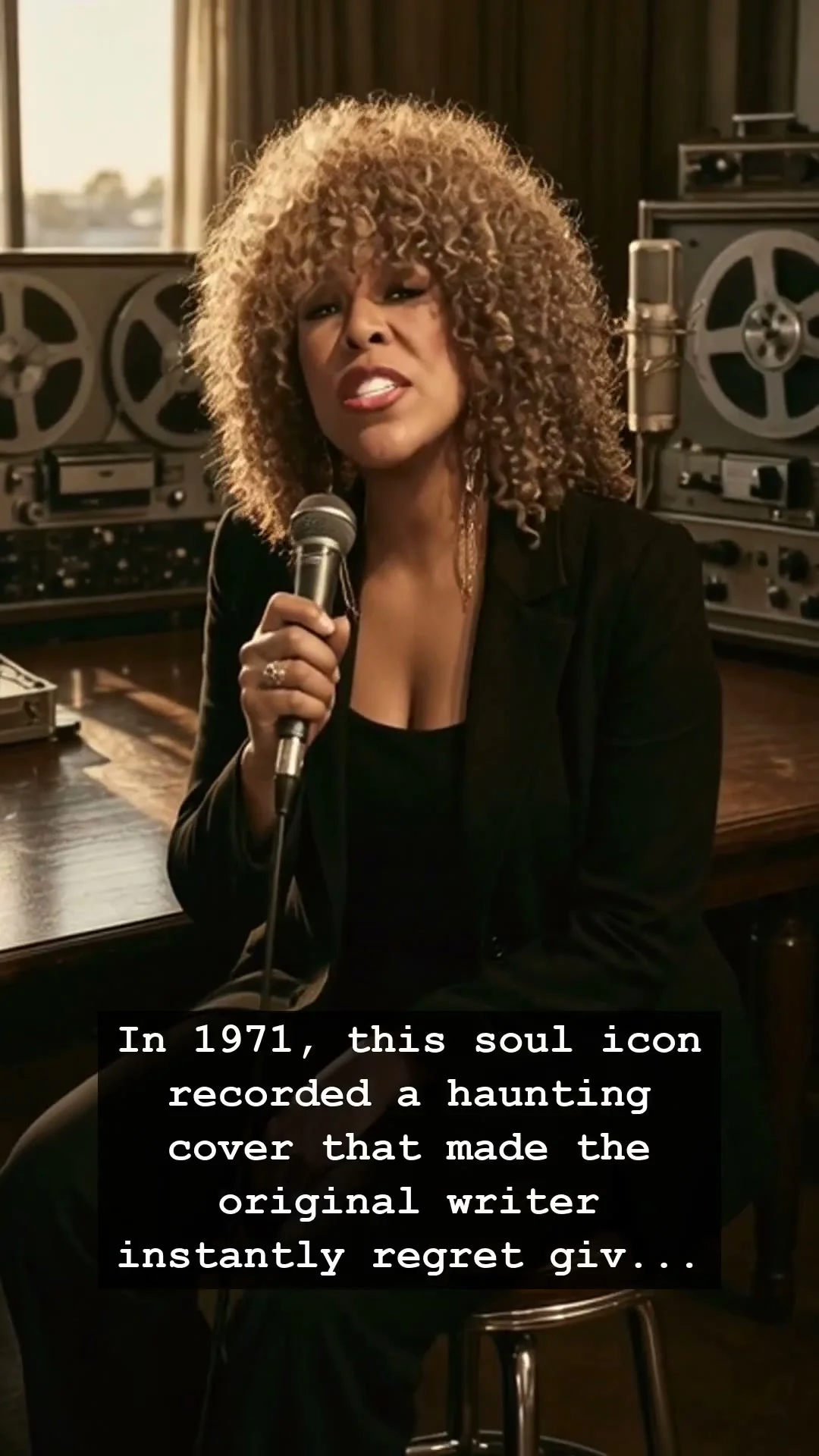
It was 1971, and the airwaves were humming with the raw, transformative energy of a changing musical landscape. Amidst the rise of FM radio and the intimacy of the bedroom studio, a relatively unknown songwriter named Lori Lieberman sat in a dimly lit club, mesmerized by a performance that would change the trajectory of soul music forever. She heard Don McLean play Empty Chairs, and the emotional resonance of that moment sparked a poetic seed that would soon become a global phenomenon. Yet, when the lyrics were transformed into the haunting masterpiece Killing Me Softly With His Song, no one could have predicted that the song’s true soul would be unlocked by the incomparable Roberta Flack.
Roberta Flack, a classically trained musician with a voice that felt like velvet draped over jagged glass, discovered the track almost by accident. While flipping through a magazine on a flight, she stumbled upon a mention of the song, but it was the magnetism of the melody that pulled her into the studio. When she finally laid down the vocal track, she stripped away the excess, leaving only a haunting piano arrangement that prioritized raw human vulnerability over production polish. The result was not just a hit; it was a visceral confession. Legend has it that when the original songwriters heard Roberta Flack infuse those notes with her signature smoky, soulful depth, a wave of instant, stinging regret washed over them. They realized they had parted with a song that was destined for a different kind of immortality.
This was the era of the Jukebox and the burgeoning intimacy of the cassette tape, where songs were no longer just background noise but deep, personal companions for the lonely and the lovelorn. Roberta Flack didn’t just sing the lyrics; she lived them. Every breath she took on the record became a masterclass in tension and release. She possessed the rare ability to bridge the gap between folk poetry and R&B sensibilities, a cross-genre feat that captured the hearts of a generation feeling the weight of the post-Woodstock malaise. Her delivery made the listener feel as if they were sitting in the front row of a sold-out theater, the only person in the room hearing a secret being whispered into the dark.
Decades later, the impact of Roberta Flack on this track remains undiminished. While the music industry shifted toward the synthesizers of the eighties and the neon glare of the disco era, the quiet power of her voice remained a gold standard for authenticity. It serves as a reminder of a time when soul music wasn’t afraid to be quiet, slow, and devastatingly honest. In a world of fleeting trends, the brilliance of Roberta Flack is a timeless anchor, pulling us back to the heart of what makes music endure.
As we look back at the golden age of American soul, we find that the most powerful stories aren’t always the loudest ones. They are the songs that stop us in our tracks, forcing us to reconcile with our own memories and the ghosts of our past. Roberta Flack captured that lightning in a bottle, proving that even a simple song, when handled by a true icon, can resonate through the ages. Does the melody still haunt you just as it did when you first dropped the needle on the record?