
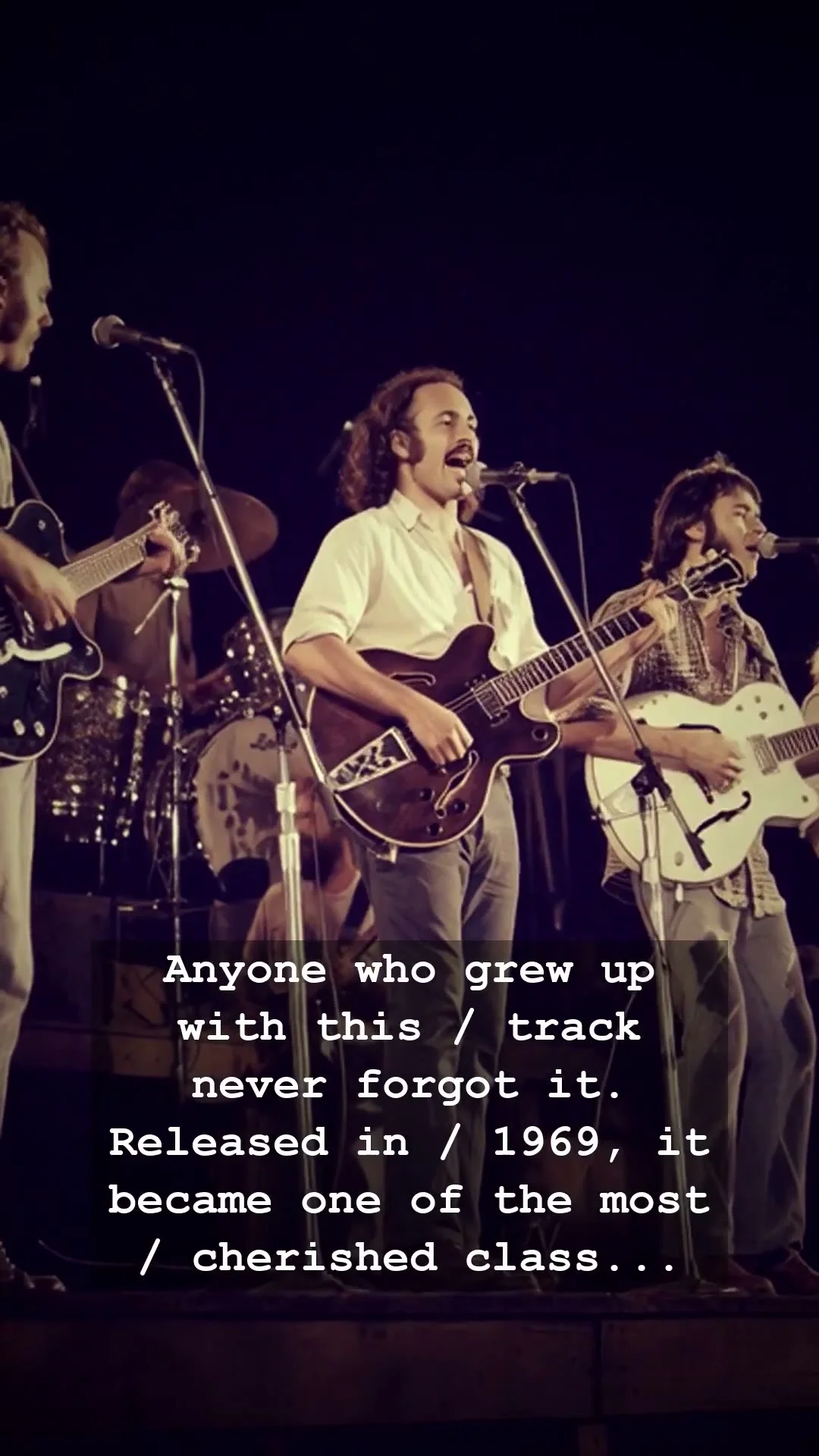
The year was 1969, a summer defined by the swirling dust of Woodstock and the scent of revolution hanging heavy in the air. Amidst the chaos of a changing world, a new harmony emerged that seemed to stop time itself. Crosby, Stills and Nash arrived not just as a band, but as a sonic tapestry of the era, weaving delicate acoustic textures with haunting, intricate vocal harmonies. Anyone who grew up with their self-titled debut album never truly left that moment behind. It was a time when the Jukebox was a portal to a new consciousness, and these three voices became the soundtrack to a generation searching for peace amidst the noise.
David Crosby, Stephen Stills, and Graham Nash were already survivors of their own respective musical lives before they collided in a room in Laurel Canyon. Their chemistry was instantaneous, yet fragile. They represented a rare alchemy of talent—Crosby’s jagged, exploratory spirit, Stills’ relentless precision, and Nash’s melodic pop sensibilities. When they first harmonized, the air in the room reportedly stood still. That raw vulnerability captured in their 1969 release remains one of the most cherished classics in American history. It did not sound like anything else on the radio; it sounded like a secret being whispered directly into the listener’s soul.
Behind the pristine vocal layering lay a tumultuous landscape of ego and artistic friction. The trio was a powder keg of creative genius, often pushing against one another even as they blended perfectly on record. This was the dark underbelly of the late sixties dream: the immense pressure to define a counterculture while personal demons lurked in the shadows. From the hazy, drug-fueled parties in the Hollywood Hills to the frantic, high-stakes atmosphere of the recording studio, the road for Crosby, Stills and Nash was never paved with gold. Instead, it was defined by the struggle to keep their fragile harmony from collapsing under the weight of their own ambition.
Decades later, tracks like Suite: Judy Blue Eyes still send chills down the spines of listeners who remember the vinyl crackle of the original pressings. There is an inexplicable power in how they captured the zeitgeist—the romantic longing, the political unrest, and the sheer idealism of 1969. While the world moved from the organic simplicity of acoustic guitars to the synthesized polish of later decades, the work of Crosby, Stills and Nash remained frozen in amber, perfectly preserved. They were the voice of an era that believed music could change the trajectory of history.
As you revisit these songs today, you aren’t just listening to a melody; you are stepping back into the theater of your own memories. Perhaps you hear the song and suddenly you are back in your first car, driving down a rain-slicked highway, or sitting in a dimly lit room with the radio turned low. Their music demands that you remember. Do you still recall every single word? If you close your eyes, the harmonies are still there, waiting to take you home to 1969 once more.