
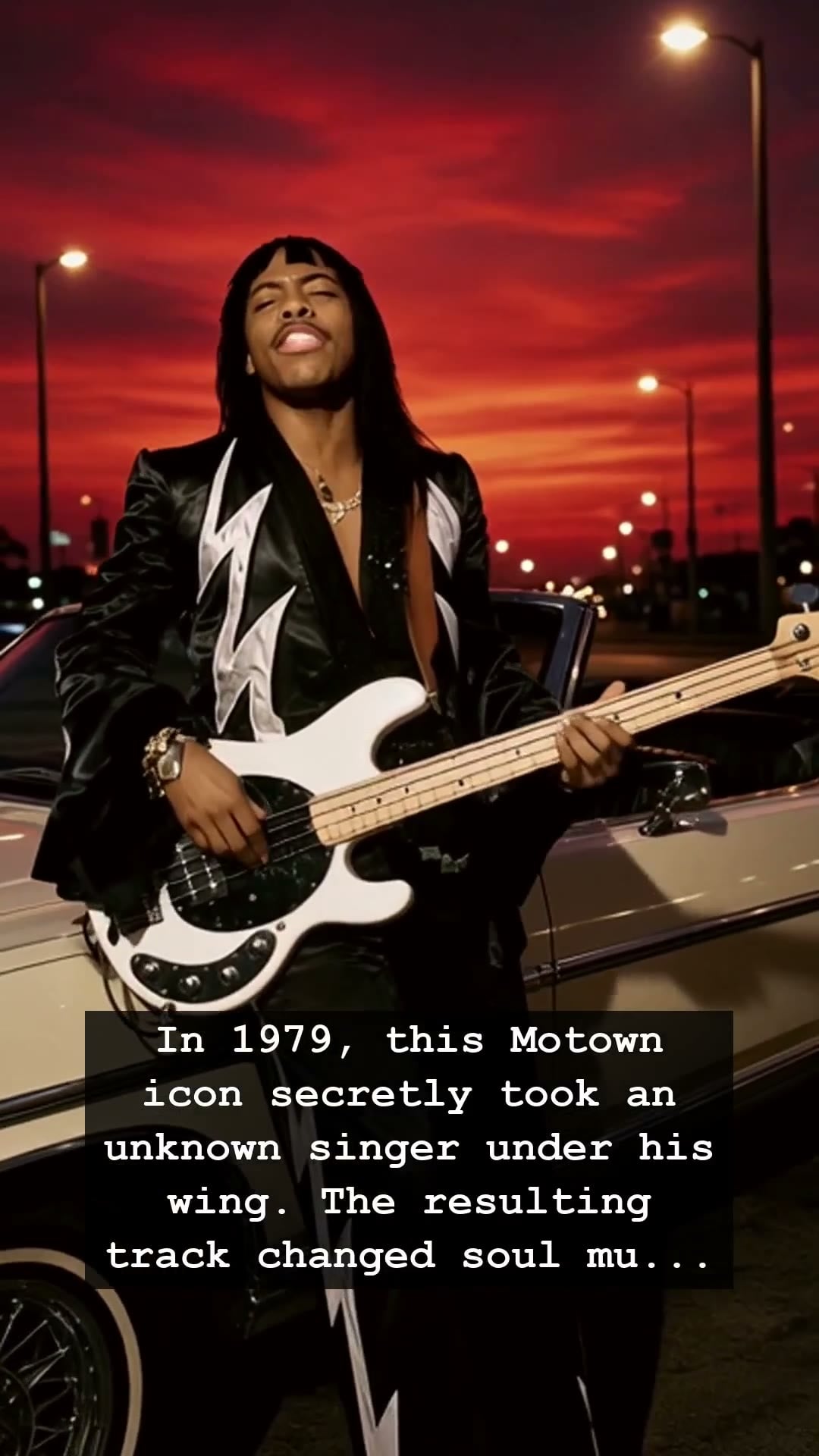
It was 1979, an era defined by the shimmering lights of Studio 54 and the deep, infectious basslines of the funk revolution. Inside the hallowed, high-pressure walls of Motown Records, a cultural explosion was brewing, but not one the executives had planned for. A rising funk titan, Rick James, had discovered a diamond in the rough—a young, white singer named Teena Marie with a voice that carried the grit and soul of a seasoned blues legend. In a move that sent shockwaves through the industry, Rick James secretly took her under his wing, shielding her from the narrow-minded suits who believed a white woman had no business singing deep, rhythmic soul.
The resulting collaboration, most famously cemented in the hit I’m a Sucker for Your Love, was more than just a song; it was a defiant act of artistic rebellion. When the executives first heard the demo, panic set in. They weren’t just worried about the commercial viability of a cross-genre sound; they were terrified of shattering the rigid racial boundaries that still dictated the music industry’s radio play. Yet, Rick James was immovable. He knew that the chemistry between him and Teena Marie was rare, a lightning-in-a-bottle connection that pulsed with raw energy and unparalleled vocal precision. He didn’t just mentor her; he treated her as his musical soulmate, forging a partnership that would redefine the boundaries of R&B.
Looking back, this era was a landscape of Walkmans and jukeboxes where musical identity was often strictly categorized, yet Rick James and Teena Marie refused to conform. Their partnership was fueled by a shared creative intensity, often characterized by late nights in the studio and a fierce, sometimes volatile, mutual respect. While the public saw the polished performances, the behind-the-scenes reality was a high-stakes tug-of-war against Motown’s image machine. They were the outliers, two musicians pushing against the tide of what was considered acceptable, creating a sound that was at once nostalgic and years ahead of its time.
What makes their story so enduring is the sheer authenticity of their connection. Despite the immense pressure of fame and the inevitable pitfalls that come with the rock-and-roll lifestyle, their bond remained a constant, even as the music industry evolved toward the arena rock and synth-pop spectacles of the 1980s. Teena Marie didn’t just survive in the shadow of Rick James; she emerged as the ‘Ivory Queen of Soul,’ proving that musical talent knows no color, only the depth of one’s heart and soul.
Today, when we spin those old records, we aren’t just hearing a track; we are listening to a historical defiance that changed the course of soul music forever. Their story remains a powerful reminder of how artistic truth, when guarded fiercely, can eventually break down the walls built by prejudice. As you listen to the rhythmic pulse of their work today, remember the quiet, tension-filled rooms of 1979, where two artists dared to be different and ultimately changed everything.