
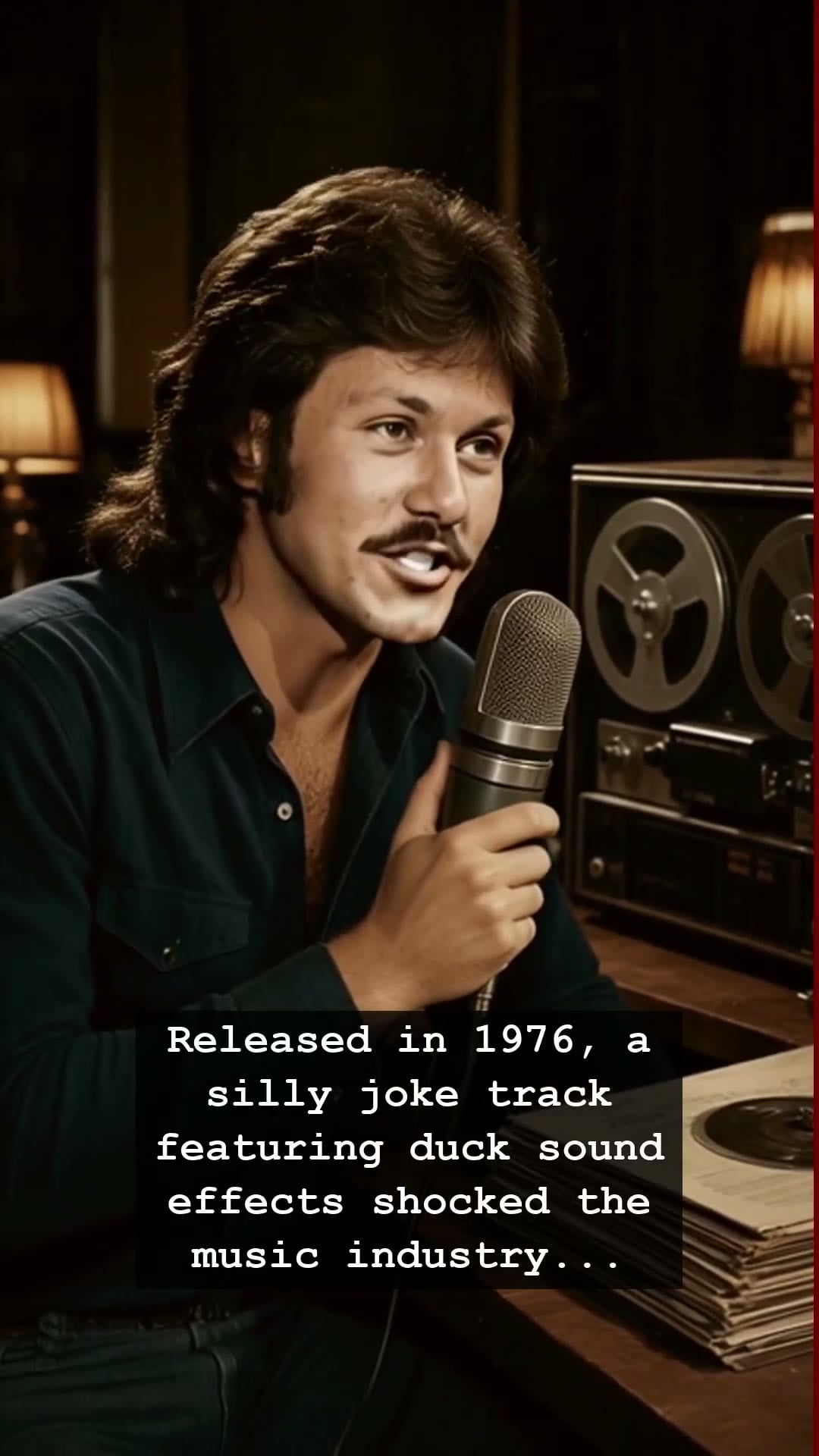
In 1976, while the world was obsessed with the glitz of Studio 54 and the smooth grooves of radio hits, a bizarre, quacking anomaly emerged from Memphis to humiliate the music industry’s elite. It was a novelty record that defied every rule of taste and talent, yet Rick Dees, a local radio DJ, managed to turn a silly joke into the most unlikely number one smash hit of the decade. Disco was at its zenith, the charts were polished to perfection, and suddenly, the nation found itself unable to stop laughing—or dancing—to the sound of a plastic duck.
Rick Dees was working the airwaves when he recorded Disco Duck, a track featuring a ridiculous falsetto voice, heavy synth textures, and—most importantly—persistent, jarring duck quacks. It was never meant to be a masterpiece; it was an ironic jab at the suffocating dominance of disco music. Yet, as the vinyl spun on jukeboxes across the country, the song became an unstoppable cultural virus. Listeners who were tired of the overly serious, cocaine-fueled grandeur of the mid-seventies embraced the absurdity. For a brief, strange moment, America chose a cartoon duck over the carefully curated personas of mainstream rock stars.
The success of Rick Dees sparked a genuine crisis among record labels and music critics. How could a track composed of cheap sound effects and nonsensical lyrics displace icons of the era? Behind the scenes, the music industry was baffled, watching as radio stations were flooded with requests for the quacking anthem. It was a humiliating reality check for a genre that prided itself on prestige. Rick Dees had inadvertently pulled the curtain back on the industry, proving that sometimes, the public didn’t want another epic soul ballad; they just wanted to be amused.
Life in the late seventies was defined by shifting sands. The warmth of the analog era was being pushed toward the cold, synthetic precision of the coming decade. Amidst the tension of post-Vietnam America and the grind of daily life, Rick Dees offered a momentary escape. The song became a staple of roller rinks and basement parties, a chaotic soundtrack to a generation that was learning to embrace the weird. It wasn’t just about the quacking; it was about the collective relief of not taking life so seriously while the rest of the world felt like it was spinning out of control.
Looking back, Disco Duck remains a bizarre monument to a time when radio was king and novelty records could change the trajectory of an artist’s career overnight. Rick Dees went on to become a broadcasting legend, but he would forever be the man who made a mallard a superstar. The track serves as a charmingly strange reminder of a bygone era, a period when the lines between genius and absurdity were frequently blurred. If you listen closely to the echoes of that summer, you can still hear the faint, triumphant quack of a song that refused to be forgotten.