
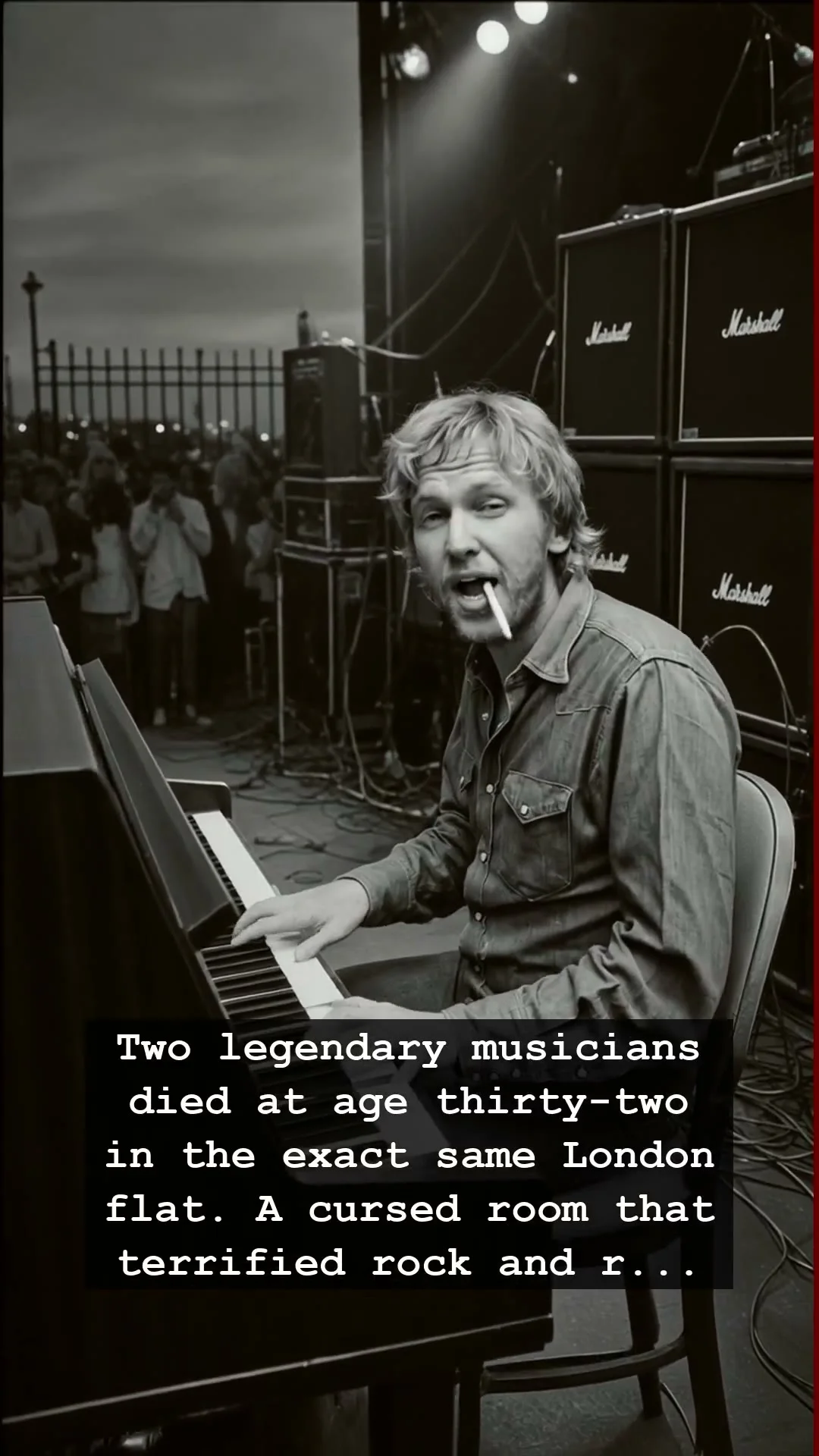
In the glitzy, cocaine-dusted heights of the 1970s, London was the epicenter of the music world. It was a place where rock royalty could disappear into the shadows of velvet-curtained flats, only to have their brightest flames snuffed out in the dead of night. Among the many urban legends that haunt the hallways of music history, few are as bone-chilling as the mystery of a single apartment at 12 Curzon Place. This wasn’t just a home for the elite; it was the site of two separate tragedies that rocked the foundation of the industry, forever sealing the room in a shroud of morbid fascination.
In July 1974, the world lost the angelic, powerful voice of Mama Cass Elliot. As a founding member of The Mamas and the Papas, she had defined the sound of the late sixties with hits like California Dreamin’. She was staying in the London flat, borrowed from the songwriter Harry Nilsson, when she passed away in her sleep at the age of thirty-two. The tabloids spun wild, sensational stories about a ham sandwich, but the reality was a quiet, heartbreaking end to a woman who had captured the hearts of millions during the golden age of folk-rock. She left behind a void that no one could fill, and her death became a somber footnote in the swinging London scene.
Four years later, the curse seemed to strike the very same location again. On a September night in 1978, the legendary drummer of The Who, Keith Moon, was also found dead in that same apartment, also at the age of thirty-two. Keith Moon was the human embodiment of the chaotic, destructive energy of the era—a man who lived as if he were trying to outrun his own shadow. Having taken residence in Harry Nilsson’s flat, he met a fate that mirrored Cass Elliot’s with eerie precision. The coincidence was too sharp for the public to ignore, and soon, rumors of a cursed room began to circulate through the dark alleys of the music industry.
For those who lived through the era of the Walkman and the rise of stadium rock, these deaths felt like the death of innocence. We were coming off the high of Woodstock and the idealism of the flower power movement, only to watch our heroes crumble under the weight of fame and substance abuse. The apartment at Curzon Place became a morbid monument to the price of being a star. It was a time when the lines between art and self-destruction were razor-thin, and the pressures of the spotlight often demanded a soul in exchange for a hit record.
Today, the story of Mama Cass and Keith Moon remains a haunting reminder of how fragile rock and roll royalty truly was. Their deaths were not just statistical anomalies; they were personal losses that left fans reeling for decades. Whether you believe in haunted rooms or simply the cruel hand of fate, the legacy of these two icons lives on in their music. Every time we hear the Mamas and the Papas or the frantic, genius drumming of The Who, we are reminded that some stars burn too brightly to stay long on this earth, leaving behind only echoes in the rooms where they once dreamt.