
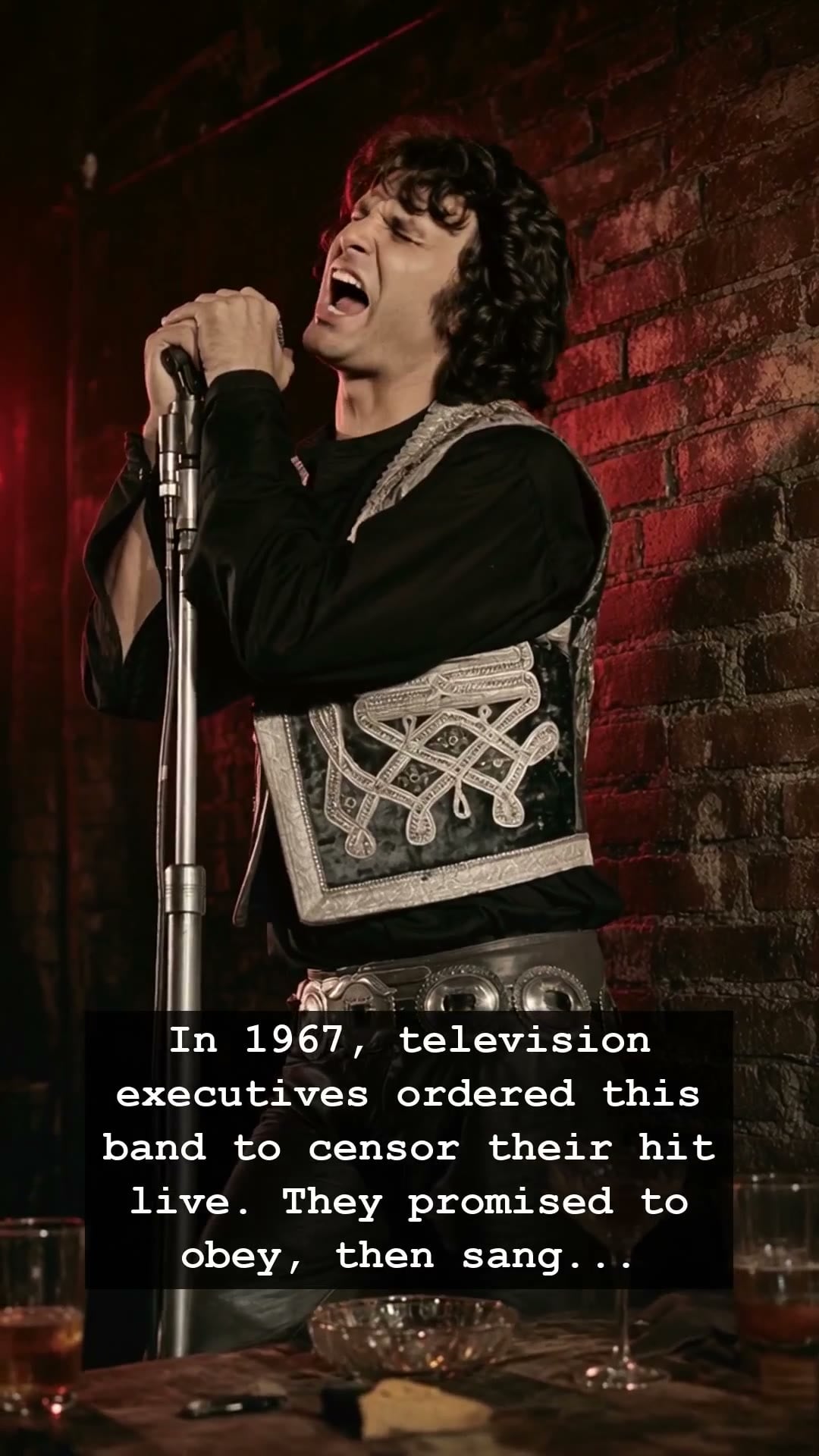
It was September 17, 1967, and the air inside CBS Studio 50 was thick with the scent of hairspray, stage lights, and the rigid, suffocating decorum of 1960s television. The Ed Sullivan Show was the ultimate cultural gatekeeper for American households, a suburban hearth where families gathered to watch the icons of the day. On this particular evening, the producers were terrified of the dark, leather-clad poet standing in the center of the stage. The Doors were scheduled to perform their smash hit, Light My Fire, but there was one problem: the lyrics. Specifically, the line girl, we couldn’t get much higher was viewed as an unmistakable, scandalous reference to drug culture that the network simply could not broadcast to millions of living rooms.
Ed Sullivan himself approached the band with a stern, paternal warning. He demanded that Jim Morrison change the word higher to better, ensuring the performance would remain family-friendly. Morrison, with his piercing, melancholic gaze and that trademark serpentine grace, nodded in apparent agreement. The band huddled, exchanged knowing glances, and stepped into the blinding spotlight. As the hypnotic, swirling organ riff of The Doors filled the studio, the tension was palpable. The audience, largely unaware of the silent war being waged behind the curtains, cheered as the band launched into their psychedelic anthem. It was a moment of pure, raw energy that only the late sixties could produce.
When the verse finally arrived, the studio fell into a strange, anticipatory silence. Morrison, staring directly into the camera lens with a defiant, almost haunting intensity, ignored the executives standing in the wings. He belted out the original lyric with unmistakable clarity, emphasizing the word higher as if to spite the very institution that invited him there. In that singular second of rebellion, Jim Morrison didn’t just sing a lyric; he shattered the fragile illusion of control held by the television industry. He proved that The Doors were not there to play by the rules of the mainstream.
Backstage, the aftermath was swift and brutal. Ed Sullivan, a man not known for his patience with dissent, refused to shake the band’s hands after the set. He reportedly told them that they would never appear on his program again. Morrison’s legendary response—allegedly telling the host that they had already done the show—cemented his status as a permanent outsider in the world of high-gloss entertainment. It was a moment that redefined rock and roll, proving that for artists like The Doors, the integrity of the art was worth more than the exposure of a television spot.
Decades later, the legend of that night remains one of the most vivid snapshots of the cultural revolution. It serves as a reminder of a time when a single word on a screen could trigger a national controversy. The Doors went on to become architects of the psychedelic era, but that brush with censorship remains their most iconic act of defiance. Today, when we listen to the swirling organs and Morrison’s haunting baritone, we aren’t just hearing a song; we are listening to a young man who looked into the face of authority and chose to shout his own truth, consequences be damned.