
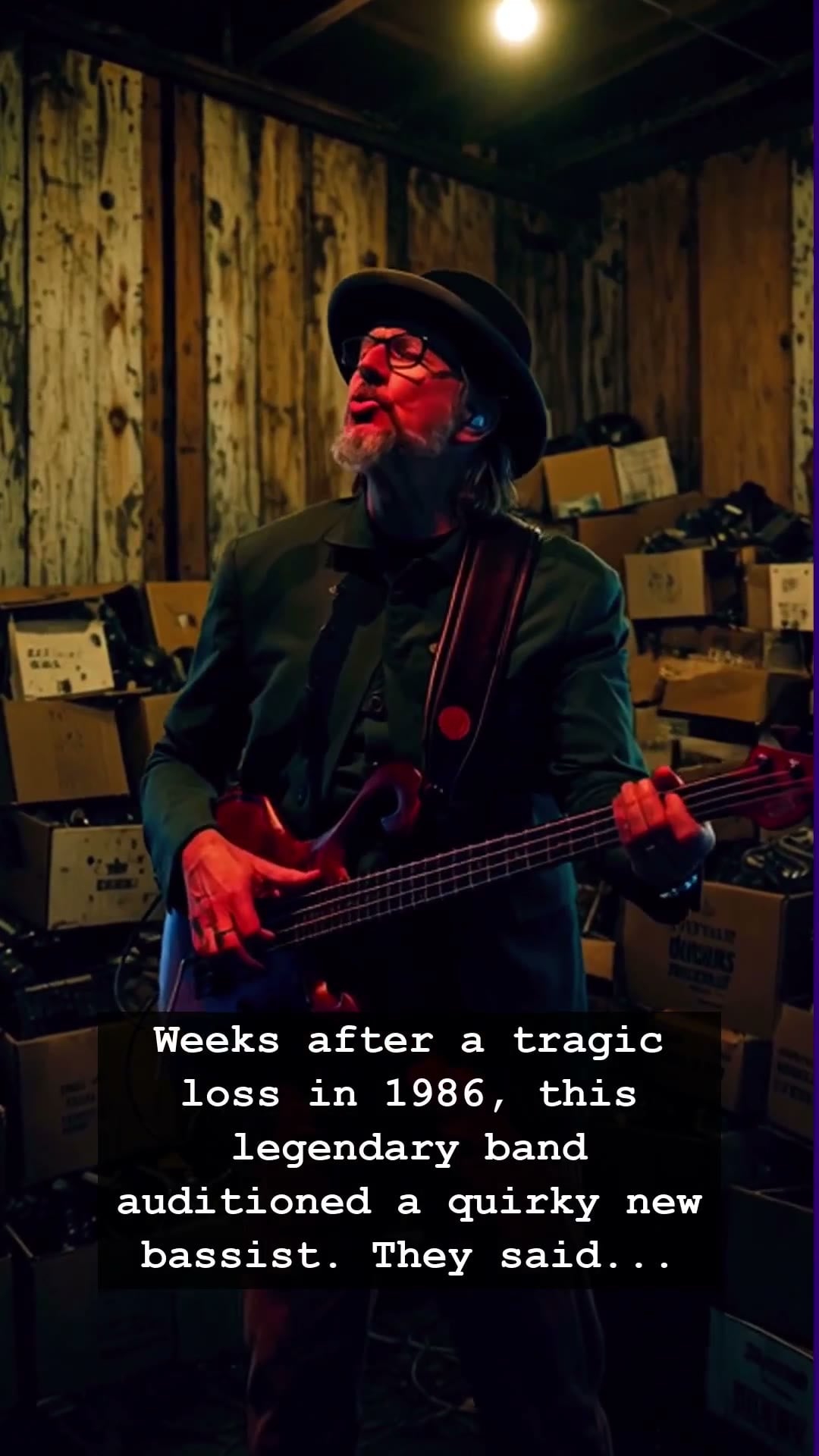
The year 1986 remains etched in the annals of metal history as a period of profound mourning. When a tragic bus accident claimed the life of Cliff Burton, the sonic landscape of Metallica was left in absolute tatters. The world of thrash metal held its collective breath, waiting to see if these giants of the scene could ever recover from such a devastating void. Amidst the chaos and the grief, a young, eccentric, and undeniably brilliant bassist named Les Claypool walked into an audition room, unknowingly setting the stage for one of the most intriguing ‘what if’ scenarios in the history of rock and roll.
At the time, Les Claypool was already carving out his own path with a style that defied the rigid, aggressive boundaries of thrash metal. While the band was searching for someone to replicate the thunderous, melodic legacy that Burton had established, they were met instead with a virtuoso who played with a funk-infused, avant-garde flair. The story goes that James Hetfield and Lars Ulrich were floored by his technical prowess. He was, by all accounts, far too good for the role, but perhaps more importantly, he was simply too singular to fit into the specific, punishing machine that Metallica was building for their future albums.
In those smoke-filled rehearsal rooms, the contrast was stark. The band was mourning a friend, looking for consistency, while Les Claypool was bursting with a creative energy that demanded its own spotlight. It was not a rejection of his talent, but rather a realization that his complex, experimental style—the very style that would later define the quirkiness of Primus—would have fundamentally altered the trajectory of the metal genre. The band famously told him he was ‘too good’ for the gig, a humble nod to the fact that his idiosyncratic thumbing and plucking technique belonged to a different musical orbit entirely.
Looking back at that era through the lens of nostalgia, it is fascinating to imagine how the eighties might have sounded if Les Claypool had taken that spot. Would the transition into the nineties have sounded the same? Would the evolution of thrash into the more polished Arena Rock sound of the later decade have been dampened by such a rhythmic disruptor? The rejection became a pivotal moment of destiny. It kept Les Claypool on a path toward becoming a cult icon of alternative music, and it left the door open for Jason Newsted to bring his own brand of heavy, driving force into the Metallica fold.
Today, the story of Les Claypool auditioning for Metallica serves as a reminder that the history of music is built as much on the doors that close as the ones that open. It highlights the delicate balance of creative chemistry, where individual genius must sometimes bow to the greater, unified sound of a band. Decades later, we still find ourselves fascinated by this fleeting collision of worlds, a brief moment where the past, present, and future of metal converged in a room, only to spin off in entirely new, legendary directions.