
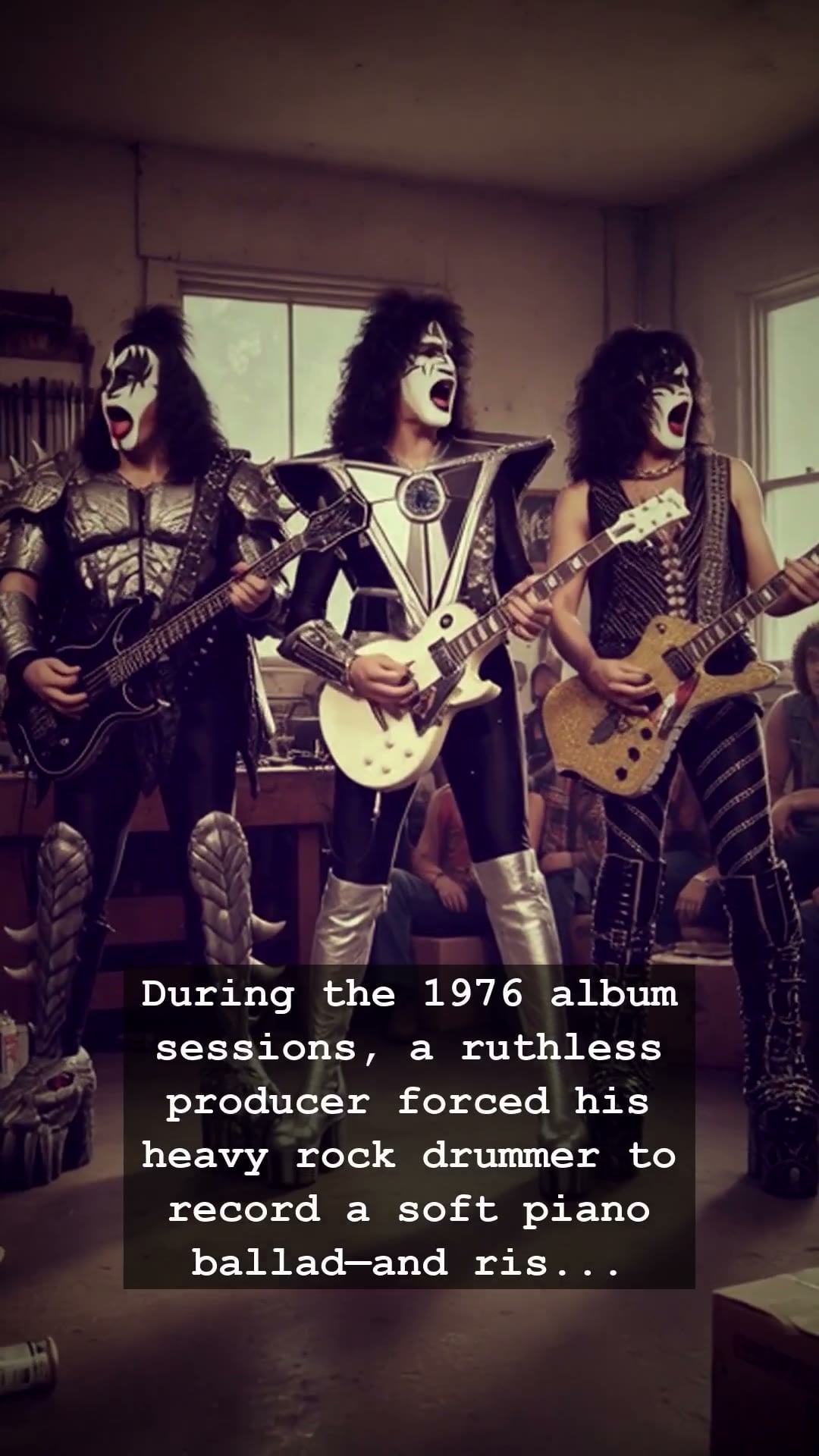
It was 1976, and the air inside the recording studio felt heavy with the scent of stale cigarette smoke and the desperate ambition of a band teetering on the edge of superstardom. Kiss had built their reputation on blood, pyrotechnics, and the aggressive, arena-shaking riffs that defined the mid-seventies rock landscape. But behind the masks, producer Bob Ezrin saw something else. He was a visionary taskmaster who realized that if they wanted to dominate the charts, they had to break the mold. He didn’t just want a rock anthem; he wanted a tear-jerker that would pierce the armor of the toughest metal fans. His target was the band’s drummer, Peter Criss, and the result was the haunting ballad Beth.
For Peter Criss, the experience was less of a creative collaboration and more of a psychological siege. Bob Ezrin was notorious for his ruthless perfectionism, a trait that had already pushed Alice Cooper to his limits. As the sessions for the Destroyer album dragged on, Ezrin isolated Peter Criss, demanding a level of emotional vulnerability that felt alien to a man defined by the thunderous roar of his drum kit. There is a palpable tension in the history of this recording, as the band members feared that stepping away from their heavy rock identity would alienate the die-hard fans who lived for the spectacle of their live shows. They were masters of the Jukebox era, yet they were risking everything on a piano-driven confession.
Ezrin knew exactly what he was doing. He understood the shifting cultural tides of the mid-seventies, where audiences were beginning to crave something more intimate than just high-decibel posturing. By locking Peter Criss in the studio, Bob Ezrin wasn’t just directing a performance; he was conducting a social experiment in fame. He forced the drummer to confront his own isolation, channeling his personal struggles into the microphone. It was a gamble that could have destroyed their credibility in an era where authenticity was the only currency that mattered. If the song failed, the image of Kiss as the kings of rock would have been permanently tarnished by a perceived act of weakness.
Yet, when Beth was finally released, it became the unexpected pivot point of their career. It wasn’t just a hit; it was a cultural phenomenon that proved even the most hardened icons could weep. The contrast between the face-painted demon on stage and the heartbroken man singing about loneliness resonated deeply with a generation starting to outgrow the rebellion of the early seventies. Peter Criss delivered a vocal performance that was raw, unpolished, and undeniably human, forever changing the trajectory of the band and solidifying the power of the power ballad in rock history.
Today, the story of those sessions remains one of the most fascinating chapters in rock lore. It reminds us that behind the massive arena lights and the manufactured myths, there is always a human being pushed to the brink by an uncompromising genius like Bob Ezrin. The next time you hear those opening piano chords on the radio, remember the friction and the fear that birthed it. What do you think was the true cost of that song’s success for Peter Criss?