
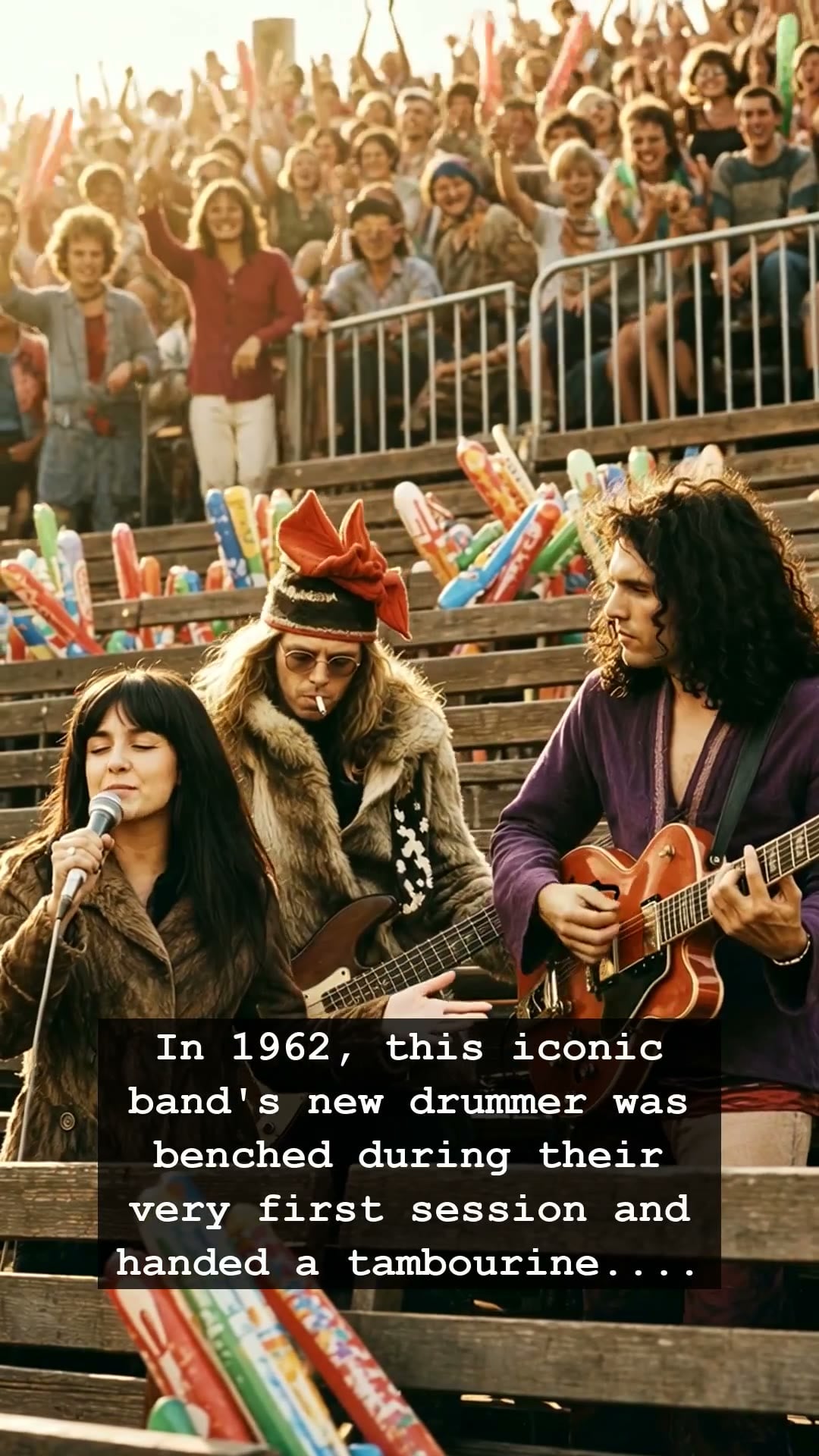
The year was 1962, a time when the world was vibrating with the promise of change, and a mop-topped quartet from Liverpool was on the precipice of global domination. For Ringo Starr, the dream of being the backbone of The Beatles seemed within reach. Yet, during his very first official recording session at Abbey Road, the dream curdled into a humiliating reality. As the group prepared to record Love Me Do, the producer George Martin, unimpressed by the newcomer’s style, made a decision that would haunt Ringo for years. He was unceremoniously benched, sidelined to the corner of the studio, and handed a tambourine while a session musician took his place behind the kit. It is a moment of cold, calculated industry pragmatism that feels almost blasphemous when viewed through the lens of history, yet it captures the brutal tension inherent in the early days of rock and roll.
Imagine the scene in that sterile studio, the smell of cigarette smoke clinging to the walls, the crackle of vacuum tubes, and the crushing weight of expectation. Ringo Starr, the man who would eventually define the rhythmic heartbeat of a generation, sat in the shadows clutching a piece of percussion, forced to watch someone else solidify the track that would ignite the British Invasion. It was the ultimate test of ego and resilience. For a band on the verge of becoming the biggest cultural phenomenon the world had ever seen, this internal friction was a stark reminder that even legends begin with rejection. The music industry of the 1960s was an unforgiving beast, one that cared little for band chemistry and everything for the perfection of a three-minute radio hit.
Why does this story still resonate more than six decades later? Because it humanizes the untouchable. We often look back at the Beatles through a sepia-toned filter, seeing them as gods of melody and harmony, but stories like this ground them in the visceral anxiety of being young and unproven. The transition from the sweaty, beer-soaked stages of the Cavern Club to the polished demands of a professional recording environment was a violent shift. Ringo was an outsider, a replacement drummer trying to find his footing, and that moment with the tambourine was his baptism by fire. It was a fleeting, uncomfortable second in time that somehow helped forge the unshakable bond the Fab Four would eventually share.
Today, when we spin a vintage vinyl of Love Me Do, we hear the innocence and the raw energy that captivated the planet. Most listeners have no idea that the man providing the beat on that particular take was a stranger, while the future legend of the drum kit was relegated to a side role. It serves as a haunting, fascinating footnote in music history. It reminds us that every masterpiece is built on a foundation of hidden struggles, behind-the-scenes drama, and the quiet resilience of artists who refuse to let a moment of professional dismissal stop them from changing the world forever. The story of Ringo, the session drummer, and the tambourine remains a timeless lesson in the persistence required to earn your seat among the stars.