
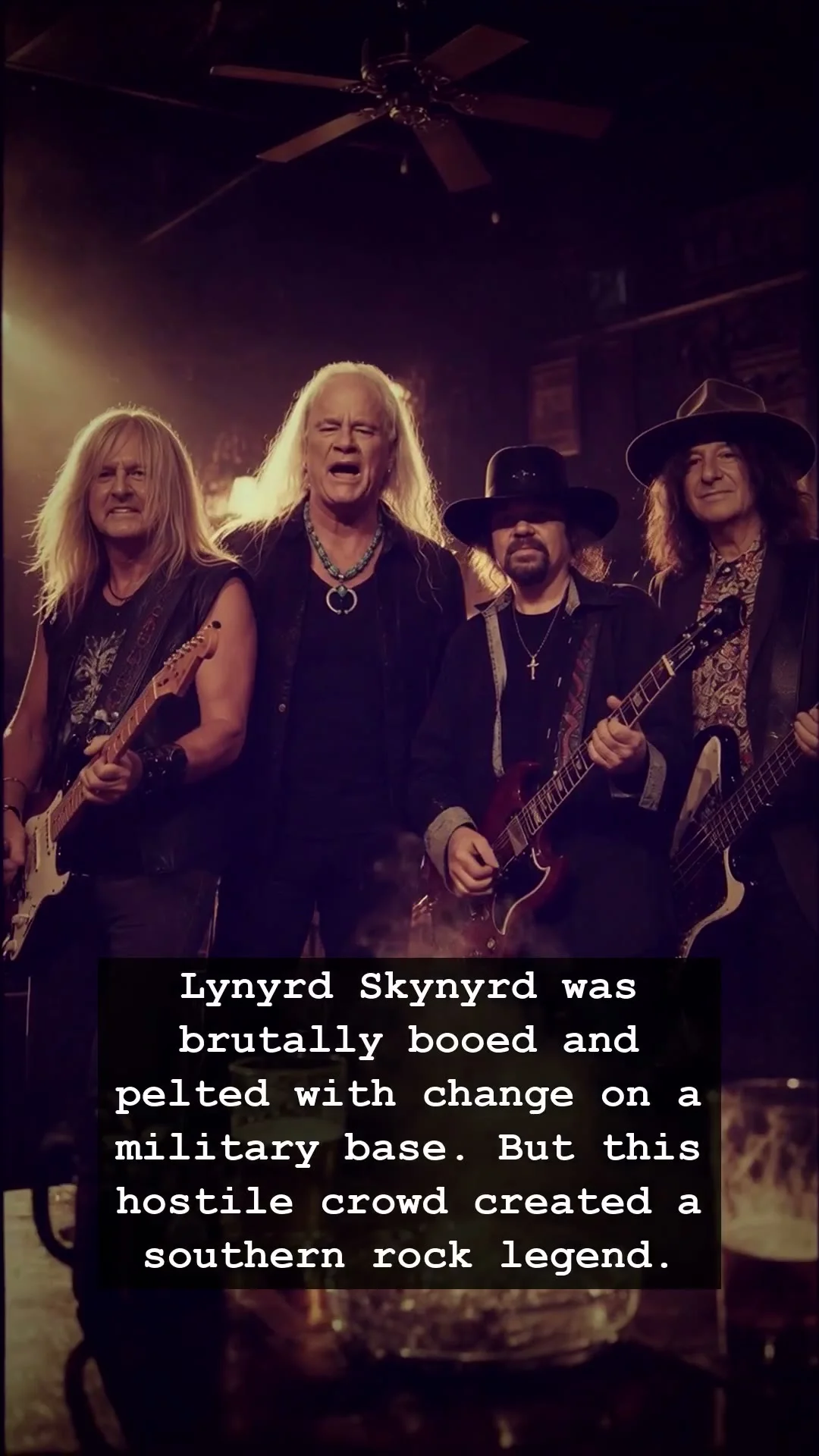
It was 1970, and the air inside the US Marine Corps base was thick with tension, cigarette smoke, and a palpable sense of intimidation. Standing on a makeshift stage were five young, long-haired men from Jacksonville, Florida, known as Lynyrd Skynyrd. They weren’t there to perform for adoring fans at a festival like Woodstock; they were essentially lambs being led to the slaughterhouse of a military base. As the band struck their first chords, the reaction from the Marines was not applause, but a thunderous, visceral roar of disapproval. The crowd began to pelt the stage with loose change, coins flying through the air like jagged hail, mocking the musicians for their appearance and their sound.
Most bands would have walked off, perhaps even returned fire, but Lynyrd Skynyrd remained anchored to that stage. Ronnie Van Zant, with his trademark steely resolve, stared down the baying crowd and kept singing. They didn’t just survive the barrage; they leaned into it. That moment of absolute hostility acted as a furnace, forging the band’s signature southern rock identity. They realized then that if they could command the attention of a room filled with hardened soldiers who wanted them gone, they could conquer any venue in the world. It was a baptism by fire that stripped away any pretense, leaving behind only the raw, defiant soul of what would become a legendary American sound.
In an era dominated by the smooth grooves of Motown and the psychedelic haze of the late sixties, Lynyrd Skynyrd represented something far more dangerous and grounded. They were the blue-collar poets of the American South. Their music became a testament to the grit of the working class, a soundtrack for those who spent their days in the heat and their nights looking for a way out. While the rest of the country was preoccupied with the slick production values of radio hits, Lynyrd Skynyrd was sharpening their knives in the shadows, crafting riffs that hit with the force of a freight train.
That night at the military base serves as a chilling reminder of the volatility of the music industry in the 1970s. The culture wars were real, and the stage was often a battleground where identity politics and musical taste collided with dangerous consequences. Yet, the story of Lynyrd Skynyrd proves that brilliance often emerges from the most suffocating pressure. They took the hatred of that crowd and turned it into an unyielding commitment to their own style, a stubborn refusal to be anything other than who they were.
Decades later, the echo of that rainy, coin-tossed evening still resonates. Lynyrd Skynyrd didn’t just play rock music; they lived the rebellion that defined an entire generation of American music. Every time a power chord rings out, you can hear the defiance of five boys who stood their ground against an army. If you ever find yourself at a jukebox tonight, play a track, turn the volume up, and remember the night they refused to quit.