
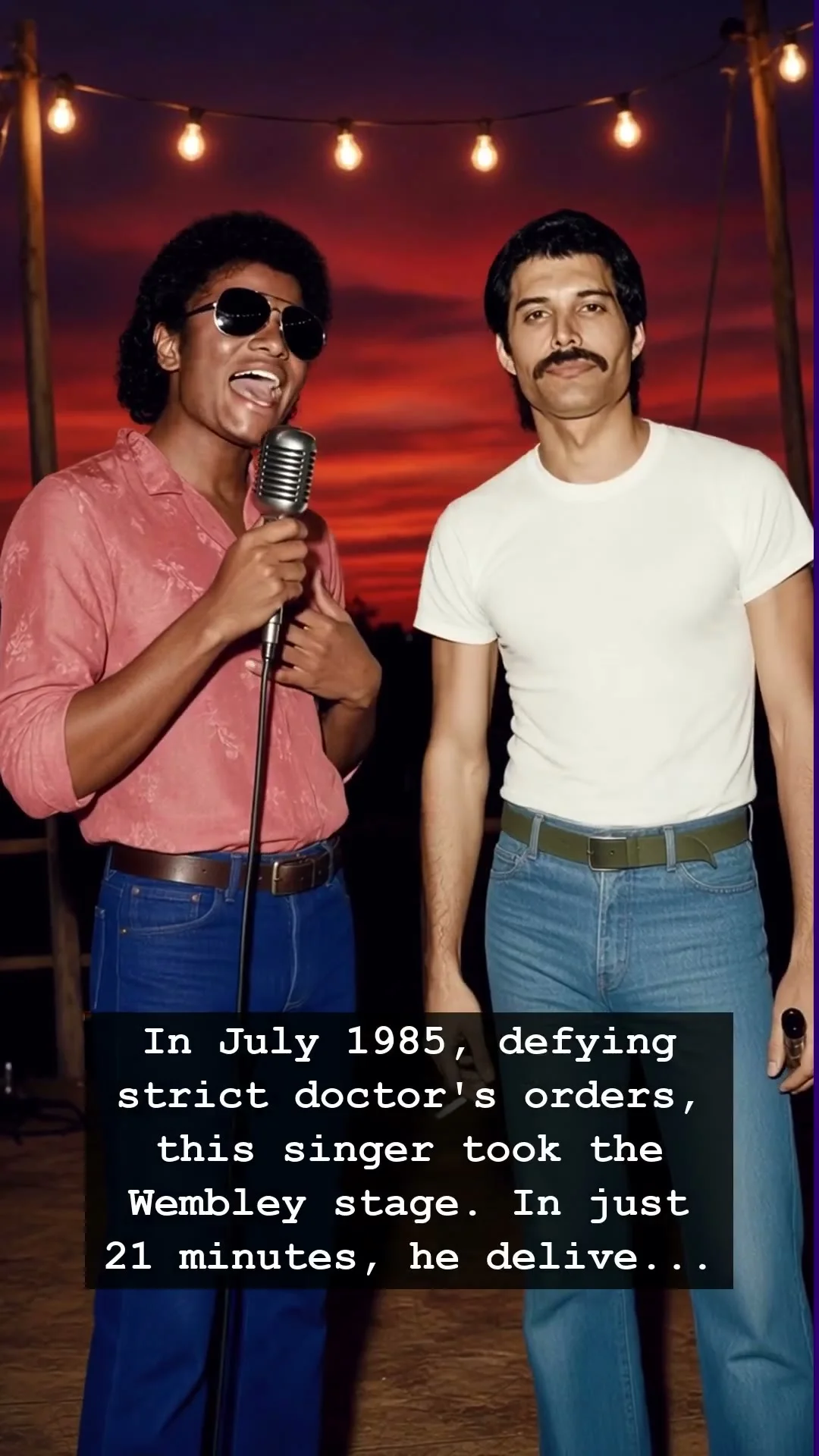
The summer of 1985 was draped in the neon glow of MTV and the pulse of the Walkman, but the world stopped spinning on July 13th for exactly twenty-one minutes. At Wembley Stadium, seventy-two thousand souls stood in collective awe as a man walked onto the stage, not just to sing, but to command history. Freddie Mercury, defying strict medical advice and battling the growing whispers of his fading health, stepped into the light. He wasn’t just performing; he was conducting an electric séance that would forever be cemented as the greatest live set in the annals of rock and roll.
To understand the gravity of that afternoon, one must look at the era. This was the age of excess, where the spirit of Live Aid sought to bridge global divides through the raw power of sound. Behind the scenes, the tension was palpable. Many critics and peers doubted that Queen could hold their own against the heavyweights of the day. Freddie Mercury knew the stakes. He had a throat ailment that terrified his doctors, who warned him that the strain could cause permanent damage. Yet, as the familiar opening chords of Bohemian Rhapsody echoed through the massive venue, the pain vanished into a transcendent display of pure, unadulterated musical genius.
Witnessing Freddie Mercury that day was like watching a man bridge the gap between human frailty and god-like charisma. He didn’t just sing to the front row; he locked eyes with the back benches, turning a massive stadium into an intimate club. The way he manipulated the crowd—the call-and-response, the swagger, the sudden shifts from delicate piano ballads to soaring rock anthems—was a masterclass in stagecraft. It was the peak of Arena Rock, a moment where the sheer energy of a performer could eclipse every production value in existence.
Behind the golden spotlight lay the darker, more human narrative of a superstar living under immense pressure. The shadow of his health was always there, a secret weight carried amidst the roar of the fans and the blinding glare of fame. Yet, during those twenty-one minutes at Wembley, the vulnerability disappeared. Freddie Mercury gave everything he had, leaving nothing on the table. It was a defiant act of love for his audience, a performance that proved his voice was not just a tool, but a legacy that would outlive the era of cassette tapes and global telethons.
Decades later, the legend of Freddie Mercury remains untarnished. We revisit those clips not just for the music, but to remember a time when rock and roll felt truly dangerous and infinitely powerful. He taught us that greatness isn’t about being untouchable; it is about standing up when the world expects you to fall. As the final notes of We Are the Champions faded into the London sky, the music industry shifted forever. Do you still feel the echo of that magic today?