
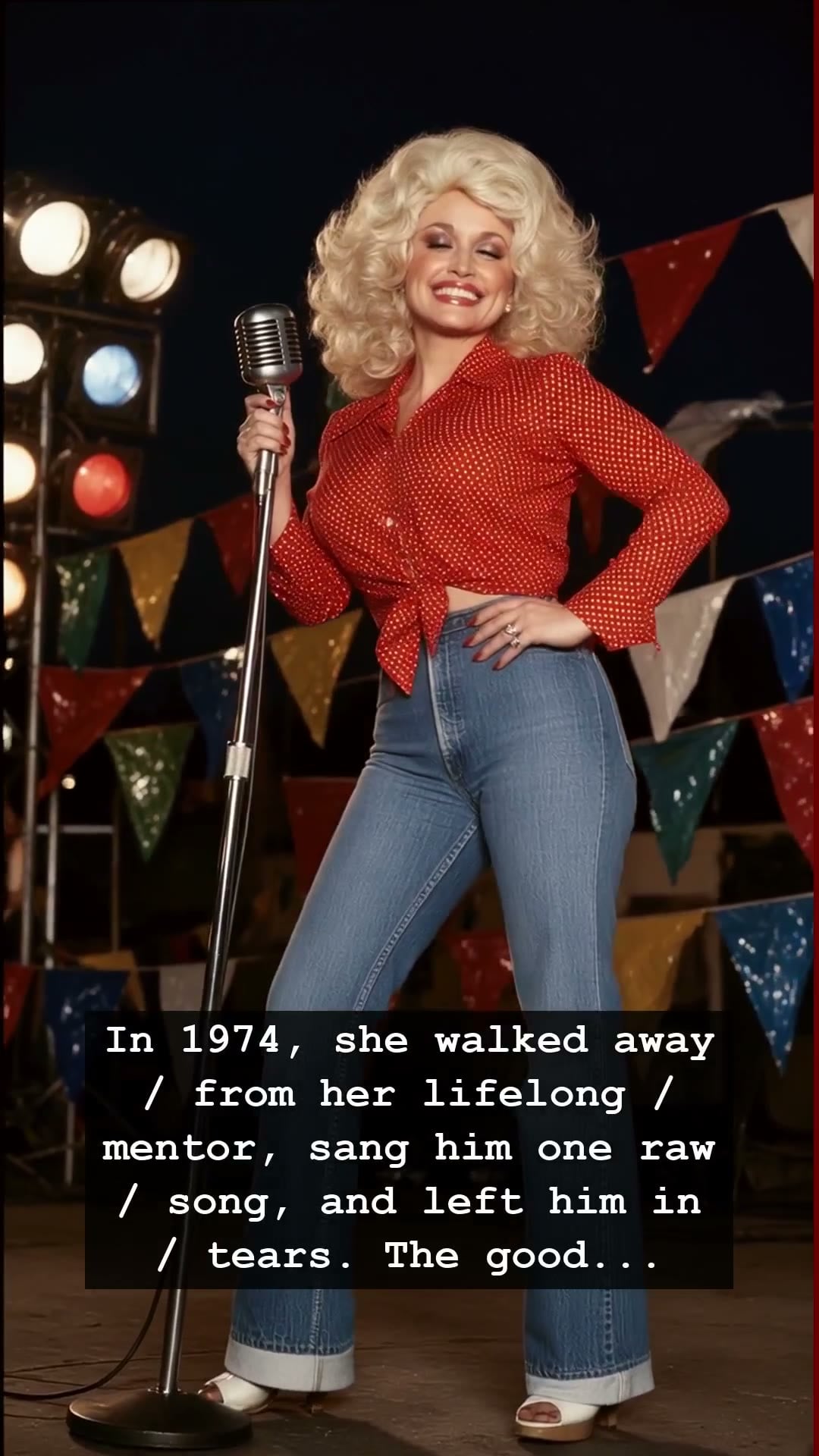
In 1974, the air inside the recording studio was thick with a tension that only true heartbreak can cultivate. Porter Wagoner, the towering figure of country music and the man who had propelled a young Dolly Parton into the national spotlight, stood frozen as the woman he had mentored for seven years prepared to leave him. He had seen her blossom from a local talent into a star on the hit television program The Porter Wagoner Show, but their professional marriage had become a cage. As the magnetic tape began to roll, Dolly Parton didn’t reach for a contract or a list of grievances. Instead, she did what she did best; she poured her soul into a song that would become the most famous resignation letter in music history.
That song, I Will Always Love You, was written not as a ballad of romantic ending, but as a tender, agonizing farewell to a creative partnership that had turned sour. The room was silent, save for the soft, trembling notes of her voice. As she sang the chorus, she watched her mentor’s face crumble. For years, the country music establishment had been built on the sturdy foundations of the Jukebox era, where artists were often expected to stay in their lane and under the control of their producers. Yet, Dolly Parton knew that her evolution required her to step out of the shadow of a man who, despite his immense contribution to her success, was stifling her creative growth.
Their conflict was a classic tale of artistic clashing. Wagoner was a traditionalist, a man of the old guard who saw Dolly as his discovery, while she was a visionary with an ambition that reached far beyond the limitations he placed upon her. The drama of their parting wasn’t just about a change in management; it was a cultural shift. It was the moment the industry realized that the woman who looked like a porcelain doll was made of iron. When the final note faded into the studio air, the silence that followed was heavy with the weight of lost years and the frightening uncertainty of a solo career.
Years later, when the song reached a global audience through the power of cinema and the soaring vocals of later interpretations, the original intent remained rooted in that small 1974 studio. That moment of raw, authentic vulnerability is why we still return to their story today. It captures a universal truth about the pain of outgrowing a mentor and the courage required to walk away from a comfortable, albeit restrictive, golden cage. It was a milestone in country music history that transcended the charts, mirroring the turbulent spirit of the seventies where change was the only constant.
We often romanticize the legends of the past, but the story of Dolly Parton and Porter Wagoner reminds us that behind every iconic melody lies a human struggle. It wasn’t just a business exit; it was an emotional reckoning. Today, when we hear those opening notes, we aren’t just listening to a hit song. We are eavesdropping on a private, tear-filled goodbye that changed the landscape of American music forever. Does the melody still pull at your heartstrings the way it did all those years ago?