
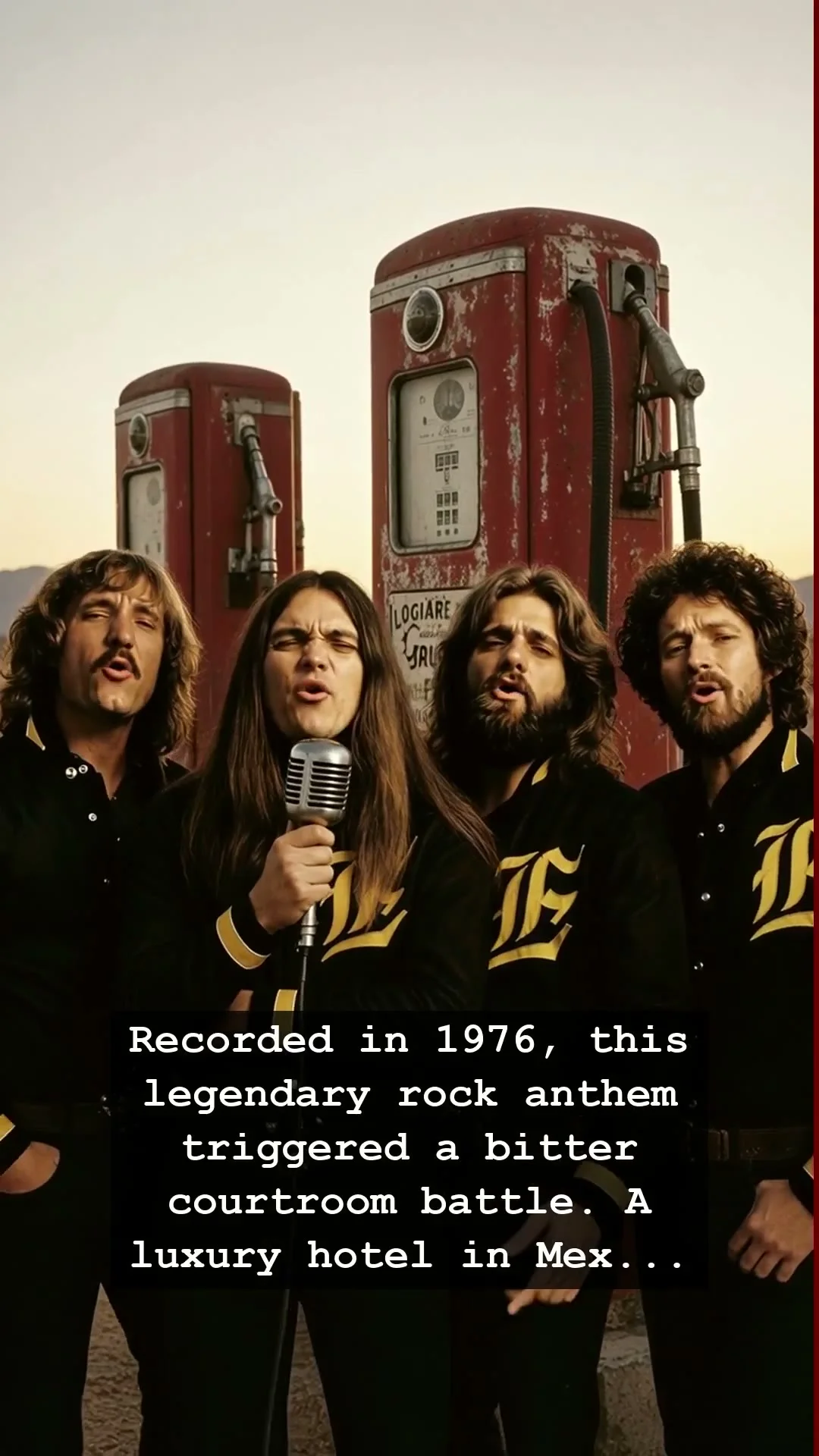
When the soft, melodic arpeggios of the opening guitar riff drifted through the airwaves in 1976, no one could have predicted that Hotel California would eventually transform from a rock masterpiece into a fierce legal battlefield. For the Eagles, this haunting anthem was intended as a cynical commentary on the excess and self-destruction of the Southern California music scene. Yet, decades after the song became the soundtrack to a generation, its legacy took a bizarre and litigious turn, proving that even in the world of classic rock, the ghosts of the past never truly go to sleep.
The drama erupted when the legendary band found themselves in a bitter courtroom confrontation with a real-life luxury hotel in Baja, Mexico. The establishment, which had marketed itself under the name Hotel California, found itself in the crosshairs of the Eagles. The band argued that the hotel was trading on the fame of their song to mislead travelers into believing there was a genuine connection between the property and the eerie, metaphorical desert inn described in their lyrics. It was a clash between the myth of the song and the reality of commercial trademark rights, turning a timeless mystery into a very modern, very expensive legal headache.
To understand the gravity of this dispute, one must remember the atmosphere of the mid-seventies. This was an era defined by the rise of the FM radio empire, the ubiquity of the jukebox, and the intoxicating, hollow promise of the American Dream. The Eagles had captured the paranoia and the indulgence of the time perfectly. The song was never about a specific building, but rather a state of mind—a place you could check into but never leave. By dragging the song into a courtroom, the essence of the track felt suddenly anchored to a mundane, physical property, stripping away some of the mystic dread that fans had spent forty years decoding.
The irony was not lost on the legions of devoted followers who had spent decades speculating about the song’s true location. Whether it was the mental wards of California or the debauchery of the Sunset Strip, the song thrived on its ambiguity. The legal war forced the band to confront the reality that their intellectual property had become so woven into the cultural fabric that businesses were literally trying to inhabit it. It was a jarring reminder that in the music industry, the line between art and product is often blurred, and even the most revered icons are not immune to the cold demands of corporate ownership.
Despite the bitterness of the litigation, the music remains untouched by the pettiness of legal filings. The soaring guitar solos and the cryptic, velvet-voiced storytelling of Don Henley and Glenn Frey continue to define the sound of the era. Whether you are listening on a dusty cassette deck or a digital stream, the song still transports you to that lonely desert highway. It stands as a testament to a time when rock music was a powerful, dangerous force, capable of haunting both the listener and the law. Perhaps, in the end, it was always meant to be a song that couldn’t be escaped.