
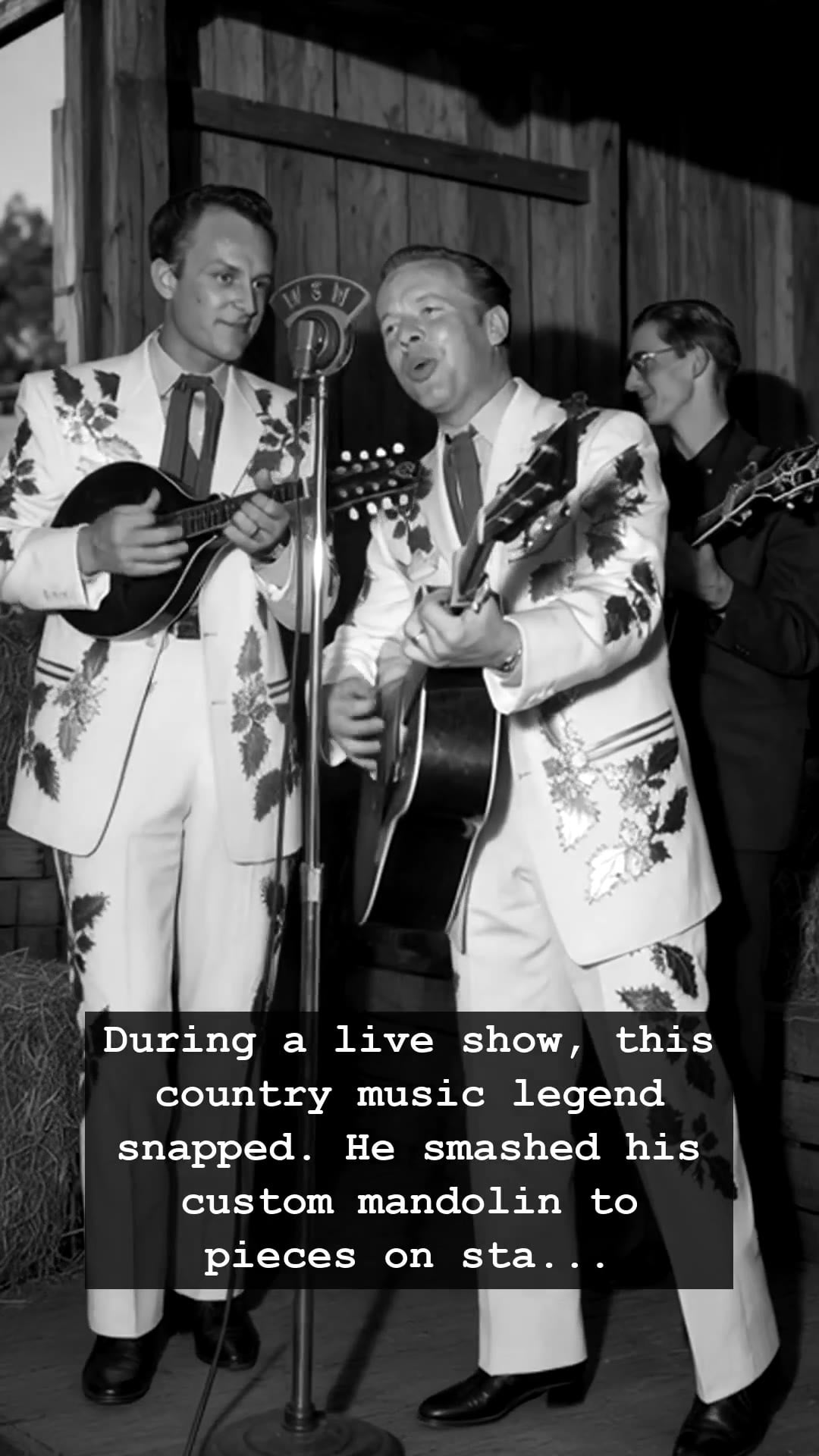
The golden age of country music promised a pristine image of angelic harmonies and wholesome, porch-swing values. But beneath the polished veneer of the mid-century radio dial, a storm was brewing. Few stories capture the volatile intersection of divine musical talent and human fragility quite like that of The Louvin Brothers. To the public, Ira and Charlie Louvin were the masters of blood harmony, two voices blending so perfectly they seemed ordained by heaven. Yet, behind the curtain, their relationship was a pressure cooker of resentment, religious guilt, and alcohol-fueled rage that threatened to consume them both.
The most shocking manifestation of this tension occurred during a live performance that left their audience paralyzed in disbelief. In a sudden, explosive fit of fury, Ira Louvin, a man whose mandolin playing defined the high-lonesome sound, snapped. Before thousands of onlookers, he took his custom-built instrument and smashed it into splinters against the stage floor. It was a visceral, terrifying moment—the sound of wood cracking mirrored the fractured bond between two siblings who could sing of salvation in perfect unison but could barely stand to look at one another offstage. The audience witnessed the ugly, raw truth that their purest melodies were often born from the deepest personal agony.
Their saga belongs to an era when music was played on vinyl, spun on dusty Jukebox machines, and broadcast into living rooms across America. The Louvin Brothers climbed to the top of the Grand Ole Opry, yet their private life was far from the simple innocence they projected. Ira was a brilliant, volatile force, often battling his own demons, while Charlie struggled to maintain stability in a partnership that felt more like a cage than a career. Their music, marked by sharp, biting lyrics about temptation and retribution, was an honest reflection of the conflict that defined their existence. It was music that demanded attention, echoing the emotional stakes of a time when fame felt like a life-or-death gamble.
The tragedy of The Louvin Brothers remains a cautionary tale of how the weight of the spotlight can exacerbate deep-seated family trauma. Their influence rippled through the decades, leaving a legacy that inspired everyone from The Everly Brothers to modern alt-country artists who crave that authentic, jagged edge. Their songs, like The Great Atomic Power, served as a haunting reminder of the Cold War anxieties that permeated the 1950s, yet it is their complex, broken brotherhood that keeps historians and fans fascinated today. They were the architects of a sound that felt eternal, even as their own world was constantly falling apart.
Looking back at their career, we see more than just a musical duo; we see the cost of total artistic commitment. The smashing of that mandolin was not just an act of violence, but a desperate scream for air in a suffocating partnership. Even today, when we listen to those pristine recordings, the faint vibration of their internal discord adds a haunting layer of reality to every note. The Louvin Brothers remind us that even the most beautiful art is rarely created without a price, and sometimes, the most harmonious songs come from the most fractured souls.