
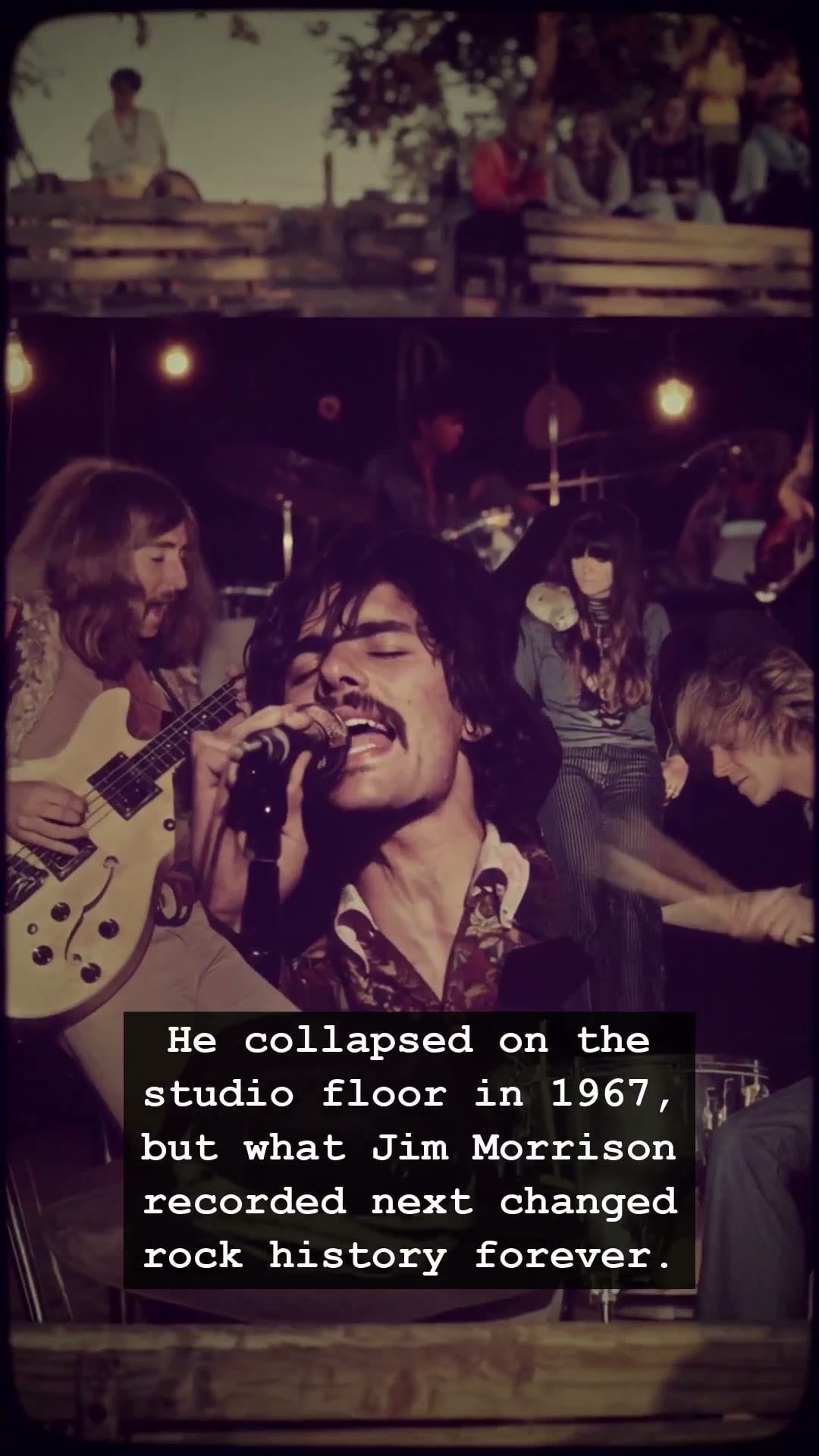
It was 1967, and the air inside Sunset Sound Recorders in Los Angeles was thick with the scent of stale cigarette smoke and the suffocating tension of a band on the edge. The Doors were struggling to capture a sound that felt both ancient and dangerously new. Suddenly, the Lizard King himself, Jim Morrison, crumpled to the studio floor. It was not a grand rockstar exit, but a raw, physical surrender to the exhaustion and chemical excess that defined the era. The session came to a grinding halt, and for a moment, the music died. But what happened in the silence that followed would solidify the band’s place in history and birth one of the most haunting climaxes in rock music.
Most fans know The Doors for their radio-friendly hits, but the true essence of Jim Morrison lay in the shadows of their longer, improvisational pieces. As the studio lights dimmed, Morrison dragged himself back to the microphone. He wasn’t just singing; he was exorcising demons. The engineers watched in stunned silence as he began to deliver a performance that felt less like a vocal take and more like a visceral confession. His voice, strained and weathered by the decadence of the late sixties, bled into the track with an intensity that defied explanation. This wasn’t just a song; it was a psychological descent into the blue abyss.
In the era of Woodstock and the flower power movement, Jim Morrison stood as the dark, poetic antithesis to the peace and love ideology. He was the embodiment of the Dionysian spirit, a man who viewed the stage as a sacrificial altar. His collapse that night was symptomatic of a larger tragedy, one that would haunt him until his premature death in Paris. While the world saw the leather pants and the magnetic charisma, those close to the production process knew the price of his genius. He pushed his vocal cords to the breaking point, chasing a visceral reality that modern studio production often polished away into oblivion.
This specific moment of raw vulnerability is why the music of The Doors remains immortal decades later. When you listen to those tracks today, through the hum of a vintage turntable or a worn-out cassette, you are hearing the sound of a man confronting his own mortality. Morrison did not hide behind the studio technology of the time; he leaned into the grit, the mistakes, and the heavy atmosphere of the room. It is a stark reminder of a time before the digital age, when musicians bled for their art and the studio was a sanctuary for both madness and brilliance.
Today, we look back at the sixties as a golden age, but we often forget the jagged edges that made the era so profound. Jim Morrison was the sharpest edge of them all. His collapse in 1967 wasn’t just a minor headline; it was the birth of a legend that continues to challenge our understanding of rock stardom. As the echoes of his voice fade, we are left to wonder how much of himself he really left on that studio floor, forever trapped in the grooves of a record that will never stop haunting our dreams.