
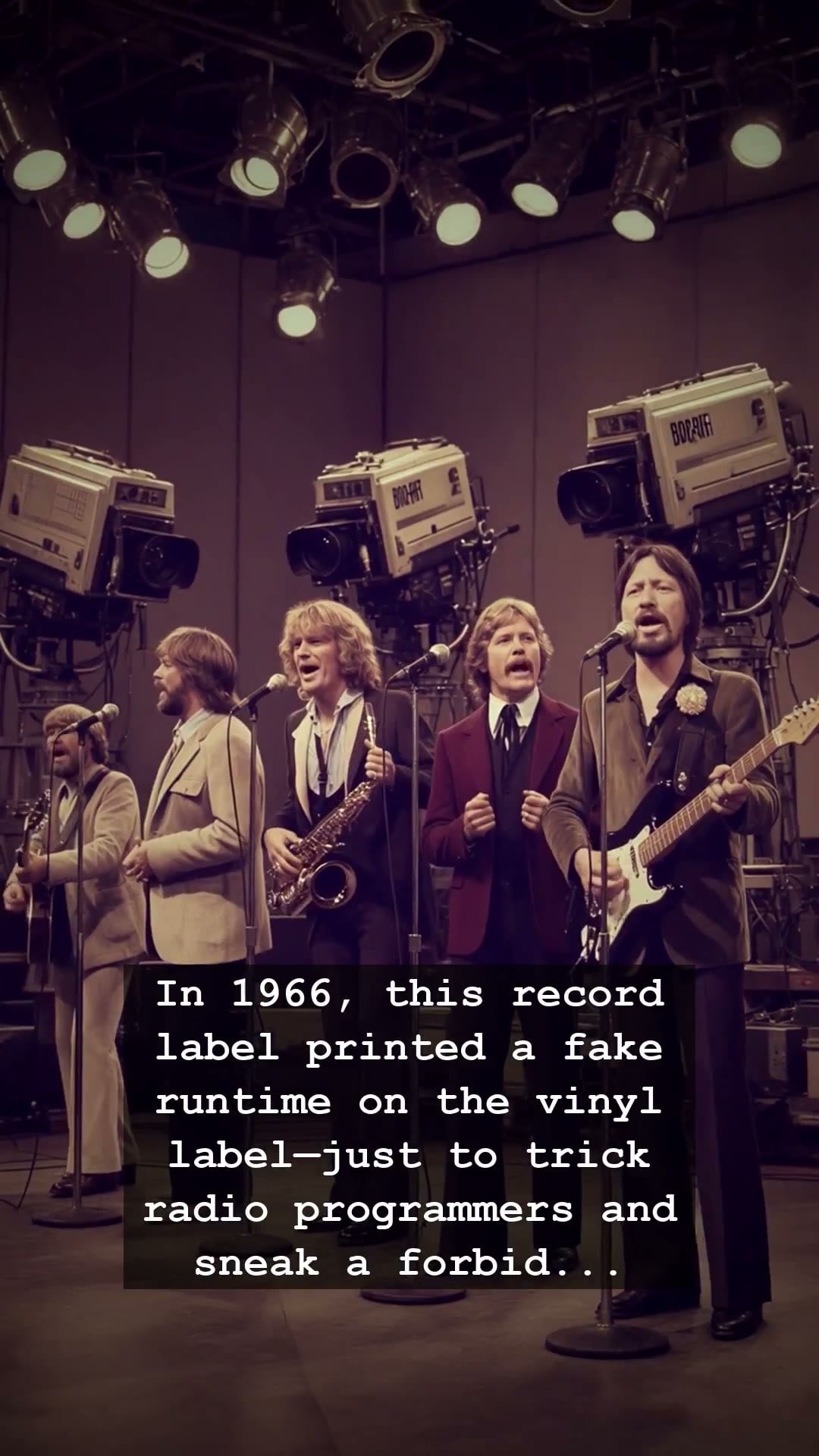
It was 1966, an era defined by the crackle of a vinyl record on a warm turntable and the golden age of the AM radio dial. In the world of pop music, radio programmers held all the power, enforcing strict rules on song lengths to keep the hits moving. If your song was too long, it was relegated to the cutting room floor, never to be heard by the masses. The Association, a burgeoning harmony-driven vocal group, found themselves staring at this very wall with their breakthrough track, Along Comes Mary. They knew they had a masterpiece on their hands, but its unconventional runtime posed a massive threat to its survival on the airwaves.
Faced with a system that demanded brevity, the band’s label hatched a daring, almost cinematic scheme that would make modern music executives blush. They didn’t just hope for a favor; they pulled off a high-stakes deception. By printing a fake, shorter runtime on the vinyl label, they essentially smuggled the song past the watchful eyes of strict station managers. It was a classic 1960s rebellion, a moment of corporate sleight-of-hand that allowed The Association to sneak their forbidden, slightly elongated masterpiece straight onto the playlists of America.
The song was a sonic departure from the standard bubblegum pop of the era. With its intricate harmonies and driving rhythm, Along Comes Mary captured the nervous, shifting energy of the mid-sixties. When it finally hit the air, listeners were instantly hooked, unaware that they were hearing a track that had defied the rigid protocols of the industry. The Association had successfully navigated the labyrinth of fame and regulation, using a little bit of mystery and a lot of nerve to ensure their music reached the ears of millions of teenagers tuning in on their transistor radios.
This story is more than just a footnote in music history; it is a testament to the friction between artistic ambition and commercial control. The Association rose to prominence during a time when the music business was a wild landscape of shifting alliances and payola scandals. While groups like The Beach Boys were pushing the technical boundaries of the studio, The Association were mastering the art of the perfect radio hook. Their success proved that sometimes, a little bit of rule-breaking is the only way to let true talent shine through the static.
Decades later, the legacy of The Association reminds us of a time when the physical record label was the gatekeeper of culture. Today, we might stream music with a single tap, but we have lost some of that legendary drama that defined the 1960s music scene. The next time you drop the needle on an old vinyl record, think back to that 1966 gamble. It serves as a haunting, beautiful reminder that every great song has a story, and sometimes, the best ones involve a little bit of chaos to make it to the top of the charts.