
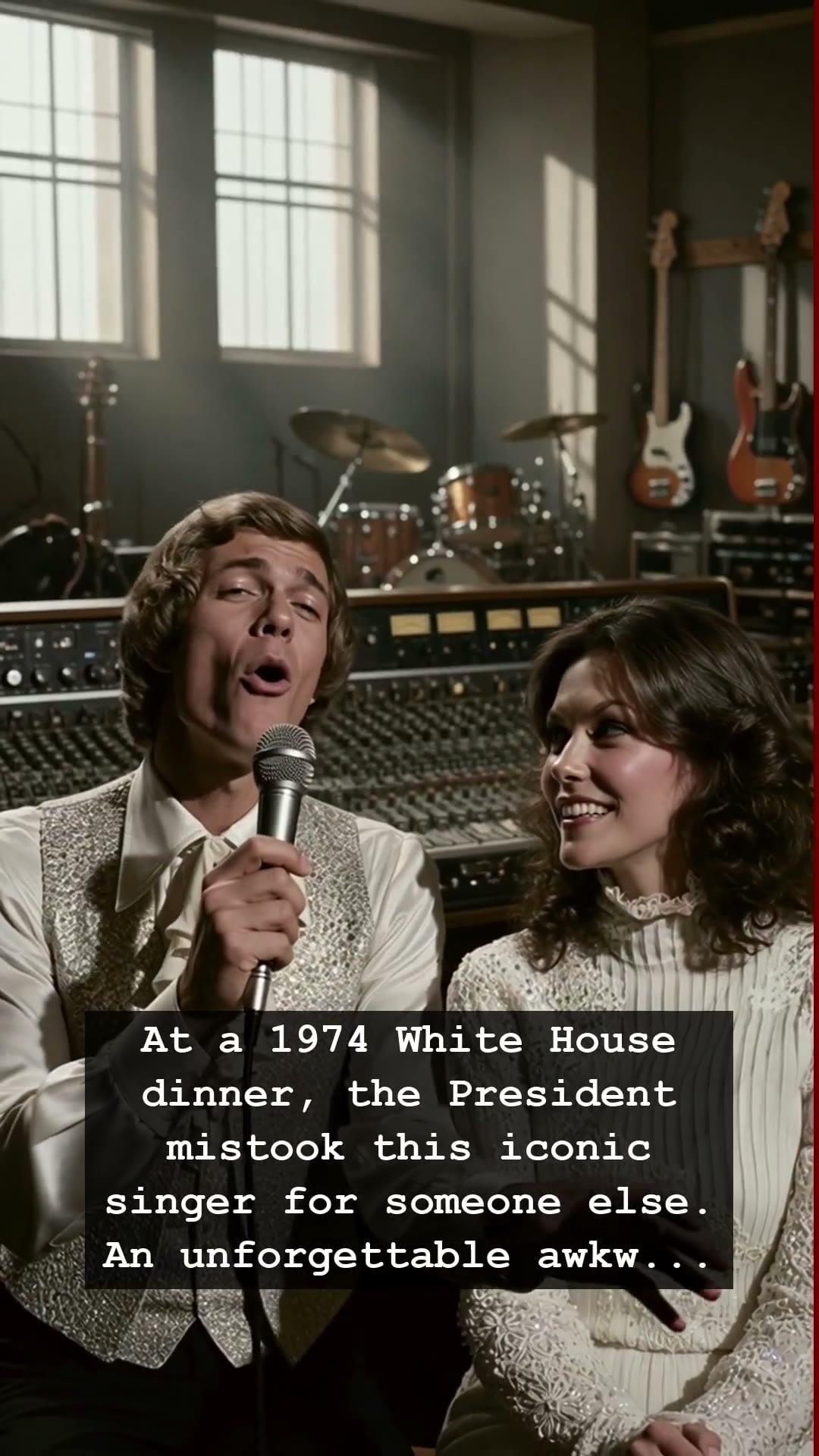
It was 1974, a year defined by the flickering glow of television sets and the soft, polished melodies of The Carpenters dominating the airwaves. America was head-over-heels for Karen Carpenter, whose voice felt like a warm embrace during a decade defined by political uncertainty. Yet, beneath the velvet-smooth harmonies and the impeccably produced hits, a quiet, stinging humiliation awaited at the most prestigious stage in the nation. During a state dinner at the White House, the President of the United States stood to address the room, his eyes scanning the crowd before landing on the soft-spoken icon. In a moment of pure, cringing confusion, he praised her—but used the name of the legendary Peggy Lee instead. For a woman whose musical identity was her entire world, the mistake was a jarring reminder that even among the elite, she was often seen merely as a prop in the background of history.
This awkward encounter serves as a lens into the bittersweet reality of The Carpenters. While their music was the soundtrack to a generation, accompanying long drives with a Walkman or lazy afternoons listening to a Jukebox, the reality for Karen and her brother Richard was far from the sunny, optimistic imagery projected on their album covers. The 1970s were a transformative era, but for Karen, the immense pressure of global stardom was beginning to take a toll. Her voice, so perfectly clear and emotionally resonant, was becoming a gilded cage. While the world marveled at her technical perfection, few saw the deep, underlying struggle that would eventually turn this national darling into a tragic symbol of the dark side of fame.
What makes the legacy of The Carpenters so haunting today is that juxtaposition between the pristine beauty of their sound and the fragility of Karen’s life. The era of the 1970s was shifting toward more rebellious sounds, yet their soft-pop aesthetic remained an anchor for millions. The White House blunder was merely a microcosm of a larger cultural dismissal; she was an icon, yet she was constantly fighting for recognition as an artist rather than just a singer. It is this specific vulnerability that keeps their music alive in our collective memory. We listen to tracks like ‘Close to You’ not just for the melody, but for the haunting ghost of the woman behind the microphone.
Decades later, the sting of that 1974 dinner feels strangely poignant. It highlights the fleeting nature of celebrity and the quiet battles fought in the public eye. The music of The Carpenters remains timeless, a testament to a perfection that was both a gift and a heavy burden. Whenever that familiar melody fills a room today, it brings back the nostalgia of a bygone era, reminding us that even the most beautiful voices carry stories of profound, hidden sorrow. Do you remember where you were when you first heard the golden voice of Karen Carpenter?