
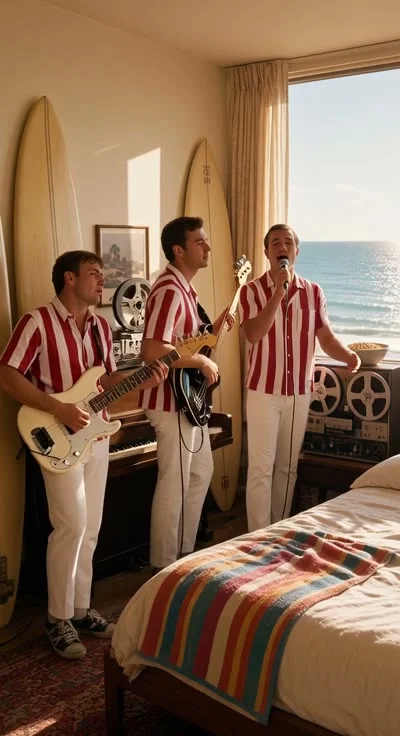
In 1966, the airwaves were crowded with upbeat surf-rock anthems and sunshine melodies. For the American public, The Beach Boys were the quintessential purveyors of California dreaming—a group defined by shimmering harmonies, fast cars, and the endless summer. But behind the scenes, Brian Wilson was spiraling into a deep, introspective creative crisis. He was tired of being the golden boy of pop. He wanted more. He wanted to bare his soul. When he sat down to compose what would become the legendary Pet Sounds album, he risked his entire career on a single, brutally honest opening line that would ultimately rewrite the history of pop music.
The lyric was simple yet devastating: ‘I may not always love you.’ When Brian Wilson presented this to his collaborator Tony Asher, the air in the studio grew heavy. In an era where radio stations played polished, high-energy tracks designed to keep teenagers dancing at the local jukebox, such a vulnerable admission felt like professional suicide. Everyone around him was terrified. They feared the song would be blacklisted, seen as an insult to the happy-go-lucky brand The Beach Boys had spent years cultivating. But Wilson knew something they didn’t: the world was changing, and the golden era of innocence was beginning to fracture.
As the needle dropped on ‘God Only Knows,’ the musical landscape shifted. It wasn’t just about the lyrics; it was the orchestration. Wilson pushed the limits of the recording studio, layering baroque instrumentation and complex, haunting harmonies that felt like a bridge between the classic doo-wop of the 1950s and the psychedelic exploration of the late sixties. This was not the music of the boardwalk; it was the sound of a man confronting his own existential dread. The song managed to transcend the radio formatting that had previously governed American hit-making, proving that vulnerability could be a commercial force.
This moment remains a pivotal turning point in the history of rock and roll. It shattered the mold, paving the way for artists to experiment with introspection rather than just radio-friendly hooks. While the rest of the world was catching up to the sound of the Beatles, The Beach Boys were busy reinventing the very architecture of the pop song. The tension between the band’s public persona and Wilson’s private darkness created a friction that gave their music a raw, cinematic quality that still resonates today.
Looking back, we can see why this story continues to fascinate. It reminds us that the greatest art often emerges from our most fragile states. Brian Wilson didn’t just write a hit; he gave a generation permission to feel complicated emotions. Whether you first heard these tracks on a crackling transistor radio or through modern headphones, the legacy of The Beach Boys lives on. Their music remains a testament to the fact that when you trade artificial perfection for brutal honesty, you don’t just sell records—you change the world for good.