
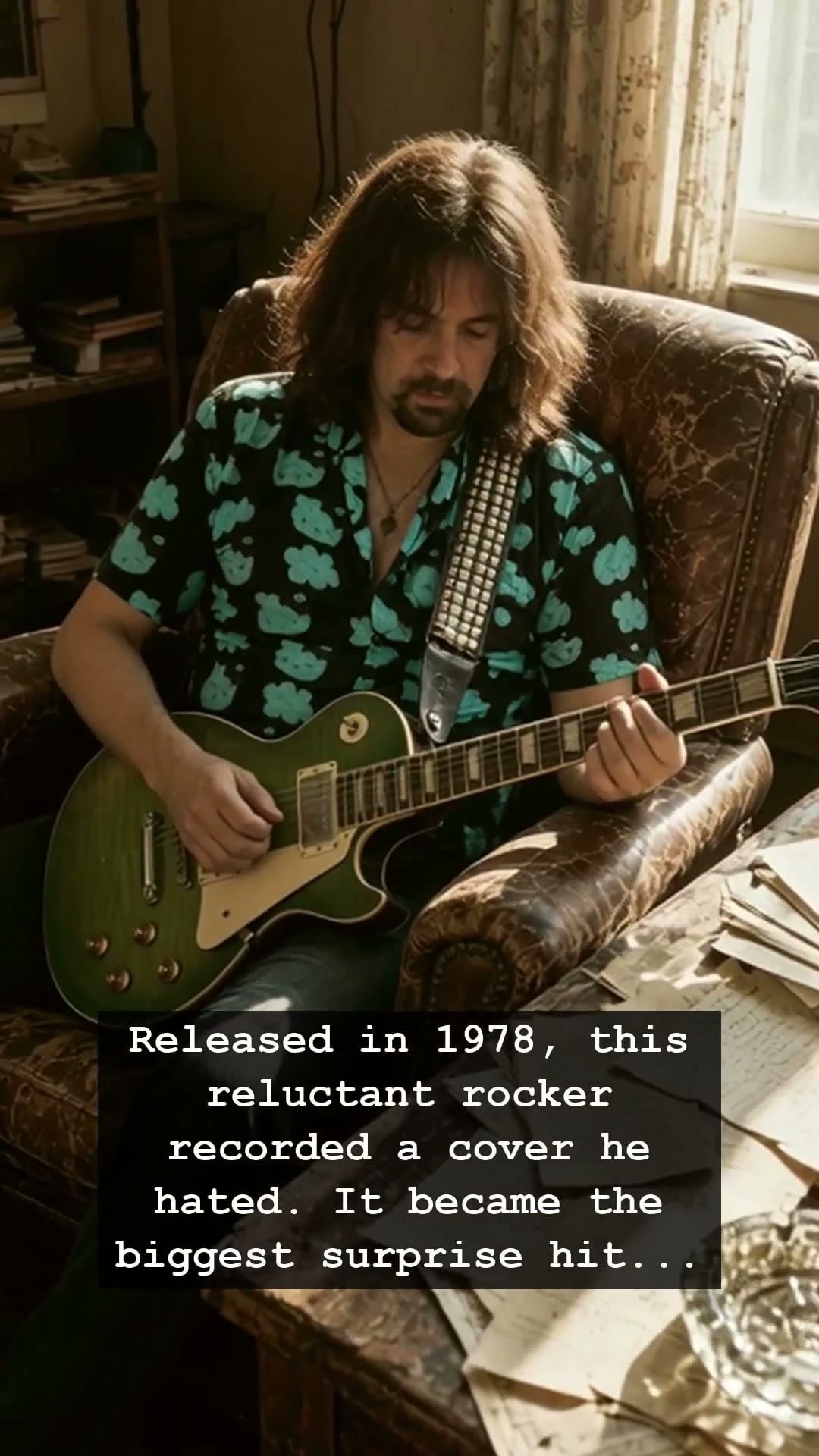
In the sweltering summer of 1978, the four members of KISS were at the height of their global dominance, yet the cracks in their foundation were growing wider by the day. To appease their egos and solve internal friction, the band made an unprecedented move: all four members released solo albums simultaneously. While Gene Simmons and Paul Stanley were busy chasing mainstream perfection, the band’s reluctant lead guitarist, Ace Frehley, was hiding away in his studio, nursing a drink and harboring a deep-seated disdain for the track that would define his entire career. He had been strong-armed by his label and bandmates into recording a cover song he felt was entirely beneath his rock and roll pedigree.
The song was New York Groove, a glam-infused tune originally performed by the British group Hello. Ace Frehley, a man whose heart beat to the rhythm of gritty, blue-collar rock, absolutely hated it. He felt the track was too pop, too soft, and far removed from the pyrotechnic thunder that made KISS a household name. He reportedly fought the decision to include it on his solo album, feeling like a puppet being forced into a dance he didn’t want to perform. Yet, in the golden age of the jukebox and the neon-soaked excess of the late seventies, the public didn’t care about the artistic integrity of a reluctant rocker. They heard the infectious, driving beat, and they couldn’t get enough of it.
When the single hit the airwaves, the result was nothing short of miraculous. New York Groove didn’t just perform well; it crushed every release from his bandmates, skyrocketing to the top of the charts and becoming a massive glam rock triumph that surpassed anything the rest of the band put out that year. For a brief moment in 1978, the guitarist who rarely took the spotlight found himself eclipsing the legendary personas of The Demon and The Starchild. It remains a fascinating anomaly in music history, a song fueled by the artist’s own resentment that somehow captured the frantic, electricity-charged pulse of New York City.
Looking back at that era through the haze of the Walkman and the legendary nights at Studio 54, the success of this track serves as a reminder that rock and roll is often unpredictable. Ace Frehley, with his leather-clad cool and rebellious spirit, accidentally created a masterpiece he never wanted. The irony is as thick as the greasepaint he wore during those stadium-filling performances. It was a time when excess was the law of the land, and even a reluctant performance could be polished into pure gold by a public hungry for a catchy hook and a bit of mystery.
Today, hearing those opening synths still transports listeners back to a time when guitar heroes were gods and record stores were the cathedrals of youth. Ace Frehley eventually learned to live with the hit, though it stands as a testament to the strange, serendipitous nature of fame. Sometimes, the songs we hate the most are the ones that end up cementing our legacy forever. Do you still find yourself tapping your foot when those iconic chords kick in?