
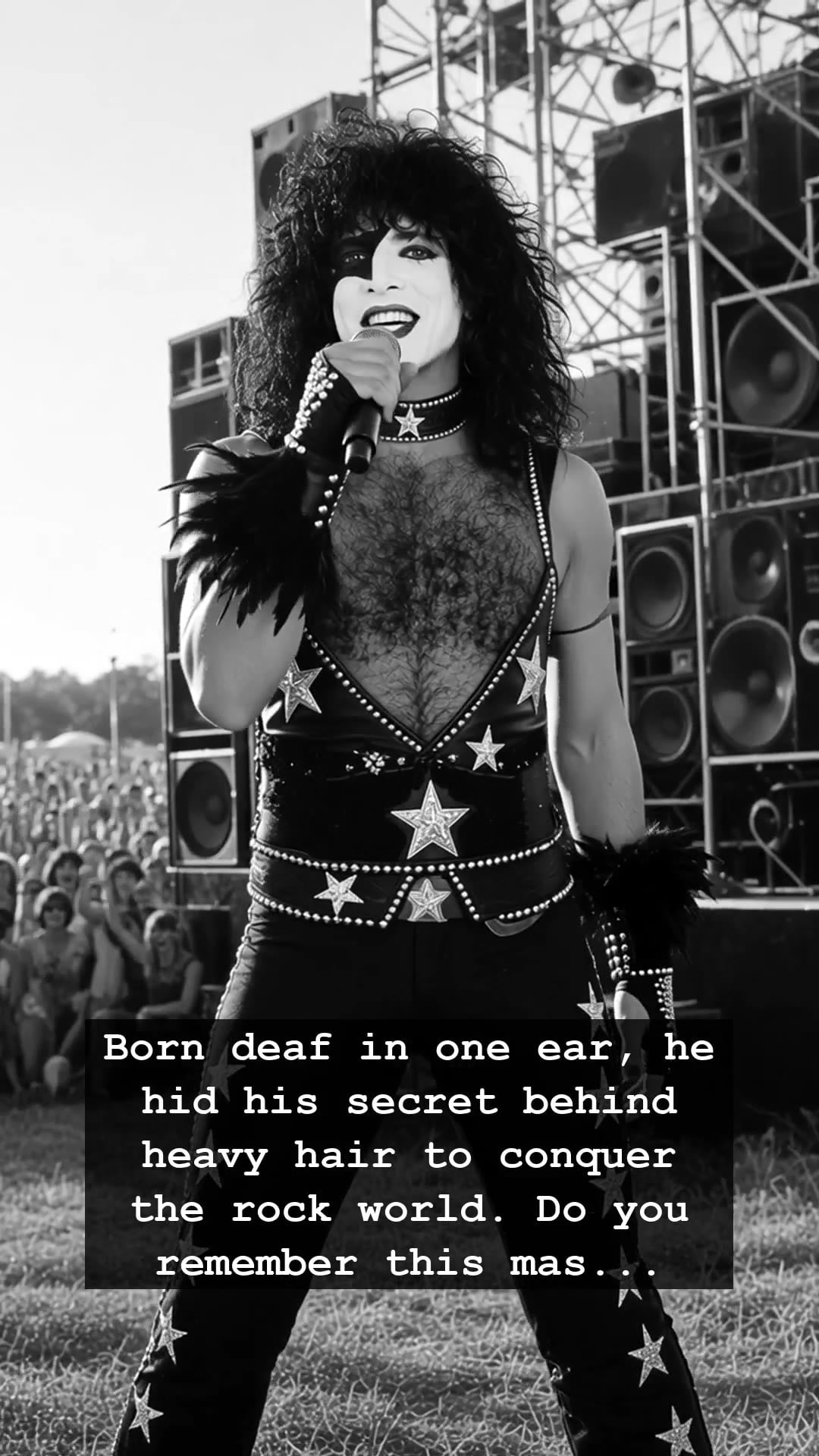
Behind the electrifying makeup and the roaring stadium crowds of the 1970s, one of rock history’s most enduring icons was harboring a secret that could have shattered his dreams before they even began. Paul Stanley, the charismatic frontman of the legendary band KISS, stood at the center of the arena rock explosion with a voice that defined a generation. Yet, for decades, the man known as the Starchild navigated the deafening chaos of world tours while being completely deaf in his right ear. Born with a congenital condition called microtia, Paul Stanley spent his formative years in the shadow of a physical insecurity that he feared would mark him as an outcast in the ruthless music industry.
In the era of the high-octane Jukebox hits and the birth of MTV, image was everything. To the millions of fans who idolized the band, Paul Stanley was a flawless titan of rock and roll. He carefully cultivated his look, using his iconic, voluminous hair to shield his ear and his vulnerability from the public eye. Every time he stepped onto the stage, he wasn’t just performing; he was defying biology. The vibration of the amplifiers, the thunderous beat of the drums, and the screaming adoration of thousands were filtered through a reality that few of his peers could ever comprehend. His ability to hit those soaring high notes while struggling with auditory equilibrium remains a testament to his sheer, unadulterated willpower.
This secret was more than just a medical reality; it was the engine that drove his relentless pursuit of perfection. Throughout the late 70s and early 80s, while disco clubs like Studio 54 were changing the nightlife landscape, Paul Stanley was busy rewriting the rules of the stadium spectacle. He channeled his isolation into the music, creating anthems that resonated with every teenager who felt like a misfit in their own skin. The heavy greasepaint was never just a costume; for Stanley, it was armor that allowed him to control how the world perceived him, effectively hiding his silence behind a wall of sound and spectacle.
Looking back at that golden era of glam metal and arena rock, it is impossible not to feel a sense of profound awe for what Paul Stanley accomplished. His struggle adds a layer of raw, human grit to the legend of KISS. It reminds us that behind the pyrotechnics, the flashy leather, and the global fame, the greatest stories in rock music are often the ones whispered in the dark. He didn’t just survive the cutthroat world of 1970s rock; he conquered it, transforming his deepest insecurity into the very thing that made him a god of the stage.
Today, as we look back through the lens of nostalgia, Paul Stanley stands as a symbol of triumph over limitation. His journey resonates deeply because it mirrors the universal human desire to be heard, even when the world seems quiet. Whether you first heard his voice on a crackling cassette tape or watched him command the stage on a flickering television screen, the legacy of Paul Stanley is proof that passion can overcome any obstacle. As the final echoes of his career eventually fade, we are left with the undeniable truth that true rock and roll is felt, not just heard.