
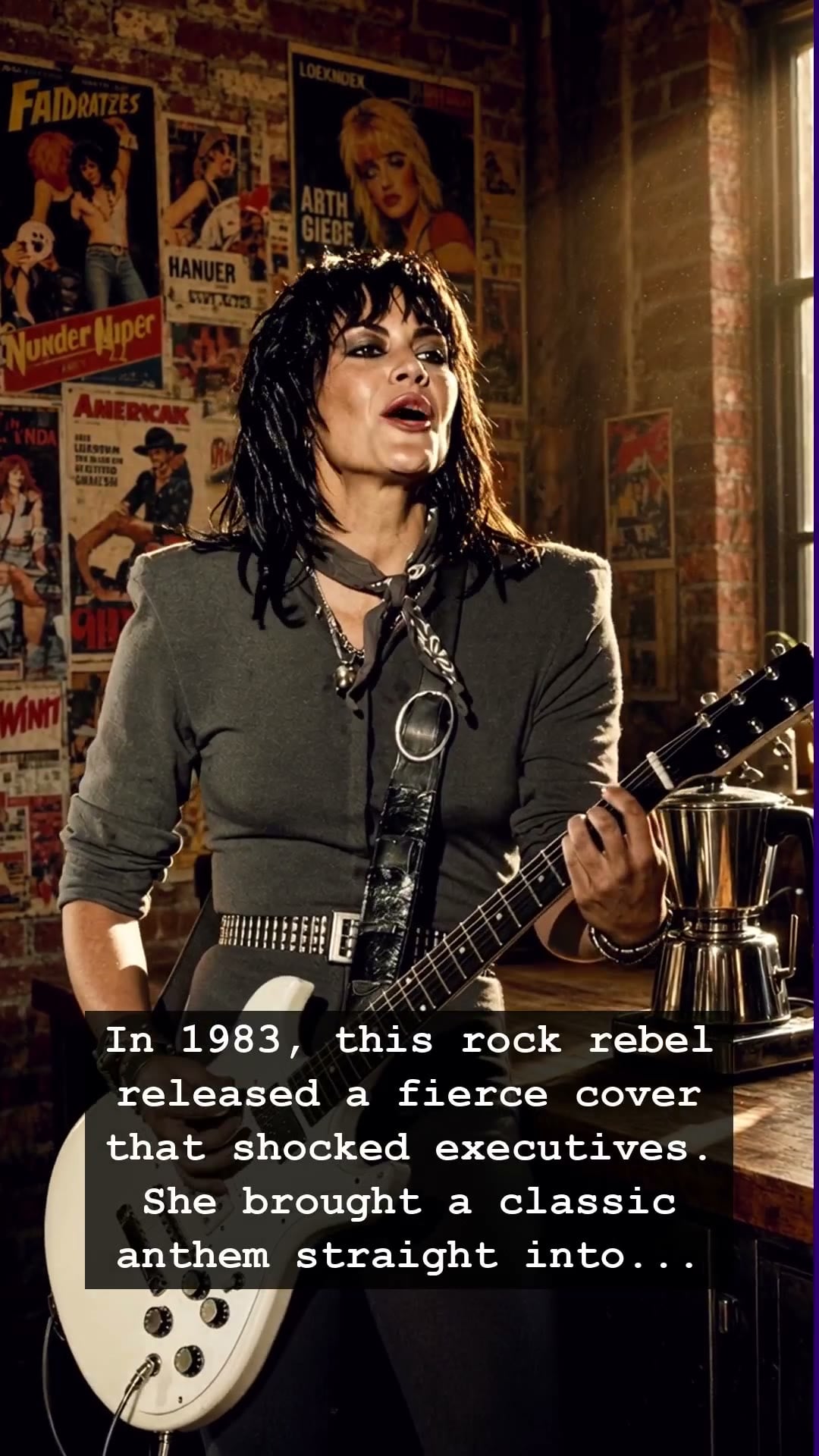
The year was 1983, a time when the landscape of music was undergoing a tectonic shift. Neon lights were flickering to life, the Walkman had transformed how we consumed sound, and a brand-new television channel called MTV was rapidly becoming the sole arbiter of cool. In the middle of this high-gloss, synth-pop-dominated era, one woman stood out like a jagged blade in a silk-lined room. Joan Jett, already a punk icon, decided to take a gamble that terrified the conservative record executives of the time. She chose to drag a forgotten, gritty anthem kicking and screaming into the modern age, proving that real rock and roll could never be tamed by video production budgets or hairspray.
Joan Jett was never one for following the industry handbook. By 1983, she had already carved out her own path away from the wreckage of The Runaways. When she set her sights on covering Crimson and Clover, the industry suits were paralyzed with doubt. They wanted pop polish and predictable hits; Joan Jett wanted the raw, visceral heat of a classic song delivered with a punk rock sneer. She wasn’t just performing a cover; she was reclaiming the soul of a generation that felt increasingly alienated by the synthetic sounds pouring out of the radio. The tension in the studio was palpable as she leaned into the microphone, her leather jacket a stark contrast to the emerging glittery aesthetic of the decade.
When the track finally hit the airwaves and the music video exploded onto the fledgling MTV, it was a moment of pure, unadulterated defiance. Executives had worried that her rough-edged sound wouldn’t fit the sleek visual medium of the new television age, but the audience proved them wrong instantly. Joan Jett brought a street-level authenticity that resonated deeply with kids who were tired of the manufactured idols of the time. She turned the song into a manifesto, a bridge between the gritty underground rock of the seventies and the MTV-fueled hunger for rebellion that defined the early eighties.
This era was defined by excess and dramatic shifts, yet Joan Jett managed to remain refreshingly consistent. She was the antithesis of the stadium-filling, pyrotechnic-heavy bands of the time, opting instead for a minimalist, high-impact approach. Watching her perform, you didn’t see a product; you saw a force of nature. That sense of danger she brought to every riff is exactly what made her a legend. While others were obsessed with perfecting their image for the cameras, Joan was busy cementing her place in history as the queen of rock and roll cool.
Decades later, the power of that 1983 rebellion still echoes in our playlists. It reminds us of a time when the music felt like a secret handshake between the artist and the audience, a shared energy that transcended the screen. Do you remember where you were when that iconic opening riff first cut through the noise? Even today, whenever that familiar rhythm kicks in, we are transported back to that electrifying moment when Joan Jett showed the world that rock and roll belongs to the rebels.