
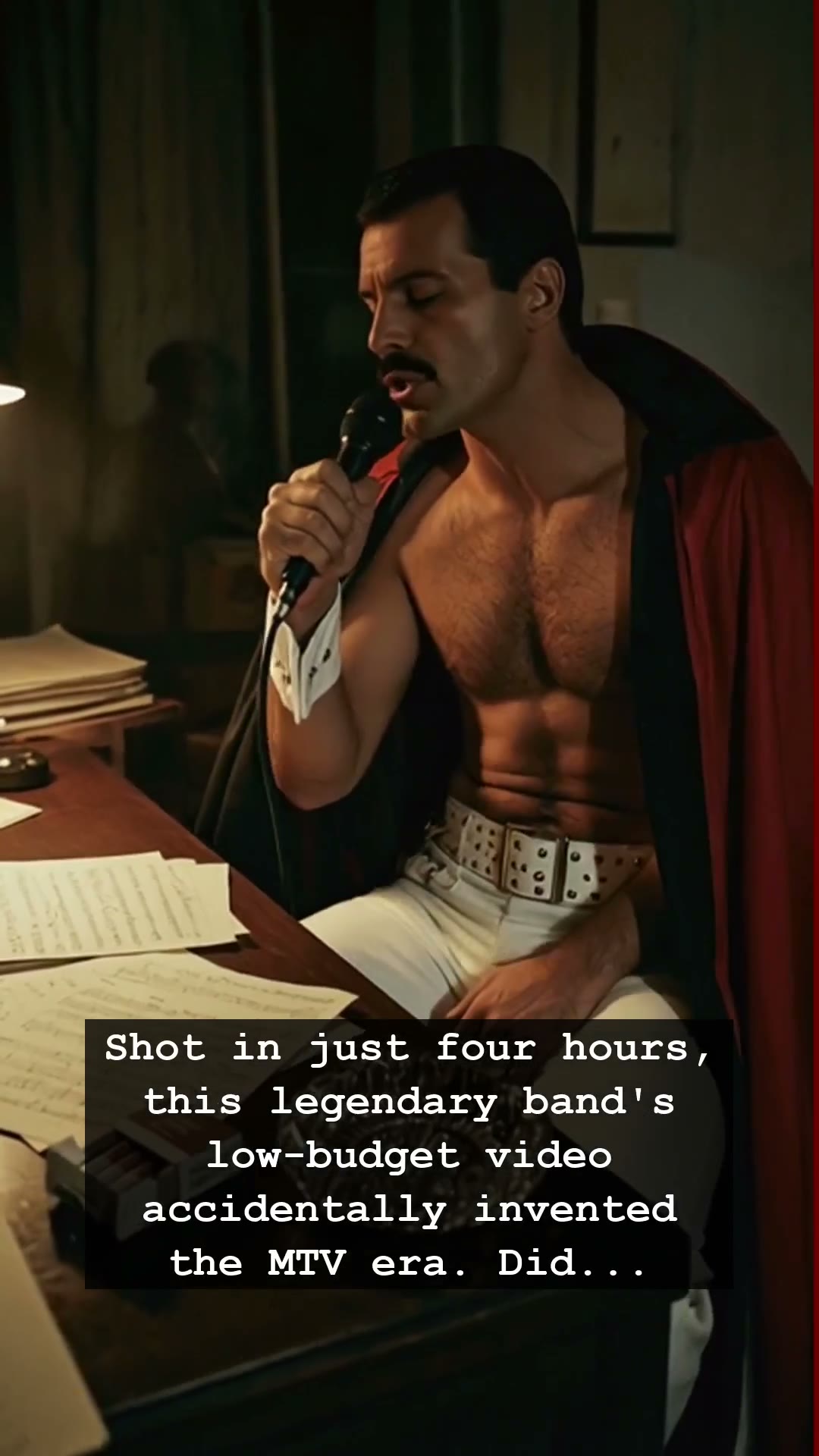
It was 1975, a time when the world was tethered to the glow of the radio and the crackle of vinyl spinning on a turntable. The music industry was a creature of traditional broadcast, where artists were rarely seen unless they graced the stage of a late-night television show or a rare concert tour. Then came four men from London who dared to construct a six-minute operatic masterpiece that defied every rule in the book. Queen had created a track that radio stations deemed far too long and structurally bizarre for the charts, yet they were committed to promoting their vision without the grueling exhaustion of a television appearance. Little did they know, the low-budget solution they found would inadvertently trigger a cultural tsunami.
The story of the Bohemian Rhapsody promotional film is one of desperate necessity turned into high art. Freddie Mercury, Brian May, Roger Taylor, and John Deacon arrived at Elstree Studios with a minuscule budget and only four hours to spare before their next rehearsal. They weren’t trying to make history; they were trying to fulfill a requirement for Top of the Pops without having to travel. Under the strobe lights and against a dark backdrop, they filmed the iconic composition in a quick, frenetic burst of creative intuition. When the footage was delivered, it bypassed the usual gatekeepers of the era, landing directly on the desks of broadcasters who were unprepared for the visual intensity of a rock band singing in four-part harmony.
This four-hour shoot became the blueprint for the entire music industry. Before the term ‘music video’ was even a standard part of our lexicon, Queen had effectively created the prototype. When MTV launched years later in 1981, they were hungry for content to fill their 24-hour broadcast cycle, and the Bohemian Rhapsody clip stood out as the gold standard of what could be achieved. It was theatrical, mysterious, and deeply immersive, transforming the band from mere audio performers into larger-than-life icons of the screen. The era of the Walkman and the Jukebox was shifting, and suddenly, you didn’t just listen to the music—you watched it.
Looking back, it is astounding how a band fighting against the industry’s limitations accidentally defined the next three decades of pop culture. Freddie Mercury’s commanding stage presence and the band’s avant-garde aesthetic proved that music was no longer just a sonic experience; it was a visual narrative. This moment changed the way record labels marketed their stars and the way fans connected with their idols. The grit and the drama of those four hours at Elstree Studios paved the road for every stadium-filling act that followed, proving that sometimes, the most groundbreaking revolutions are born from a simple need to get the job done.
Today, Queen remains a testament to the power of artistic rebellion. Their legacy is etched into the very fabric of our musical history, reminding us of a time when the world was smaller, yet the ambitions were infinite. As you listen to those sweeping operatic harmonies today, take a moment to imagine the band in that dimly lit studio, unaware that they were about to flip the switch on the MTV era forever. It was a fleeting moment in history, but one that continues to echo through every screen we own.