
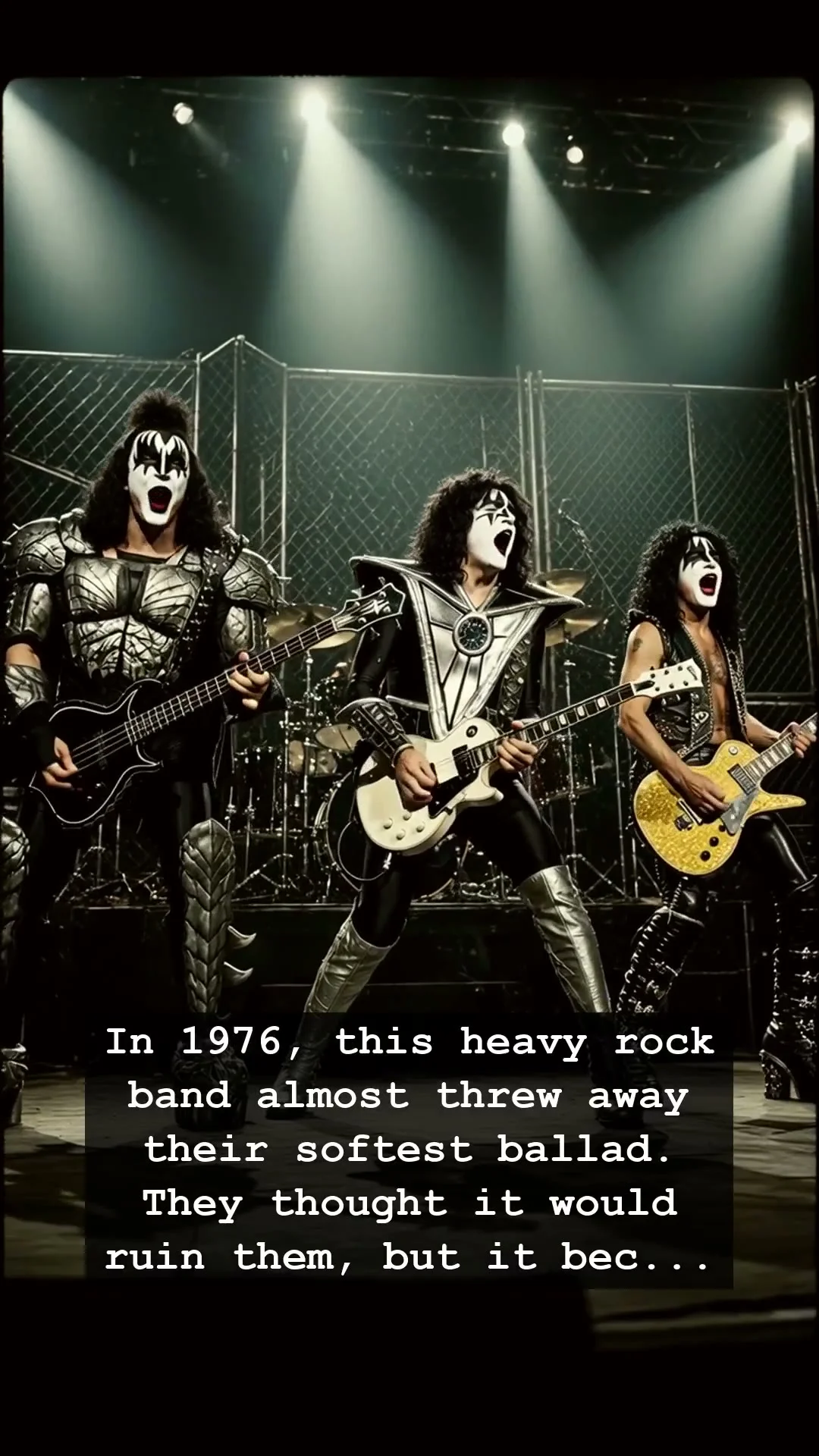
In the mid-1970s, the world of rock and roll was defined by spectacle, greasepaint, and the thunderous power of amplifiers. KISS was the undisputed king of this aesthetic, terrifying suburban parents while captivating millions of teenagers who saw their faces painted in iconic black and white. They were the architects of a monstrous stage persona, built on blood-spitting, pyrotechnics, and pure, unfiltered hard rock. Yet, in 1976, while the band was locked away in a studio, they stumbled upon a sound that would fundamentally shift their trajectory—a song so delicate that their management was convinced it would effectively kill their career and destroy the brand they had meticulously constructed.
That song was Beth. It was an anomaly in the KISS catalog, a raw, piano-driven ballad that felt miles away from the grit of Detroit Rock City. When the band first presented the track, the tension in the room was palpable. The management team viewed the song as a betrayal of the band’s hard-rock identity. They feared that if the fans heard the band softening their edges, the mystique of the unstoppable rock gods would evaporate into thin air. For a group that built its name on Jukebox anthems and rebellious stadium energy, transitioning into the realm of sentimental balladry felt like a high-stakes gamble with their very existence on the line.
Against the backdrop of an era dominated by the rise of FM radio and the increasing commercial polish of the late seventies, the band insisted on taking the risk. They pushed for the inclusion of Beth as a B-side, hoping it might slide under the radar without compromising their image. They could not have been more wrong. The song struck an immediate, visceral nerve with the public. It wasn’t just another rock hit; it was a vulnerable, melancholic confession that proved even the most hardened rock stars had a soft, human interior. It climbed the charts with a momentum that defied their management’s grim predictions, eventually becoming the band’s highest-charting single in the United States.
The success of Beth forced the music industry to rethink what a hard rock band was truly capable of achieving. It allowed KISS to transcend their initial gimmicks and prove they were songwriters of genuine depth. The song became a staple of their legendary live shows, a moment where the pyrotechnics died down and the audience could finally connect with the melody. It remains a poignant reminder of a time when the lines between radio formats were blurring and the power of a single song could change a band’s destiny overnight.
Looking back, the story of Beth is more than just a musical success; it is a testament to the power of artistic intuition over corporate fear. It bridged the gap between the stadium rockers and the mainstream audience, securing the band’s legacy long after the glitter and greasepaint were packed away. As we revisit the dusty vinyl of the seventies, it is clear that this ballad didn’t ruin them—it humanized them. It remains a beautiful, haunting piece of rock history that still resonates with every fan who understands that beneath every mask, there is a heart that beats in time to the music.