
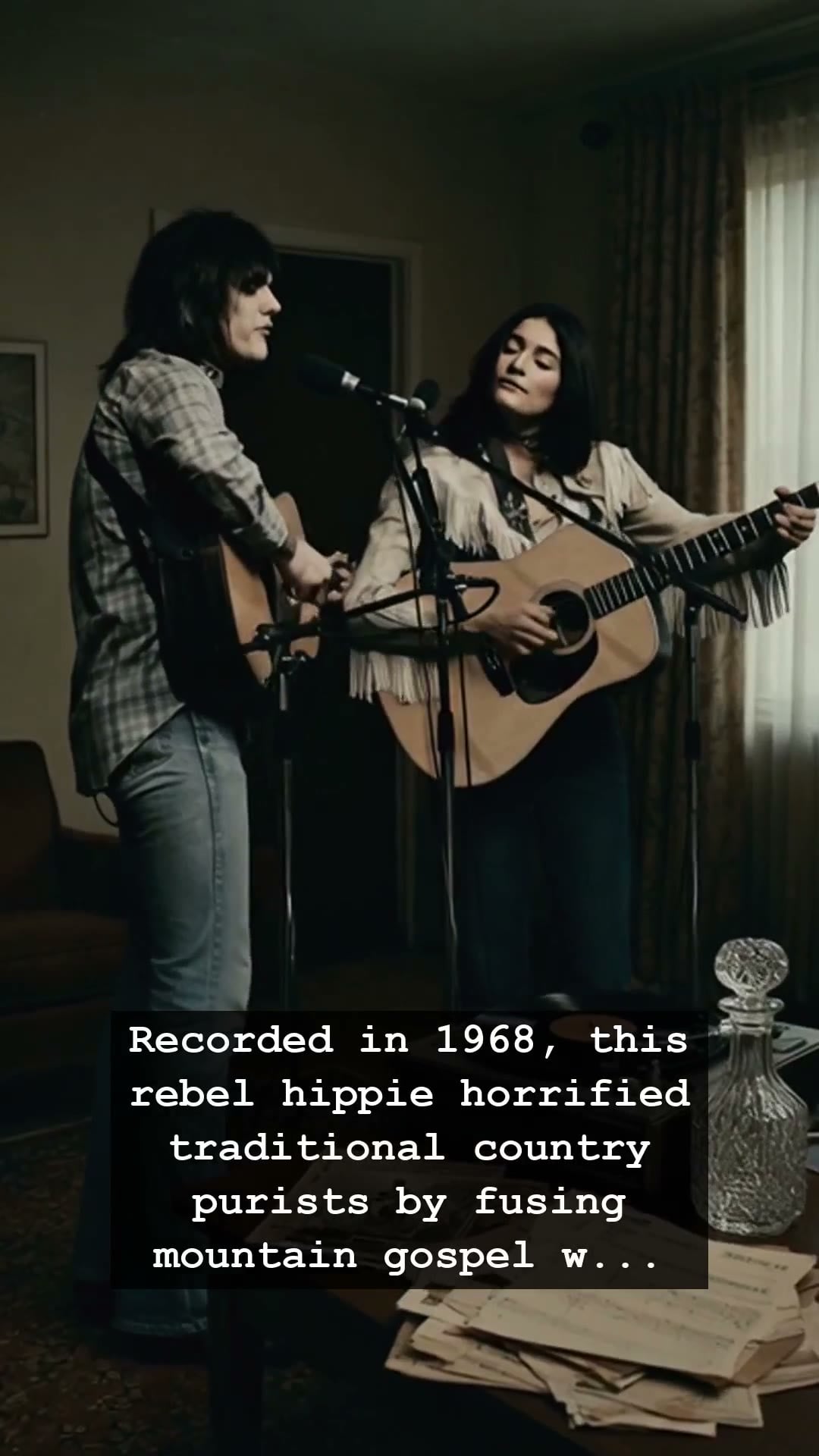
In 1968, the hallowed halls of the Grand Ole Opry were not just traditional; they were a fortress of musical orthodoxy. But then came Gram Parsons, a leather-clad rebel with a vision that felt like heresy to the purists. While the radio waves were crowded with the polished sheen of the era, Parsons was busy stitching together the raw ache of mountain gospel with the mind-bending textures of psychedelic rock. It was a sound that defied categorization, a bridge built between the dusty porch steps of the South and the neon-soaked haze of the counterculture. To the old guard, it was sacrilege, but to a generation seeking truth, it was a revolution.
Gram Parsons was never a man built for the constraints of mainstream stardom. Born into immense wealth but haunted by profound family tragedy, he walked through the music industry like a ghost who had forgotten how to fade away. When he entered the studio, he wasn’t just recording tracks; he was documenting his own existential unraveling. By infusing the cosmic wanderlust of the late sixties into the bedrock of country music, he created what we now recognize as the foundational blueprint for country rock. It was a haunting blend of pedal steel and reverb that made even the most hardened city dweller feel the deep, lonesome pull of the Appalachians.
Think back to the days of AM radio humming through a dashboard speaker or the rhythmic clicking of a needle dropping onto a vinyl record. That was the era where Gram Parsons thrived, drifting between the Byrds and his own band, the Flying Burrito Brothers. He lived in a world where Studio 54 was a fever dream, yet he remained tethered to a vision of music that felt ancient, holy, and slightly dangerous. He didn’t just play songs; he curated an atmosphere of melancholic beauty that felt as expansive as a desert highway at midnight, capturing the exact moment when the optimism of the sixties curdled into something far more complex.
His life was a volatile mix of creative genius and self-destruction, a classic narrative of the rock star as a tragic martyr. The pressure to conform was immense, yet Parsons leaned into his own dissonance. He drank deep from the wells of indulgence, and his personal struggles eventually became the dark engine of his art. When he eventually succumbed to his demons at the young age of twenty-six, he left behind a legacy that grew larger in his absence. He didn’t just leave a discography; he left a path for every artist who wanted to break the rules without losing their soul.
Today, when you hear the echo of a pedal steel guitar woven into an alternative rock ballad, you are hearing the ghost of Gram Parsons. His influence is a hidden thread connecting the rebels of the seventies to the indie icons of today. He remains a timeless enigma, a man who saw no boundary between the sacred and the profane. While the music industry has changed into something unrecognizable, the haunting, raw spirit of his work still whispers to those who look for honesty in the static. Do you still feel the pull of those mountain echoes, or have you forgotten the rebel who once set country music on fire?