
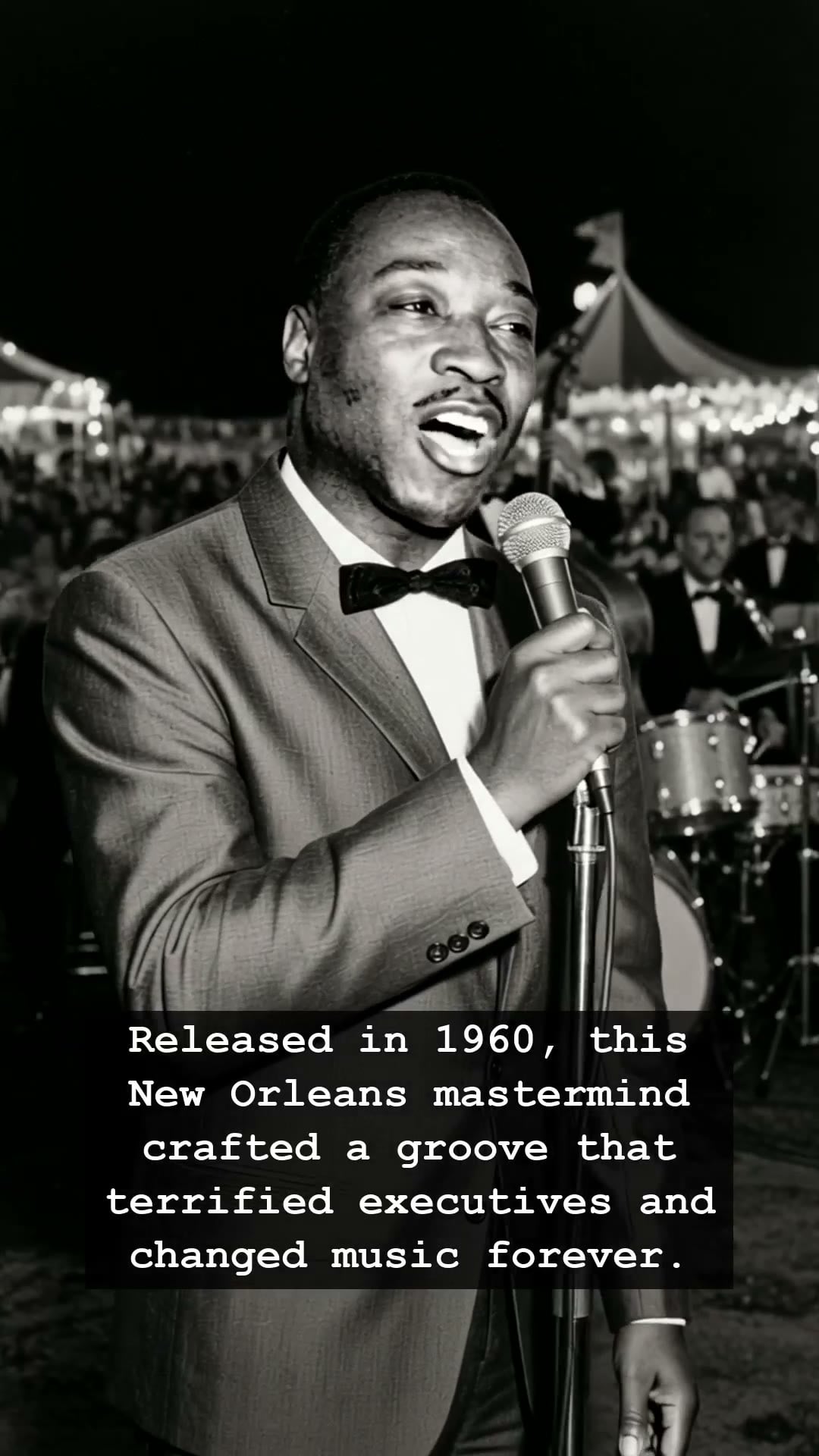
In 1960, the airwaves were dominated by polished, safe pop, but deep in the humid, rhythm-soaked streets of New Orleans, a quiet revolution was brewing. Behind the glitz and the emerging phenomenon of the jukebox era, a singular mastermind named Dave Bartholomew was busy crafting a sonic blueprint that would terrify conventional record executives. While the industry pushed for sanitization, Dave Bartholomew championed a raw, syncopated groove that felt dangerous, infectious, and unmistakably real. It was not just a song; it was a rhythmic earthquake that would eventually launch a global superstar and redefine the trajectory of American music forever.
To understand the magic of Dave Bartholomew, one must understand the environment of the Crescent City. He wasn’t just a songwriter; he was a gatekeeper of sound. Working closely with Fats Domino, he acted as the architect of the New Orleans R&B explosion. He knew that the secret to a hit wasn’t just in the melody, but in the swing—that second-line drum beat that made the floorboards shake. When he entered the studio, he stripped away the pretension. He understood that music needed a pulse, something that spoke to the soul of the listener rather than the pocketbook of the corporate suits who preferred the safety of sterile, big-band arrangements.
Executives were often baffled by the tracks Dave Bartholomew produced. They didn’t understand the grit. They didn’t grasp why a rhythm had to feel so ‘heavy.’ Yet, that very intimidation factor is precisely what made his work timeless. It was the sound of the streets, the sound of late-night jam sessions, and the sound of a musician who refused to compromise his vision for a broader, whiter audience. By layering complex arrangements under seemingly simple melodies, he created a bridge between blues, jazz, and the nascent energy of rock and roll.
Reflecting on this era brings us back to a time before digital perfection, when music was captured in singular, electric takes. Whether you were hearing it on a crackling transistor radio or via a local record store discovery, a song touched by Dave Bartholomew possessed an unmistakable DNA. It captured the sweat of the studio and the spirit of a cultural shift that was about to explode into the psychedelic and soul movements of the late sixties. He was the unsung genius who turned the tide.
Today, the influence of Dave Bartholomew remains woven into the fabric of our sonic history. Even as the era of the walkman and MTV eventually reshaped how we consumed art, the foundation he laid remained unshakable. His ability to fuse technical precision with primal emotion set the standard for generations of producers. As we look back through the golden haze of nostalgia, we realize that without his courage to disturb the status quo, the landscape of rock and pop would be significantly quieter. Listen closely to those records, and you can still hear the heartbeat of New Orleans, orchestrated by a man who taught the world how to truly feel the rhythm.