
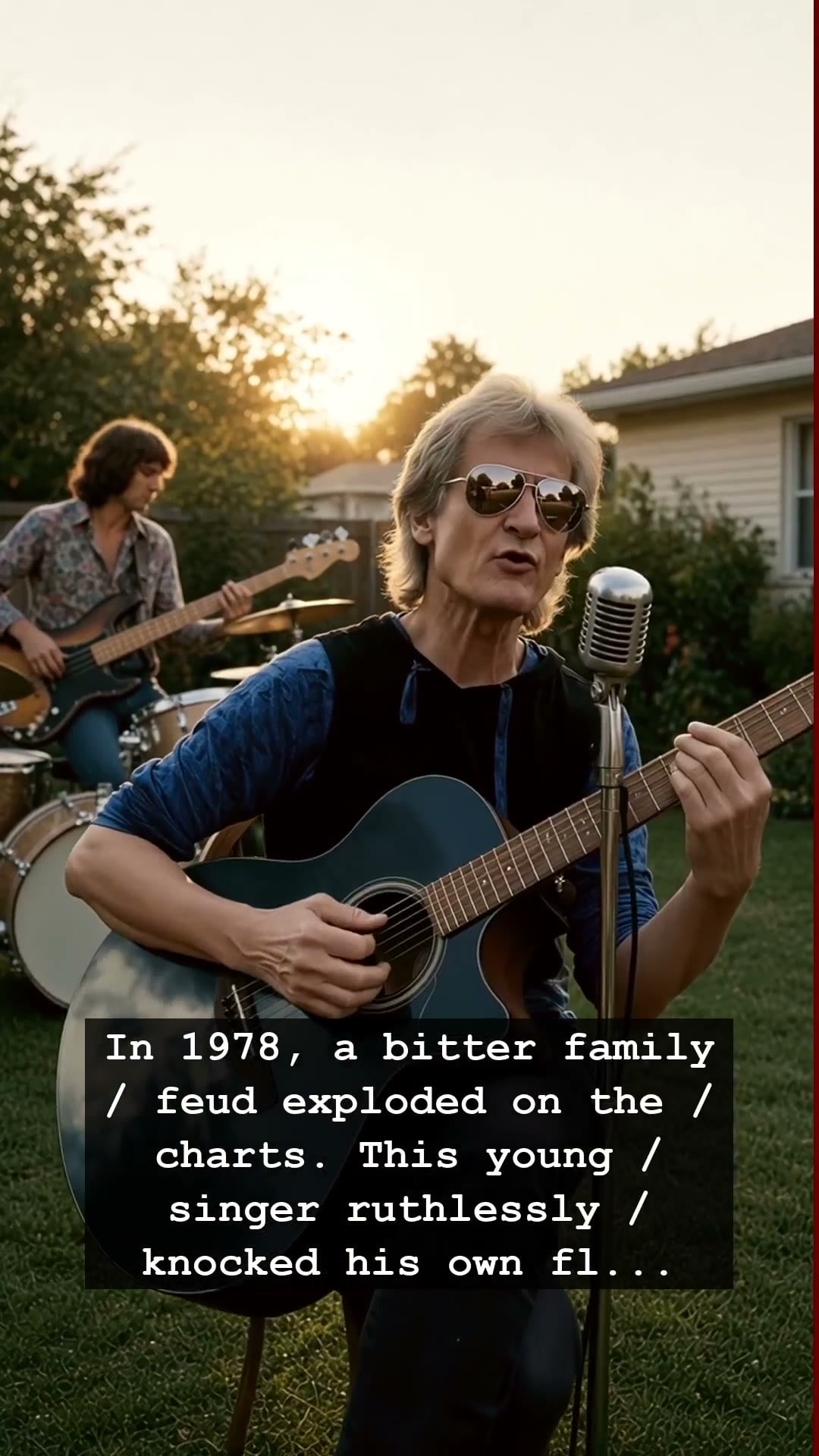
It was 1978, the golden age of the jukebox and the height of a disco fever that had gripped the entire globe. In the neon-soaked air of Studio 54, the Bee Gees were gods, reigning supreme over the Billboard charts with their infectious, falsetto-laden hits. But behind the glitz and the mirrored balls, a strange and quiet revolution was brewing within the same bloodline. A young, golden-haired heartthrob named Andy Gibb was about to pull off the ultimate familial upset, proving that in the ruthless world of the music industry, even brothers are fair game when the trophy is the number one spot.
Andy Gibb was the charismatic youngest brother, a boyish face with a voice that shimmered with pop potential. While his brothers Barry, Robin, and Maurice were busy redefining the sound of an era, Andy was carving his own path. When he released his smash hit (Love Is) Thicker Than Water, the momentum was unstoppable. The song climbed the charts with a ferocity that caught everyone off guard, including the Bee Gees themselves. In a twist of fate that reads like a dramatic screenplay, Andy eventually knocked his own flesh and blood off the top position. It was a moment of immense pride for the family, yet it was laced with the undeniable tension that comes when success turns into a zero-sum game.
This wasn’t just a simple chart movement; it was the birth of a teen idol phenomenon. Andy Gibb possessed a vulnerability that resonated deeply with the youth of the late seventies, a stark contrast to the polished, experienced soul of his older brothers. He was the poster boy of the bedroom wall, the voice of the Walkman generation, and a symbol of the fleeting, high-octane nature of disco-era fame. Yet, behind the bright lights and the adoring screams, the pressure to maintain that momentum began to take its toll. The lifestyle of the era—the late nights, the constant touring, and the crushing weight of public expectation—often became too heavy to bear for someone thrust into the spotlight so suddenly.
Looking back, the sibling rivalry between Andy Gibb and the Bee Gees is a poignant reminder of the fragility of fame. It highlights a period where the music industry operated like a grand, high-stakes theater. We remember that time for its synthesizers and shimmering dance floors, but we also remember the human cost hidden in the shadows of the stage. Andy’s meteoric rise and the competitive friction it created within the most famous musical family in history remains a captivating tale of ambition, love, and the complex dynamics of stardom.
Today, listening to these classics transports us back to a time when melody was everything. The story of Andy Gibb still resonates because it is fundamentally human; it is about finding one’s own identity in the looming shadow of legends. Though he is no longer with us, his contribution to the soundtrack of 1978 remains etched in our collective memory. As you spin these records today, listen closely to the echoes of that sibling struggle, and remember the boy who dared to challenge the kings of disco.