
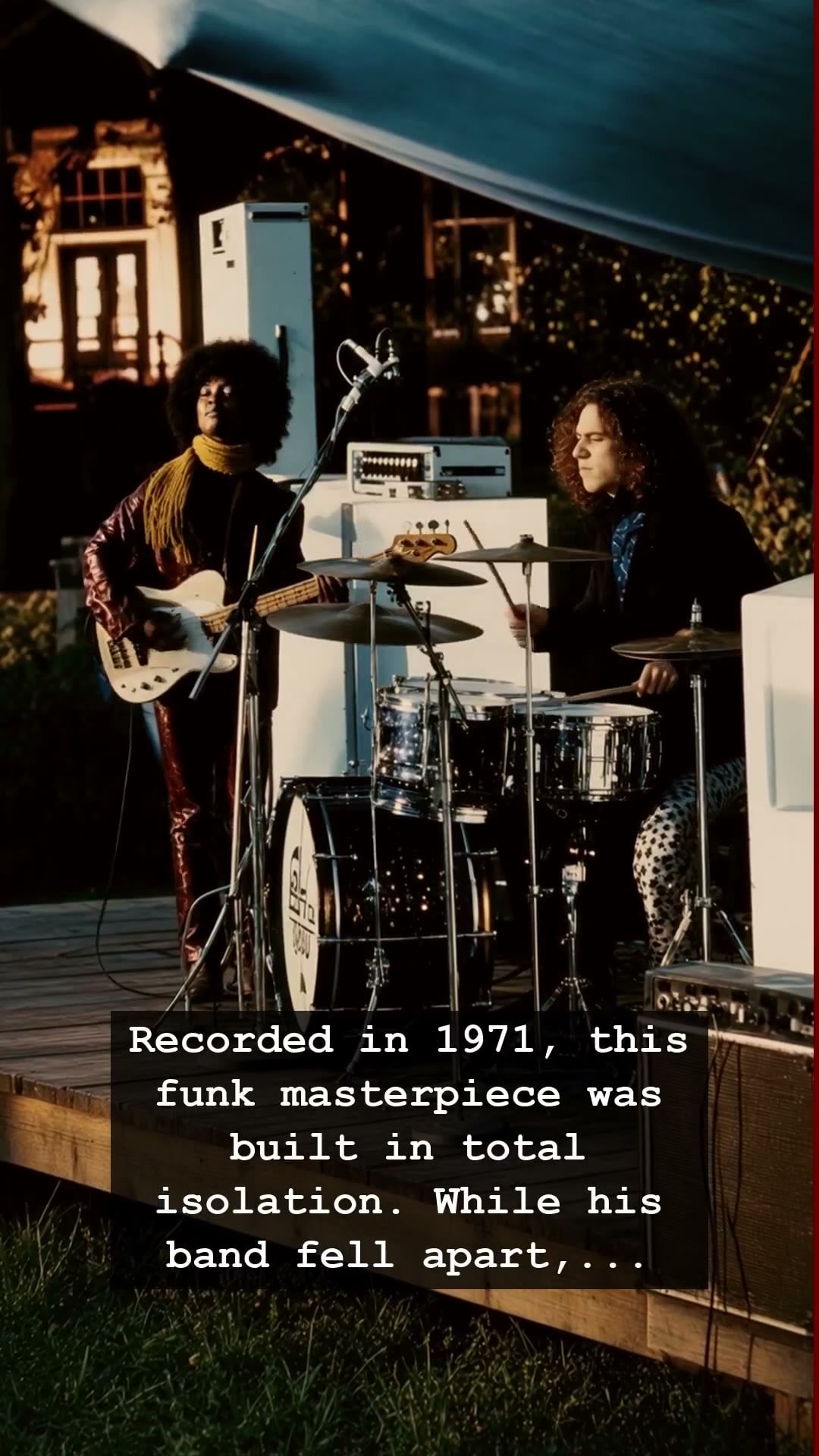
The year was 1971. While the rest of the world was dancing to the glitter-soaked pulse of disco and preparing for the neon-drenched excess of Studio 54, one man was locked in a self-imposed prison of his own creation. Sly Stone, the charismatic visionary behind Sly and the Family Stone, was at the height of his powers but drowning in the dark, swirling currents of fame and chemical dependence. As his legendary band began to fracture under the weight of ego and volatile personal struggles, Sly retreated into the shadowy, soundproofed confines of a recording studio. He was not looking for harmony; he was looking for salvation through sound.
Most fans remember the collective energy of the group, a multicultural powerhouse that defined the late sixties with hits like Everyday People. But when Sly Stone decided to craft his 1971 masterpiece, There’s a Riot Goin’ On, he did it in near-total isolation. The vibrant, sunny optimism of the Woodstock era had long since evaporated, replaced by the gritty, paranoid reality of a changing America. Inside that studio, the atmosphere was thick with tension. The collaborative magic that once defined the band had been replaced by a brooding, singular obsession. Sly became the band, the producer, and the solitary conductor of his own crumbling empire.
It is a haunting image, really: the man who once commanded thousands of screaming fans at festivals now sitting alone, weaving complex layers of funk rhythms and distorted basslines by himself. He played every single instrument, layering track upon track until the music felt like a dense, rhythmic thicket. The result was a record that sounded like nothing else of that era. It was stripped-down, murky, and deeply unsettling, yet it possessed a hypnotic groove that still pulls listeners in decades later. It was the sound of a man trying to exorcise his demons through a tape deck, capturing the hollow ache of the American Dream turning sour.
Why does this story still resonate today? Perhaps because we are all drawn to the myth of the tortured artist, the genius who stands at the precipice of total collapse and manages to pull art from the wreckage. Sly Stone remains a figure of immense complexity, a pioneer who challenged the boundaries of soul and funk before the industry machinery could fully categorize him. When you listen to those tracks today, you aren’t just hearing funk music; you are hearing the echo of a man losing his grip on reality while simultaneously crafting one of the most influential albums in history.
As the decade progressed, the world shifted toward the polished pop perfection of the MTV generation, but the grit of that 1971 session remains an essential piece of the puzzle. It serves as a reminder that even in our darkest moments, there is a rhythm to be found. Whether you were there at the time or discovered the music through the warm crackle of a vintage vinyl record, the story of Sly Stone is a testament to the unpredictable, often painful, path of true artistic vision.