
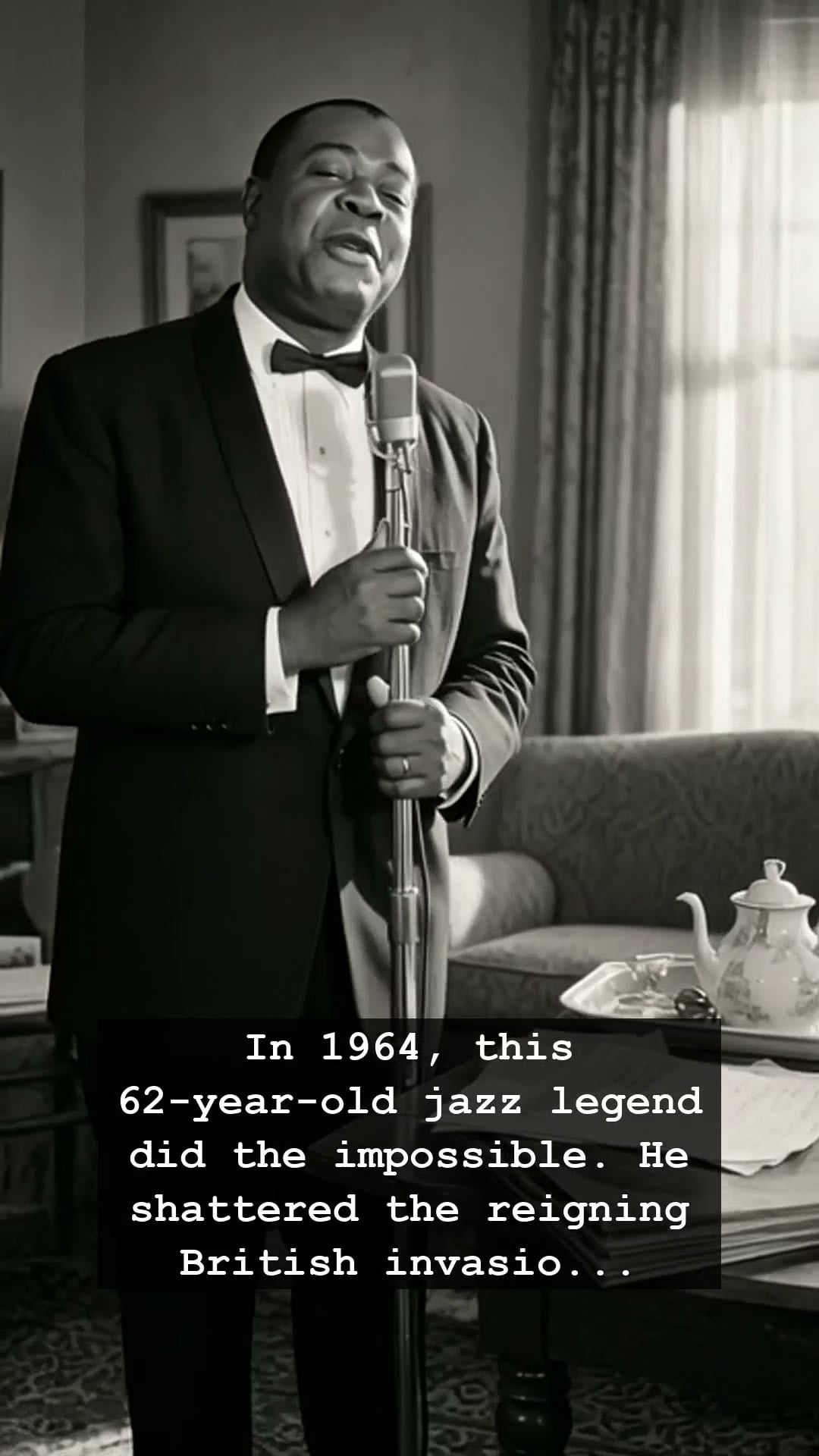
It was May 1964, and the airwaves across America felt like they belonged to four mop-topped boys from Liverpool. The British Invasion was in full, unstoppable force, with The Beatles holding a stranglehold on the Billboard charts that seemed impenetrable. Yet, amidst this sonic revolution and the shifting cultural landscape of the sixties, a sixty-two-year-old jazz icon performed a feat that defied logic and age. Louis Armstrong, the gravel-voiced trumpeter from New Orleans, stepped into a recording studio and delivered a performance that would not only become his signature song but would go down in history as the moment the jazz establishment pushed back against the tide of rock and roll.
When Louis Armstrong recorded the title track for Hello, Dolly!, nobody expected it to be a chart-topping juggernaut. He was a seasoned veteran in a decade increasingly obsessed with youth, garage bands, and the changing aesthetics of the transistor radio era. At the time, jazz legends were often relegated to the background, considered legacy acts rather than hitmakers. But the infectious, optimistic swing of the song resonated with an exhausted, war-weary nation. When the track finally climbed to the number one spot on the Billboard Hot 100, it famously knocked The Beatles off their throne, ending their unprecedented streak and proving that Louis Armstrong still commanded the hearts of the American public.
This victory wasn’t just about a melody; it was a cultural shift. The drama behind the scenes was palpable—a clash between the old guard of sophisticated jazz and the raw, unbridled energy of the emerging British Invasion. For a fleeting moment, the Jukeboxes in diners across the country were pulled away from the frantic sounds of the Liverpool sound and returned to the warm, raspy embrace of the man affectionately known as Pops. It was a poetic collision of eras, where the refined craftsmanship of mid-century jazz met the digital-age immediacy of the burgeoning pop charts.
Yet, the success of the song carries a bittersweet undertone. Louis Armstrong, a man who had faced decades of racial barriers and the grueling demands of a lifetime on the road, suddenly found himself the oldest artist to ever score a number one hit at that time. He remained humble, often remarking on the strangeness of being a pop star in his sixties while the world around him raced toward the psychedelic sounds of the late sixties and the later emergence of stadium-filling rock. It serves as a reminder of the sheer longevity and adaptability of true genius, standing firm while fads and fashions burned out around him.
Today, we look back at this moment with a sense of profound wonder. It captures a snapshot of an America in transition, where a classic trumpeter could still hold the spotlight. The story of Louis Armstrong in 1964 is a testament to the fact that talent knows no generation. Whether you grew up listening to his records on a crackling phonograph or discovered him through historical archives, the legacy of Louis Armstrong remains a vital, beating heart of American music. When you listen to that classic tune today, remember that it was once the weapon that dared to challenge a revolution.