
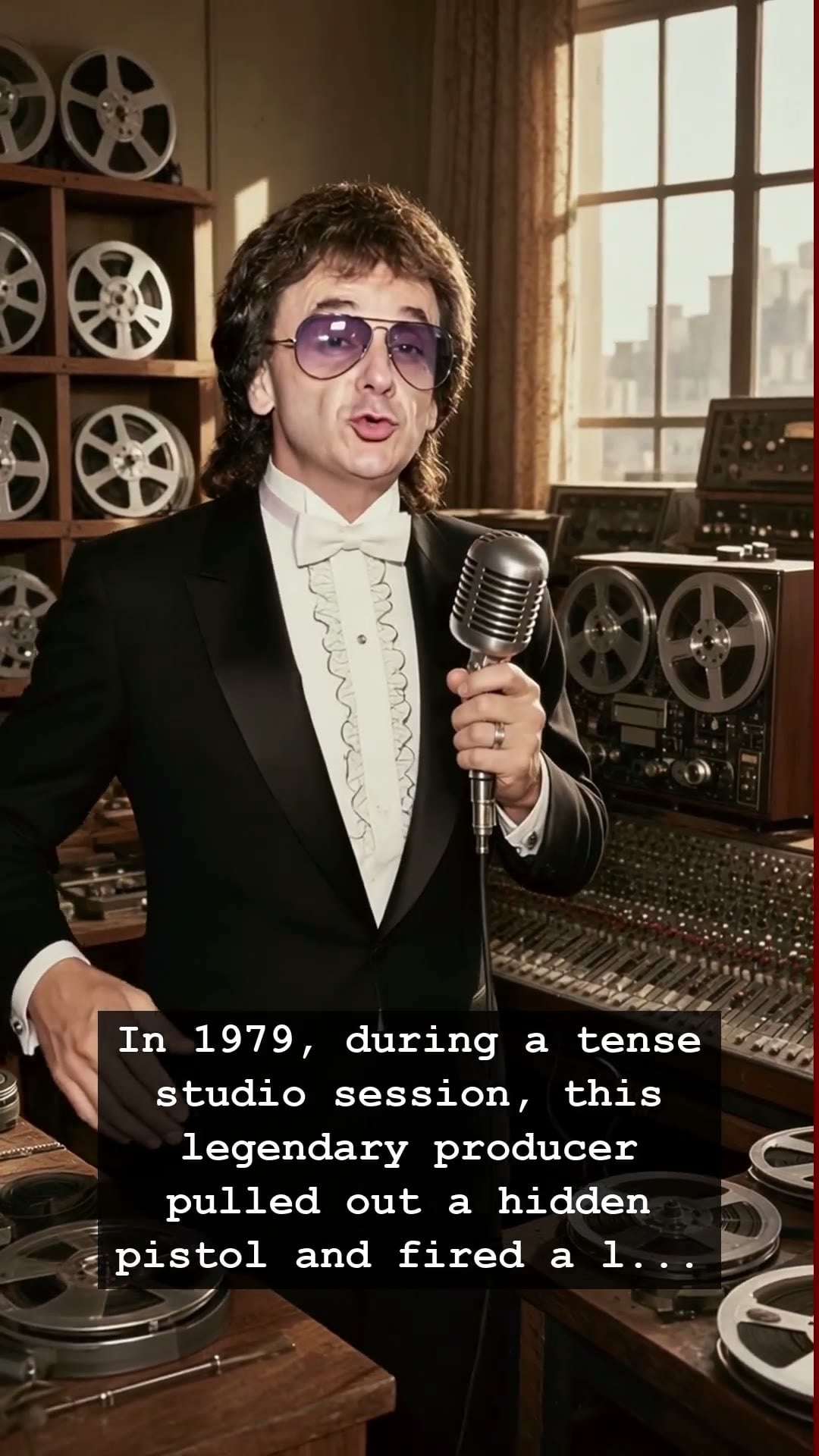
The year was 1979, and the golden glow of the post-disco era was masking the deep, jagged cracks in the music industry. Inside a dimly lit Los Angeles recording studio, the air was thick with the scent of stale cigarettes and unspoken tension. Behind the glass sat Phil Spector, the architect of the Wall of Sound, a man whose genius had once defined the sound of the sixties with tracks like Be My Baby. But as the recording session dragged on into the early morning hours, the legendary producer reached his breaking point. In a sudden, chilling flash of temper that would haunt his legacy forever, Phil Spector pulled out a concealed pistol and fired a live round straight into the ceiling. The recording came to a dead halt as the musicians sat in paralyzed silence, realizing that the man behind the hits had finally succumbed to his own unraveling.
To understand the magnitude of this moment, one must look back at the meteoric rise of Phil Spector. He was a visionary who turned the studio into an instrument, layering thick textures of sound that felt like a symphony of teenage dreams. Yet, throughout the seventies, the man who once captured the pure essence of Motown and the innocence of early Rock ‘n’ Roll began to spiral. The era of the Walkman and the rising dominance of MTV were changing the industry, but Phil Spector seemed trapped in a darker, more isolated reality. His reputation for eccentricity had long been whispered in the halls of legendary studios, but the 1979 incident confirmed that the line between artistic obsession and dangerous mania had been erased.
This wasn’t just a breakdown; it was a symptom of a darker truth surrounding the icons of the mid-twentieth century. Fame was a double-edged sword, and for someone as perfectionistic as Phil Spector, the pressure to replicate past glory often led to volatile outbursts. He lived in a world where sound was everything, yet he was increasingly losing his grip on the human connections that allowed that sound to breathe. The studio, once a sanctuary for his symphonic wall of sound, had become a prison of his own making, filled with echoes of past success and the encroaching silence of his paranoia.
Today, we look back at these stories with a sense of melancholic fascination. We love the music of that era, from the gritty Southern Rock to the sleek synth-pop that would soon take over, but we must acknowledge the shadows cast by the figures who built those foundations. Phil Spector remains a polarizing ghost in the history books, a man whose contributions to modern pop music remain undeniable, even as his later actions cast a long, permanent shadow over his life’s work. The bullet hole in that 1979 ceiling is a cold reminder of how quickly the magic can turn into a nightmare when ego and isolation take the wheel.
As we continue to celebrate the legends who shaped the American soundtrack of the sixties and seventies, it is essential to peel back the curtain on these complex lives. Stories like this ensure that the human element of our favorite records is never forgotten. Whether you are spinning an old vinyl record or listening to a remastered classic, remember that every note carries the weight of a story, a struggle, and a human being who was never quite as perfect as the music suggested. The legacy of Phil Spector continues to serve as a cautionary tale about the cost of genius in an industry built on dreams and desperation.