
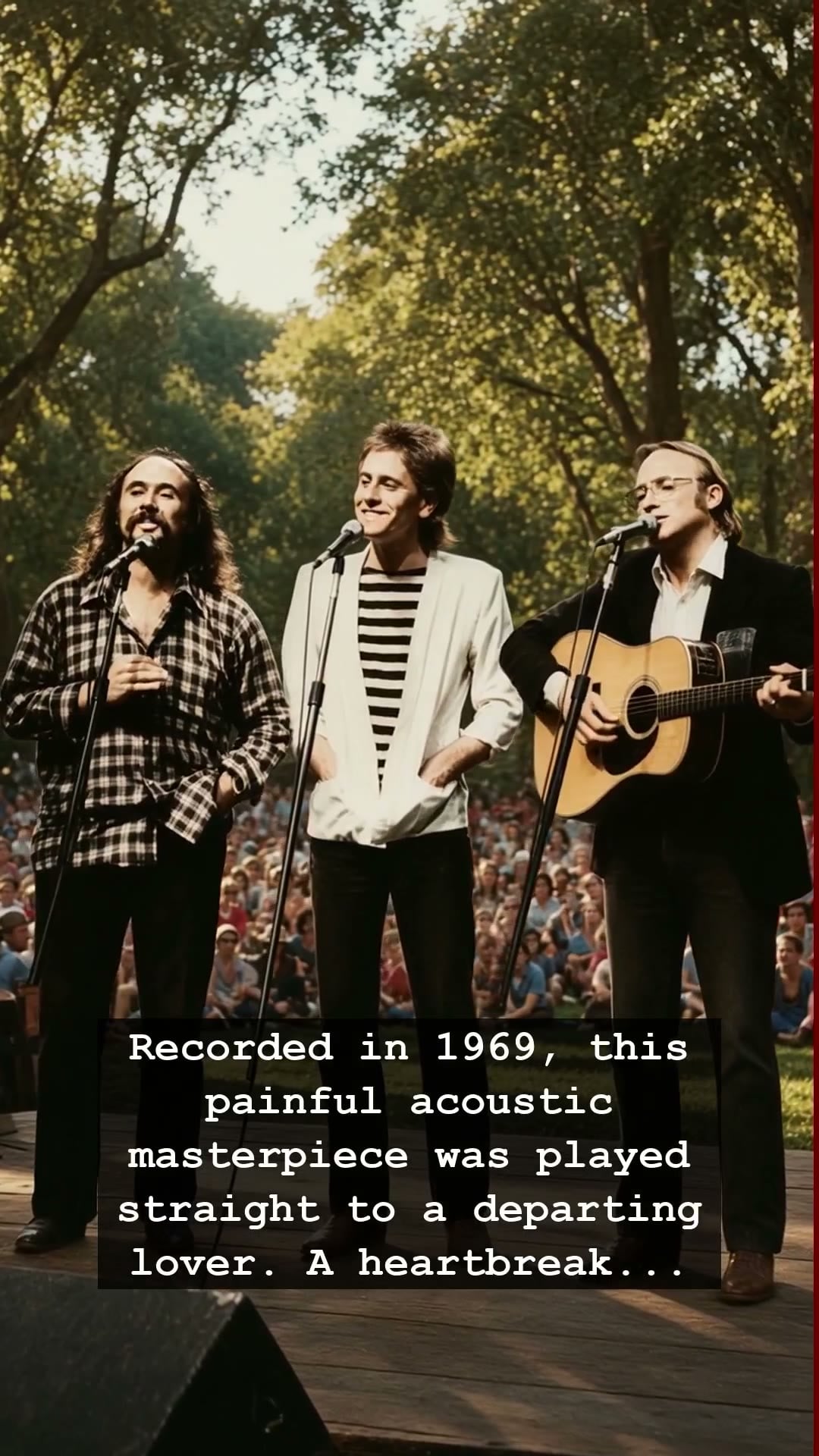
It was 1969, a year defined by the cultural explosion of Woodstock and the transition from the psychedelic haze of the late sixties into something more raw and personal. Amidst the chaos of the music industry, a singular, agonizing acoustic masterpiece was born. It was not just a song; it was a desperate, final plea played directly to a departing lover. Most listeners today recognize the intricate harmonies of Suite Judy Blue Eyes, but few realize that the song was actually a crumbling love letter set to music. Stephen Stills, one of the primary architects of the folk-rock sound, was writing his soul out in a desperate attempt to stop Judy Collins from leaving him forever.
The romance between Stephen Stills and Judy Collins was as tumultuous as the era itself. They were two icons navigating the pressures of fame, fueled by the same intensity that made their music so magnetic. By the time Stills sat down to write what would become a cornerstone of the Crosby, Stills & Nash debut album, the relationship was already fraying at the edges. The song is a complex, multi-movement suite that mirrors the psychological stages of a breakup: the initial denial, the bargaining, and the eventual, sorrowful acceptance. Every haunting lyric carried the heavy weight of a love that was slipping through his fingers like sand in a fading hourglass.
Stills used his songwriting as a sonic bridge, hoping that if he could just craft the perfect melody, he might keep Judy Collins by his side. The song remains a masterclass in acoustic arrangement, capturing that specific late-sixties folk-rock aesthetic that defined a generation. It was a time when the Jukebox in every corner diner was filled with the sounds of social change, yet this song chose to look inward at the domestic wreckage of a broken heart. You can almost hear the tension in the room during those recording sessions; it is a raw, unvarnished look at the price paid for an life under the spotlight.
Beyond the studio walls, the song became a phenomenon, proving that the most personal stories are often the most universal. While the industry was busy pivoting toward the bombast of arena rock, Stephen Stills delivered something that felt like a quiet confession in a crowded room. It captures the essence of a bygone era, long before the digital age, when emotions were measured in vinyl grooves and radio airplay. The pain in his voice remains as sharp today as it was half a century ago, resonating with anyone who has ever tried to use music to hold onto someone who has already moved on.
Do you still remember the first time you heard those opening acoustic chords? It is a melody that feels like a fading memory of a lost summer. Even decades later, the story of Stephen Stills and Judy Collins serves as a poignant reminder of the vulnerability required to make truly great art. Their story is a testament to the fact that while fame is fleeting, the songs we write to heal our own hearts are the ones that truly stand the test of time.