
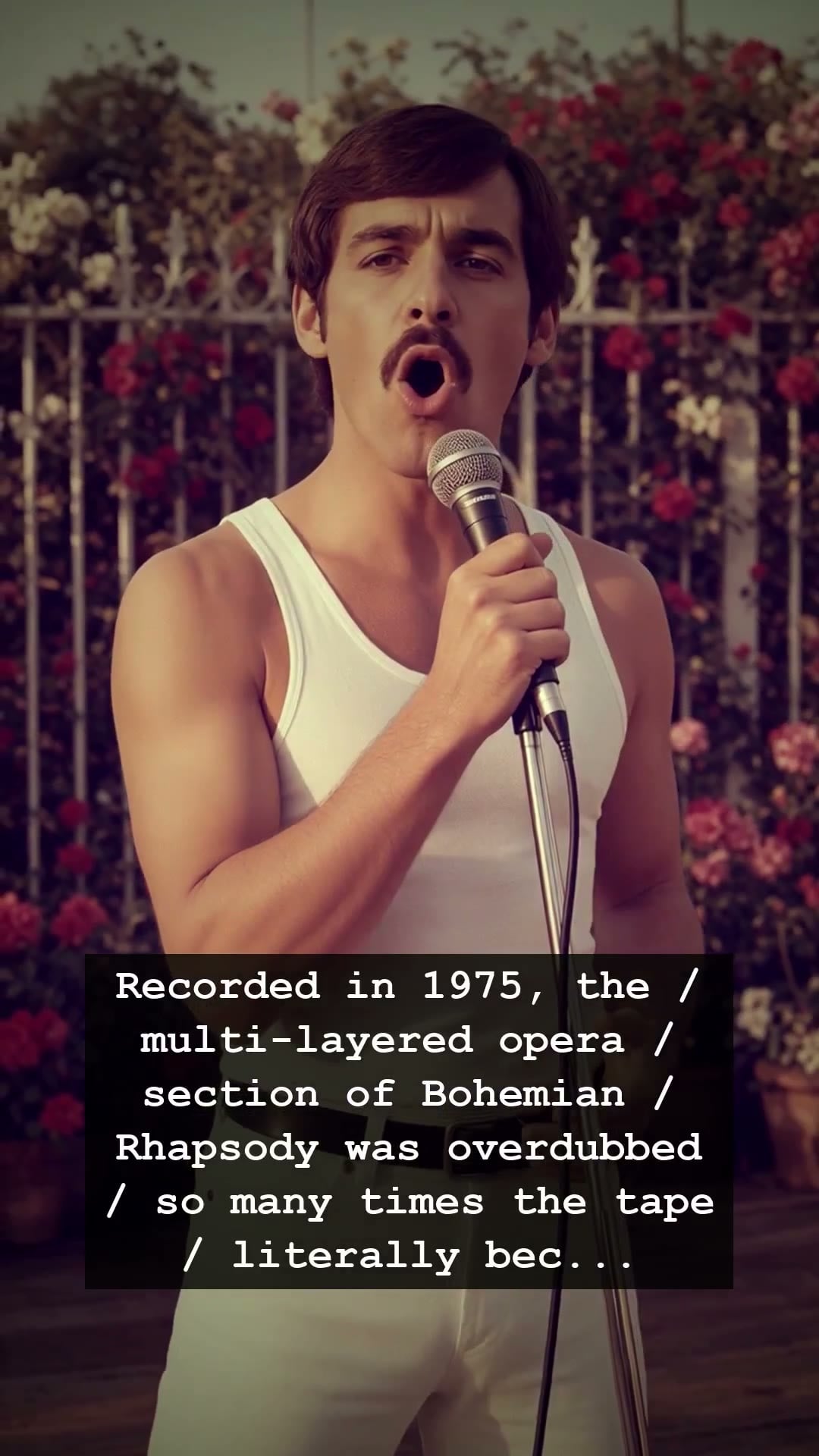
It was 1975, a year defined by the glow of the flickering cathode-ray tube and the distinct, magnetic hum of the cassette tape. Inside the hallowed, smoke-filled walls of Rockfield Studios, Freddie Mercury was orchestrating chaos. He was not just crafting a song; he was attempting to capture a fever dream, a sprawling, multi-layered operatic sequence that would eventually become the heartbeat of Bohemian Rhapsody. Outside, the world was changing, but inside that studio, time stood still as Queen pushed the physical limits of 24-track analog tape to the brink of absolute annihilation.
The process was grueling, bordering on the obsessive. Freddie Mercury, possessed by a vision that his bandmates initially struggled to comprehend, demanded perfection. As the band layered vocal track upon vocal track, building the legendary wall of sound that characterizes the operatic midsection, the tape began to suffer. They overdubbed the reels so many times that the magnetic oxide—the very substance that holds music in place—was physically worn away. In a moment that feels almost mythical today, the tape became so thin that it was literally transparent to the light. They were effectively erasing the past to write the future, recording until the medium itself cried out in protest.
This was the era of the Jukebox and the burgeoning influence of FM radio, a time when rock music was transitioning from the gritty blues of the late sixties to the elaborate, high-concept spectacles of the seventies. Bohemian Rhapsody was a massive, six-minute gamble that defied every industry rule of the time. Freddie Mercury knew that to stand out in the crowded soundscape of 1975, Queen had to offer something that felt larger than life. The song was a collage of styles—a ballad, an aria, and a hard rock anthem—all stitched together by sheer willpower and a relentless drive for artistic transcendence.
Yet, the drama behind the recording remains one of rock history’s most compelling tales. The sheer technical difficulty of splicing those tapes was immense. Brian May, Roger Taylor, and John Deacon had to match the intensity of Freddie Mercury, who was conducting the recording sessions like a mad maestro. There were moments of intense friction and exhaustion, where the pressure of expectation weighed heavily on them. They were not just making an album; they were creating a sonic monument, a work of art that captured the tension and the glamor of a decade defined by excess.
Today, Bohemian Rhapsody stands as a testament to that restless energy. When we listen to it now, we are not just hearing a hit single; we are hearing the sound of a band pushing themselves toward a precipice. The fact that the tape nearly disintegrated under the weight of their ambition only adds to the song’s legendary status. Freddie Mercury was a man who lived without boundaries, and through that fragility, he found a form of immortality. Decades later, the song still vibrates with the same raw, electric intensity it held when it was first cut to that worn, transparent strip of magnetic tape. Next time you hear those iconic opening harmonies, remember the studio floor covered in discarded tape, and the man who refused to stop until the light shone through.