
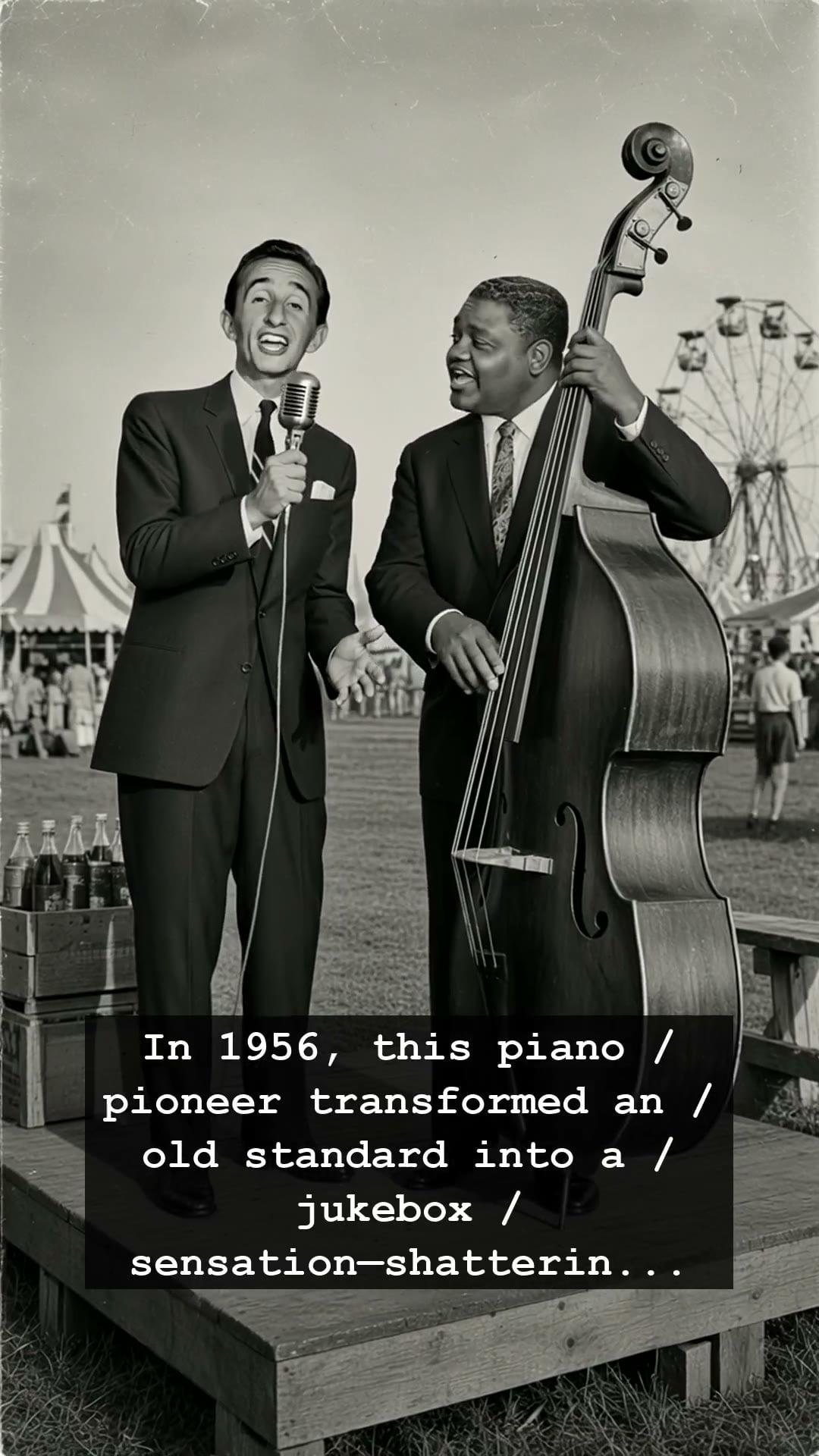
In 1956, the airwaves crackled with a new, dangerous electricity. While the jukeboxes of mid-century America were often segregated by unspoken social codes, one man sat behind a piano and dared the world to dance together. Antoine Fats Domino, a soft-spoken giant from the humid, vibrant streets of New Orleans, didn’t just play music; he orchestrated a cultural earthquake. His transformation of a forgotten 1940s tune into the iconic Blueberry Hill turned a gentle standard into an electric crossover anthem that would define the birth of rock and roll.
Fats Domino was not your typical teenage idol. He was shy, unassuming, and possessed a voice that sounded like molasses poured over gravel, yet when his fingers touched the piano keys, the rhythm was unstoppable. Back in 1956, the era of pristine pop and orchestrated ballads, the raw, driving boogie-woogie piano style of Fats Domino felt like a rebellion. By taking a sentimental song and injecting it with the heavy, syncopated soul of the Crescent City, he created a bridge between communities that had been separated for far too long.
It is hard to imagine the tension of that era today, but the transformation of music in 1956 was a high-stakes gamble. As Fats Domino rose to the top of the charts, he became one of the first African American musicians to find mainstream success in a predominantly white pop market. Every time a nickel dropped into a local diner’s jukebox and that unmistakable piano riff began, the walls of systemic division cracked just a little bit more. He wasn’t just performing; he was inviting the whole country into his world, one melody at a time.
The studio sessions for these tracks were legendary, often capturing a feeling of spontaneous joy that felt almost magical. Unlike the stiff, rehearsed performances that dominated television, the music of Fats Domino felt alive, sweaty, and authentic. There was a profound weight to his success—the pressure of being a pioneer in a world that wasn’t always kind to those breaking new ground. Yet, behind the public image, the man remained true to his roots, never letting the intoxicating fame distract him from the rhythmic heartbeat of New Orleans that lived in his soul.
Decades later, the legacy of this piano pioneer still echoes in every bluesy chord and rock anthem that follows in his footsteps. When we listen to his music now, we aren’t just hearing a song; we are hearing a snapshot of a turning point in history. The way he could take a simple sentiment and turn it into a universal language reminds us of the transformative power of art. His story is a testament to the fact that when music is genuine, it doesn’t just entertain—it changes the way we see each other.
So, the next time you find yourself humming those familiar notes, take a moment to appreciate the man who made it all possible. Fats Domino didn’t just shatter barriers; he built a foundation for the rock and roll revolution that followed. His music remains a timeless invitation to set aside our differences, lean into the groove, and remember a simpler, more melodic time.