
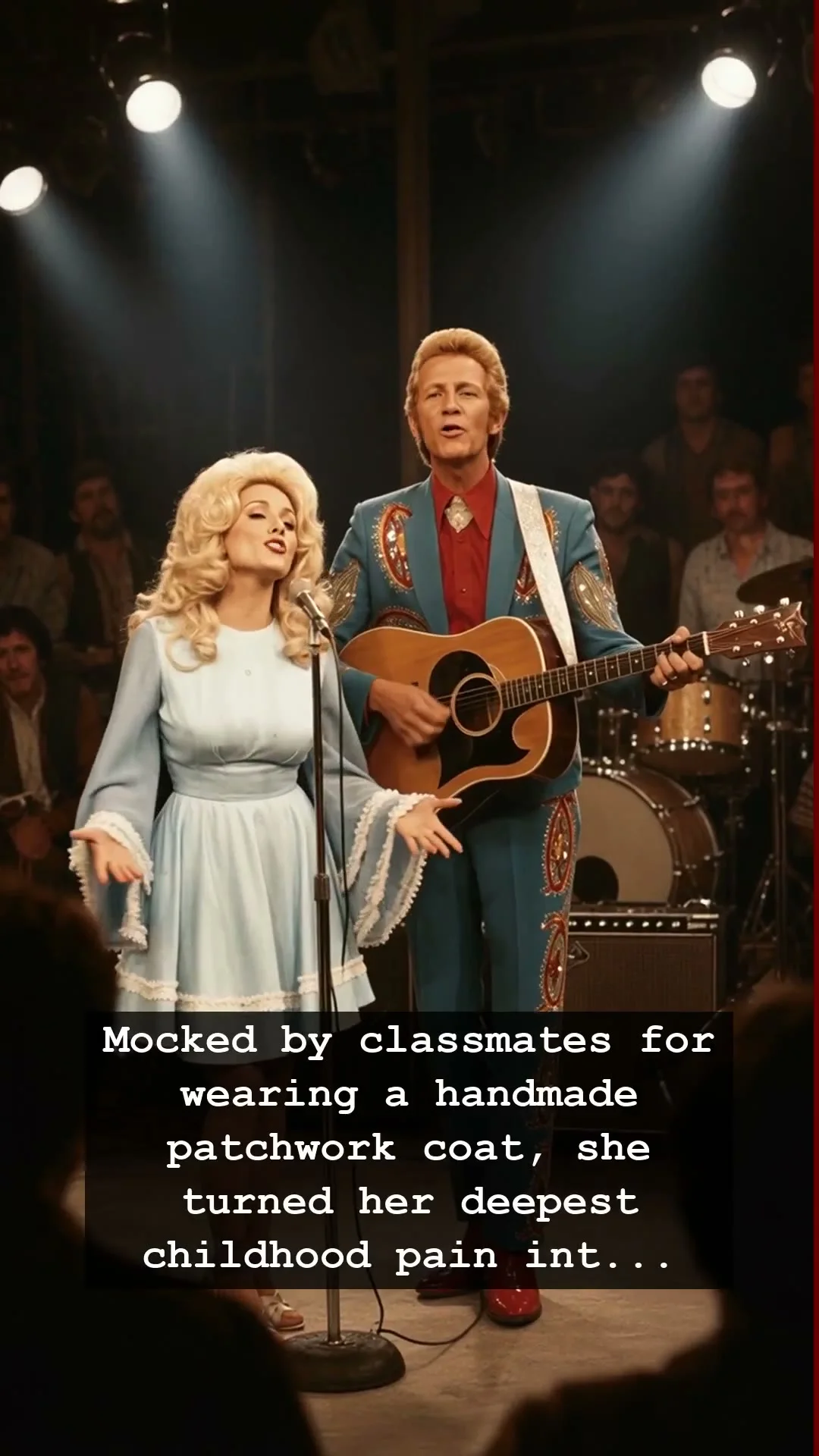
In the cold, unforgiving hallways of a small Tennessee schoolhouse, a young girl once stood trembling inside a dark closet. She was locked away by classmates who mocked her appearance, specifically the humble, handmade patchwork coat she wore with pride. To those children, it was a target for ridicule; to her, it was a woven tapestry of a mother’s infinite love. That girl was Dolly Parton, and the pain she endured in that claustrophobic silence would eventually transform into one of the most poignant acoustic masterpieces in the history of American country music.
Long before she became the rhinestone-studded icon of the Nashville scene, Dolly Parton lived a life defined by poverty but rich in storytelling. Her upbringing in the Great Smoky Mountains was far removed from the neon lights of the later disco era or the polished production of modern recording studios. In her world, music was the only currency that truly mattered. When she wrote Coat of Many Colors, she wasn’t just composing a song; she was excavating a buried trauma from her childhood. She channeled the sting of those jeering classmates into a narrative that transcended her own hurt, creating a timeless anthem about self-worth and the enduring beauty of unconditional love.
This song, released in 1971, arrived during an era where the American musical landscape was shifting rapidly. While the airwaves were crowded with the psychedelic experimentation of the late sixties and the emerging sounds of arena rock, Dolly Parton managed to cut through the noise with a simple, acoustic honesty. The track serves as a sonic time capsule, transporting us back to a rural life where a coat sewn from rags carried more value than any designer garment ever could. It is this raw, unfiltered vulnerability that defined her career and secured her place as a legendary storyteller in American folk and country traditions.
Beyond the melody, the story behind the song resonates because it speaks to the universal experience of feeling like an outsider. Many of us can recall the specific sting of a childhood memory—a moment of rejection or social ostracization that shaped who we became as adults. By turning her deepest childhood tears into art, Dolly Parton showed us that our past burdens do not have to break us. Instead, they can be repurposed into a strength that resonates with millions of listeners decades later. Even today, the song remains a fixture on the juke boxes and classic country radio stations that keep the spirit of the seventies alive.
As we look back at the cultural impact of Dolly Parton, we are reminded that true greatness is often born from the quietest, most difficult moments. Her journey from a patchwork-clad child to a global superstar is a testament to the power of resilience. Whether you remember hearing it on a crackling AM radio or discovering it through the rich legacy of her discography, the song remains a powerful reminder of our origins. Next time you listen to those delicate guitar strings, try to hear the echo of a girl who refused to be defined by the cruelty of others. It is a story that refuses to fade, proving that beauty truly is a matter of perspective.