
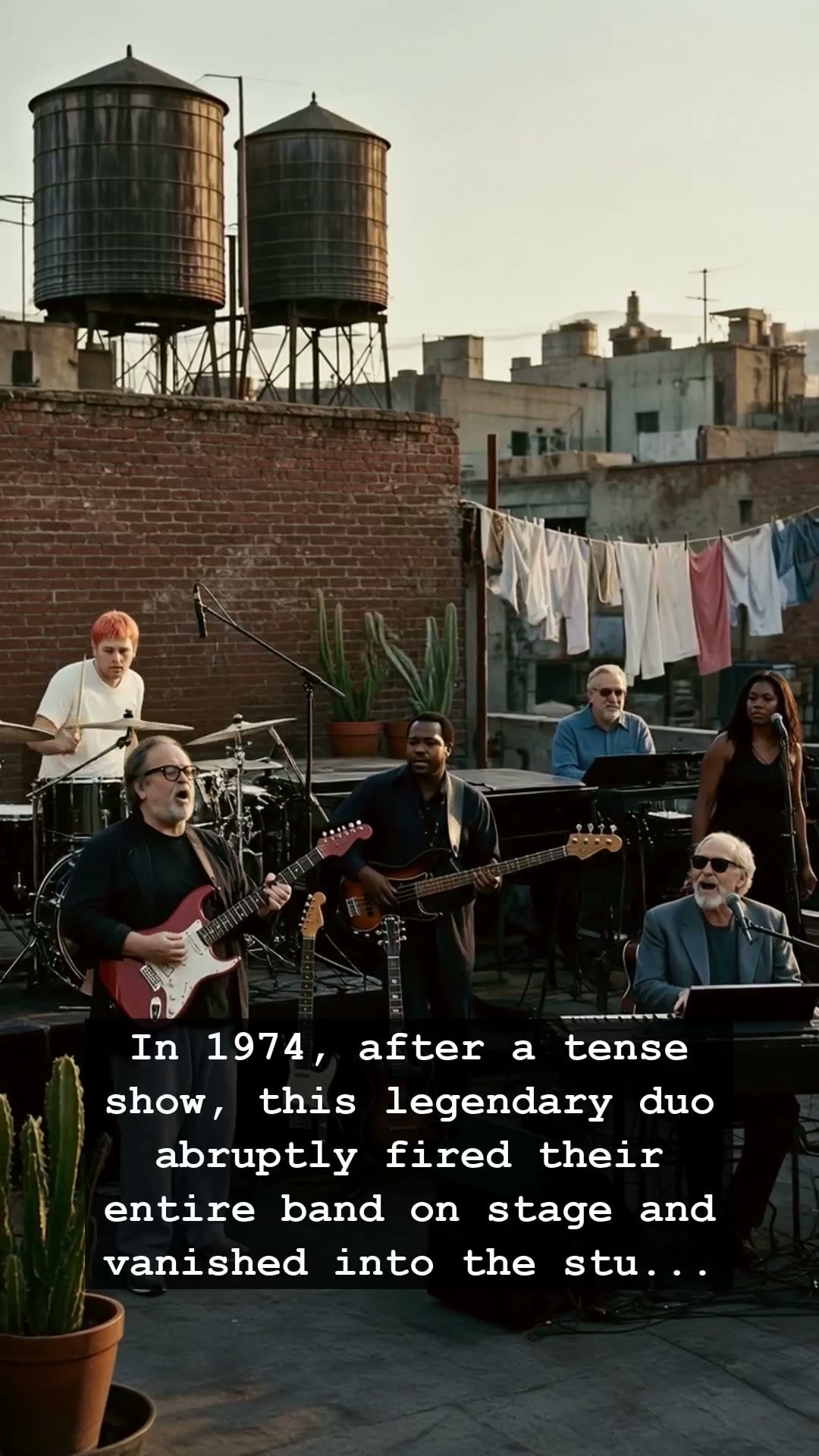
The year was 1974, and the air inside the Santa Monica Civic Auditorium was thick with the scent of cheap beer, cigarette smoke, and the unmistakable tension that only a touring band on the verge of implosion could radiate. For most rock acts of the era, the stage was a sanctuary, a place of connection with the screaming masses. But for Steely Dan—the eccentric, perfectionist duo of Donald Fagen and Walter Becker—it was a prison. As the final notes of the show echoed into the rafters, the duo did the unthinkable. Without a word of warning to the public, they abruptly fired their entire touring band right there on the stage. It was the end of an era for their live act, marking the moment Steely Dan retreated from the sweaty, unpredictable world of concert tours and vanished into the sterile, obsessive solitude of the recording studio.
To understand the magnitude of this exit, one must look at the climate of the mid-1970s. This was a time when the Jukebox defined the pulse of American culture and the legend of the road musician was the ultimate romantic ideal. Yet, Steely Dan was never interested in the chaos of life on the road. Fagen and Becker were architects of sound, men who treated a three-minute pop song like a sprawling classical composition. They viewed the limitations of live performance—the missed notes, the acoustic feedback, the fatigue—as a direct assault on the sonic purity they were trying to cultivate. When they walked away from live shows forever, they weren’t just retiring from touring; they were declaring war on mediocrity.
In the years that followed, Steely Dan became synonymous with studio perfectionism. They treated the studio as their private laboratory, hiring elite session musicians to capture the exact, polished sound they heard in their heads. Tracks like Reelin’ In the Years and Deacon Blues became masterclasses in production. While their peers were living the debaucherous life of rock stars, Becker and Fagen were meticulously layering horns, synths, and complex jazz-fusion chords. It was this obsession that made their records sound like they were from the future, even when they were being played on a worn-out Walkman in the back of a van.
The drama of that night in Santa Monica remains one of the great footnotes in rock history. It signaled a shift in how music was consumed and created, moving the focus from the messy energy of a concert stage to the controlled, pristine environment of the high-fidelity recording booth. Fans who craved the raw, unscripted moments of Woodstock were baffled, but those who craved sonic depth found their new gospel in the grooves of Aja and Gaucho. It was a cold, calculated move that defined the very essence of what Steely Dan stood for.
Decades later, the legacy of that decision still resonates. It reminds us that behind the smooth jazz-rock exterior of Steely Dan lay a pair of uncompromising visionaries who refused to settle for ‘good enough.’ They turned their back on the fame of the spotlight to ensure their music would remain timeless. So, the next time you drop the needle on a vintage pressing and hear that crisp, crystalline production, remember the night they fired their band to chase a phantom of perfection. Does their sound still reach you today, just as it did back then?