
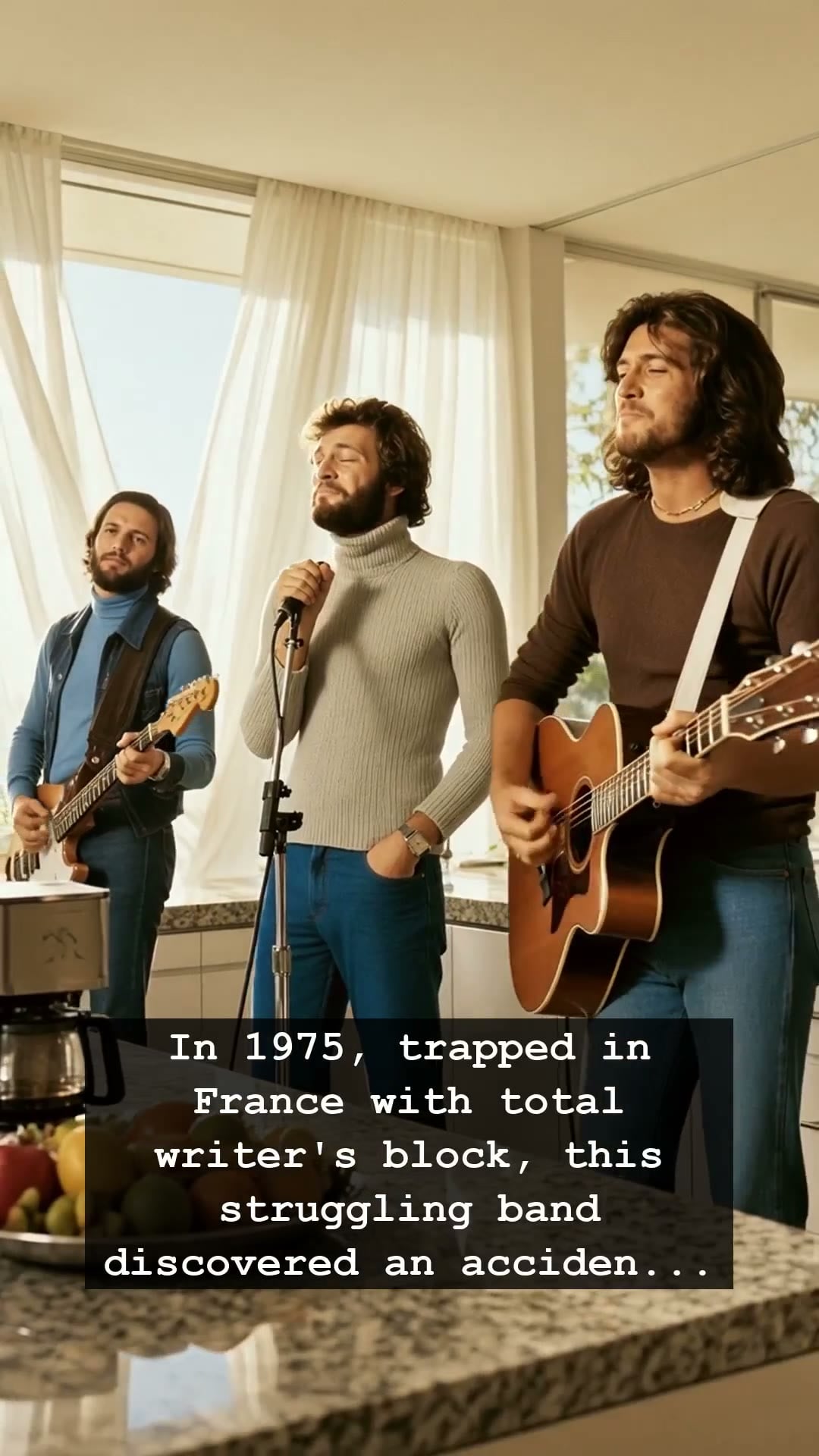
In 1975, the Chateau d’Herouville in France was supposed to be a sanctuary for the Bee Gees. Instead, it became a gilded cage. The trio, once iconic pop stars, found themselves trapped in a creative abyss, suffering from a paralyzing writer’s block that threatened to derail their entire career. The world of music was shifting beneath their feet, and the brothers Gibbs felt like ghosts haunting their own studio. The atmosphere was heavy with tension, uncertainty, and the suffocating pressure of relevance. They were searching for a spark in the dark, desperate to reinvent a sound that the public had seemingly moved past.
Then, in a moment of pure, raw desperation, Barry Gibb reached for a note he had never dared to touch before. It was an accidental, shimmering falsetto—a high, haunting sound that broke the silence of the French countryside. This was not the rock balladry of their youth; it was something electric, rhythmic, and undeniably visceral. At that moment, they had no idea that this single, fragile high note would soon tear through the neon-drenched atmosphere of Studio 54. They had inadvertently unlocked the DNA of the disco era, a sound that would define a generation and cement the Bee Gees as the architects of a global movement.
As the tracks began to take shape, the transformation was seismic. The Bee Gees abandoned the melancholic soft rock that had kept them stagnant and leaned into the pulse of the dance floor. Their newfound falsetto became a signature weapon, a sonic centerpiece that echoed across the mirror-ball-lit dance floors of the late seventies. It was a sound that captured the desperation and the euphoria of a decade defined by excess, glitter, and the relentless beat of the drum machine. The transition from struggling artists to kings of the nightlife was swift, sudden, and absolutely legendary.
When these records finally hit the airwaves, they didn’t just climb the charts; they obliterated them. From the heavy air of an isolated French studio to the throbbing speakers of the most exclusive clubs in New York, the Bee Gees became the pulse of the night. Every rhythm section was tight, every string arrangement was orchestral, and above it all sat that soaring, impossible voice. It was the soundtrack to a time when people lived for the weekend, danced until sunrise, and lost themselves in the hypnotic gravity of the bass line.
Decades later, the legacy of that moment in France still resonates with an undeniable power. It serves as a reminder that history’s greatest shifts often begin with a stumble in the dark. The Bee Gees did not just follow a trend; they created a cultural earthquake that forced the entire world to move to their rhythm. Even today, hearing those first notes of a classic disco anthem transports us back to a time of vibrant possibility. It remains a timeless testament to human resilience and the magic of finding brilliance within the shadows of failure.