
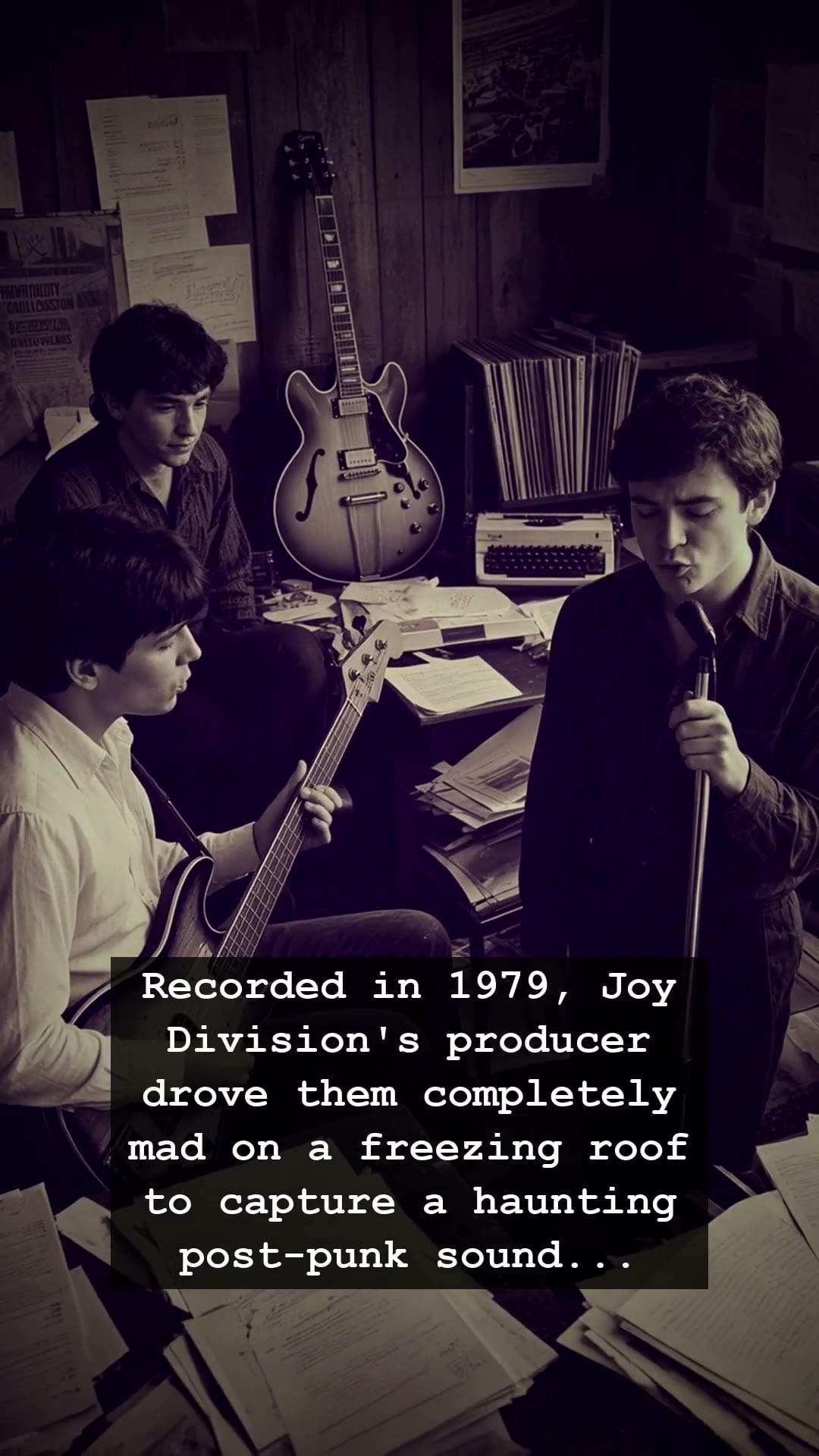
It was 1979, and the air inside the Strawberry Studios was thick with cigarette smoke and the suffocating tension of creative desperation. As the post-punk movement began to stir, a group of four young men from Manchester known as Joy Division stood on the precipice of musical history. They were joined by a man who would become their sonic architect, the enigmatic and notoriously difficult producer Martin Hannett. While the band wanted to capture the raw, explosive energy of their live performances, Martin Hannett had a far more disturbing vision in mind—one that involved psychological warfare and a complete disregard for physical comfort.
In a move that sounds more like a scene from a psychological thriller than a recording session, Martin Hannett forced the band’s drummer, Stephen Morris, to set up his kit on the freezing, windswept roof of the studio. The goal was to isolate the sound of the drums, stripping away the warmth of the studio environment to achieve a desolate, cavernous echo that felt as cold as a Manchester winter. As the frost settled on the cymbals, the band endured hours of shivering isolation. To the members of Joy Division, it felt like an agonizing form of madness, a cruel experiment that seemed destined to ruin their debut record, Unknown Pleasures.
Yet, this obsessive pursuit of sonic perfection is exactly what cemented the band’s legacy. Martin Hannett was not looking for a conventional rock sound; he was crafting an atmosphere of existential dread that perfectly mirrored the crumbling industrial landscape of their home city. He treated the mixing board like a laboratory, using experimental techniques to turn the drums into mechanical, haunting pulses that would define the post-punk genre for generations to come. The result was not just an album; it was a ghost story captured on vinyl, a bleak masterpiece that sounded like the end of the world.
Looking back from the digital age, it is hard to fathom the sheer commitment required to produce such a specific, haunting aesthetic. In an era before easy digital manipulation, these sounds were carved out of sheer willpower and frozen air. Martin Hannett pushed Joy Division to their breaking point, but in doing so, he allowed them to transcend their circumstances. The tension between the producer’s cold, analytical brain and the band’s raw, emotional vulnerability created a friction that few artists have ever managed to replicate. It was a volatile marriage of art and insanity that forever changed the trajectory of alternative rock.
Decades later, the icy textures of their debut still resonate with anyone who has ever felt like an outsider in their own skin. Every time the needle drops on a record player today, the listener is transported back to that freezing rooftop in 1979. We owe a debt to the madness of Martin Hannett and the resilience of Joy Division, for they turned a painful, cold night into an eternal sound that continues to chill the soul and ignite the imagination of every generation that discovers them.