
It is the sound of crackling logs in a fireplace, the faint scent of pine needles, and the soft glow of a vintage Jukebox tucked into a corner of a dimly lit parlor. When we hear the opening notes of White Christmas, we are instantly transported back to a simpler time. Yet, for the man whose voice defined the season, this masterpiece was far from a source of unadulterated joy. For Bing Crosby, the song that captured the collective heart of a nation became an insurmountable ghost, a haunting benchmark of perfection that he would spend the rest of his legendary career chasing, but never quite catching again.
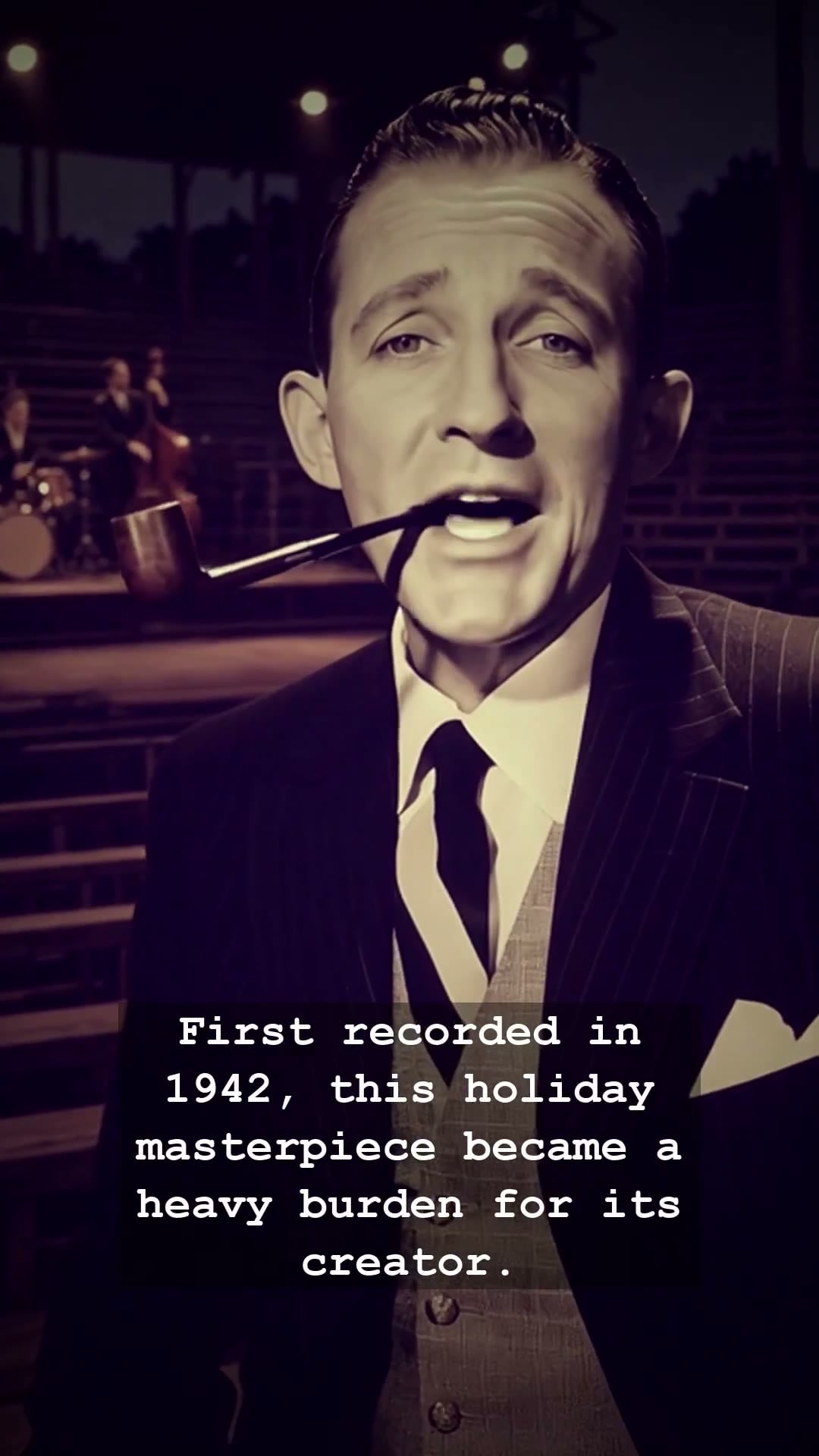
First recorded in 1942, White Christmas was birthed during a world at war, offering a desperate, melodic escape to soldiers stationed in foreign lands and families waiting anxiously at home. Bing Crosby had been a fixture of the airwaves, a master of the crooner style that dominated the mid-century American soundscape. When Irving Berlin penned those evocative lyrics, it seemed like just another session. However, the result was a cultural phenomenon so absolute that it paralyzed its creator. The world fell in love with a specific texture of sadness and nostalgia that Bing Crosby had channeled through his microphone, creating a standard that felt almost supernatural in its reach.
As the decades rolled on, from the rise of the high-fidelity era to the transformative arrival of MTV, Bing Crosby remained tethered to that singular moment in 1942. It became a heavy burden, a golden cage built by his own success. Every subsequent holiday attempt, every studio session, and every radio appearance was measured against that original performance. He reportedly felt that the magic of the first take was impossible to replicate, leading to a profound artistic frustration that few of his fans realized. Behind the dapper suits and the easy-going public persona lay a man tormented by the very legacy he helped craft.
This tension between public adoration and private stagnation is a recurring motif in the history of music. Much like the later volatility found in the rivalries of the hip-hop scene or the raw, internal fractures of 90s grunge bands, the struggle of Bing Crosby serves as a reminder that the artist is rarely the person we imagine on the record sleeve. He was a man who wanted to evolve, yet he was perpetually held hostage by the expectations of a public that only wanted the comfort of that one particular December day. The industry demanded nostalgia, and Crosby was its highest-paid prisoner.
Today, we look back at his life not just for the hits, but for the human story behind the crackle of the vinyl. We listen to that voice now with a deeper sense of empathy, knowing that beneath the warmth was an artist trying to escape his own echo. As the snow falls and the radio plays his signature tune once more, consider that you are hearing more than just a melody; you are hearing the sound of a man trying to outrun his own shadow. It remains the ultimate holiday classic, a piece of art that belongs to all of us, even if it cost Bing Crosby his peace of mind.