
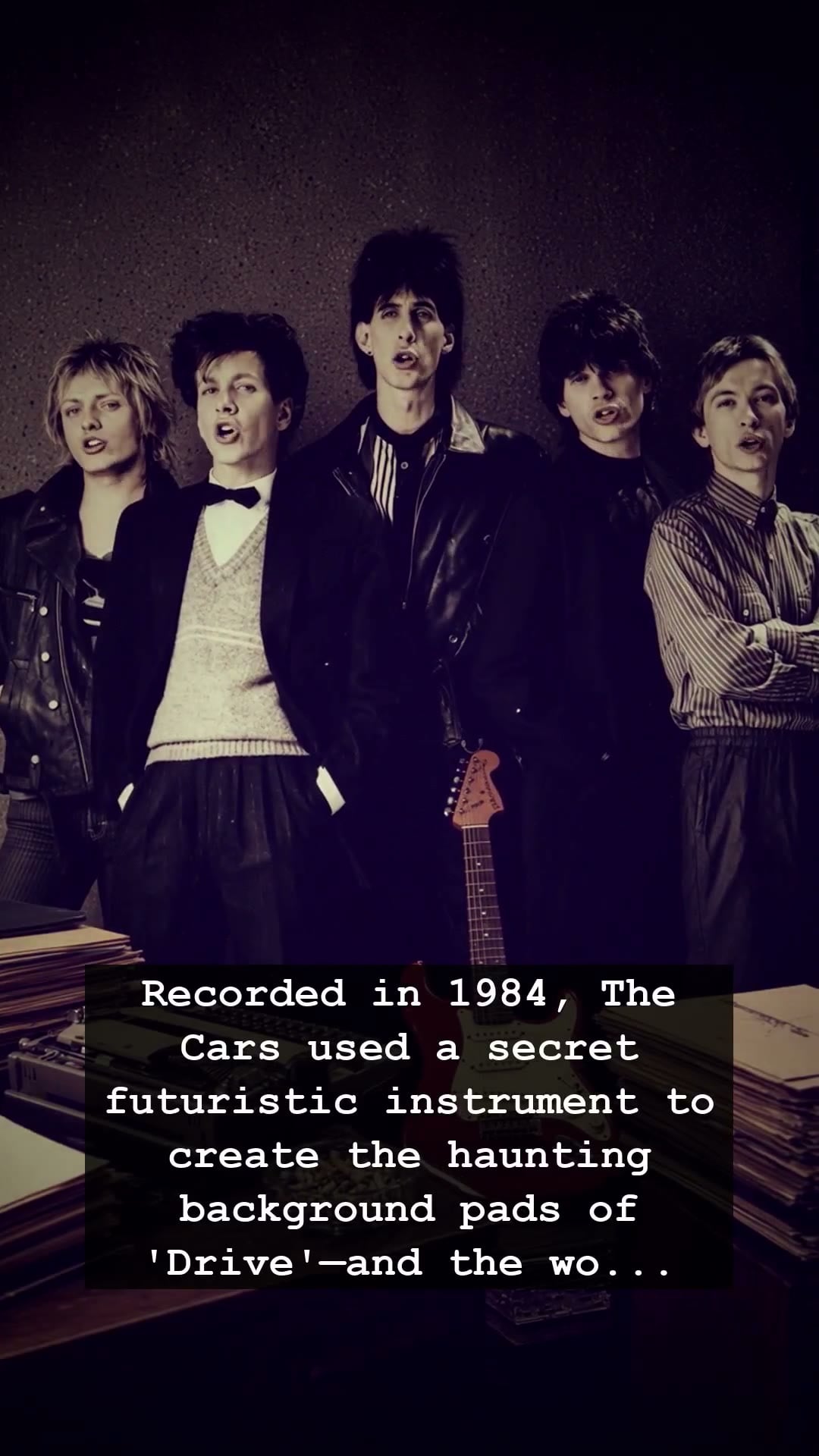
It was 1984, the era of neon lights, the rising dominance of MTV, and the bittersweet melancholy of the mid-eighties pop landscape. When The Cars released the track Drive, it felt like the world collectively paused. The song was not just a power ballad; it was a sonic ache, a masterclass in atmospheric production that defined a generation. While listeners were captivated by Benjamin Orr’s vulnerable, tear-stained vocal performance, few realized that the haunting, ethereal soundscape swirling beneath the melody was the result of a revolutionary, almost clandestine, technological experiment. The Cars had harnessed a futuristic secret instrument that would forever alter the texture of rock and pop ballads.
Behind the velvet curtains of the recording studio, Ric Ocasek and the band were pushing the boundaries of what a rock band could achieve. During this period, the industry was obsessed with the cold, digital precision of synths, yet The Cars managed to inject a ghost-like warmth into their tracks. The secret to the mesmerizing background pads in Drive lay in the meticulous use of advanced synthesizers that were, at the time, kept under wraps by the engineering elite. This wasn’t just a keyboard; it was a texture machine that allowed the band to paint with sound, creating an expansive void that perfectly complemented the song’s themes of isolation and longing. The track became a pillar of 1980s radio, played from Walkmans on street corners to high-end stereos in suburban living rooms.
Yet, the brilliance of The Cars was always shadowed by the internal friction typical of the era. The production of Drive was a moment of peak artistic synchronicity, even as the band’s dynamics were beginning to fray behind the scenes. Like the flickering lights of Studio 54 or the remnants of the disco explosion that still influenced their danceable beats, The Cars lived in a space between the organic rock of the seventies and the clinical perfection of the eighties. They were pioneers, blending the raw emotion of human heartbreak with the cold, calculated precision of emerging digital technology. This tension is exactly why the song still resonates with such intensity decades later.
Beyond the technical achievements, the legacy of The Cars remains a testament to the transformative power of a single hit. Drive remains one of those rare musical relics that captures a specific frequency of human emotion. It reminds us of a time when production secrets were guarded like state intelligence and when a melody could genuinely stop time on a crowded highway. The song acts as an anchor to a bygone decade, pulling us back to the warmth of a Jukebox in a dimly lit diner or the quiet reflection of a late-night drive home.
As we look back at the golden age of the synthesizer, the story of The Cars serves as a reminder that the best music is often built on secrets. Whether it was the complex interplay of their band members or the hidden layers of their studio production, they understood how to turn pain into something timeless. The next time you find yourself lost in the melancholic hum of Drive, listen closely to those background pads. They are not just notes; they are the whispers of a band that dared to change the sound of the world forever.