
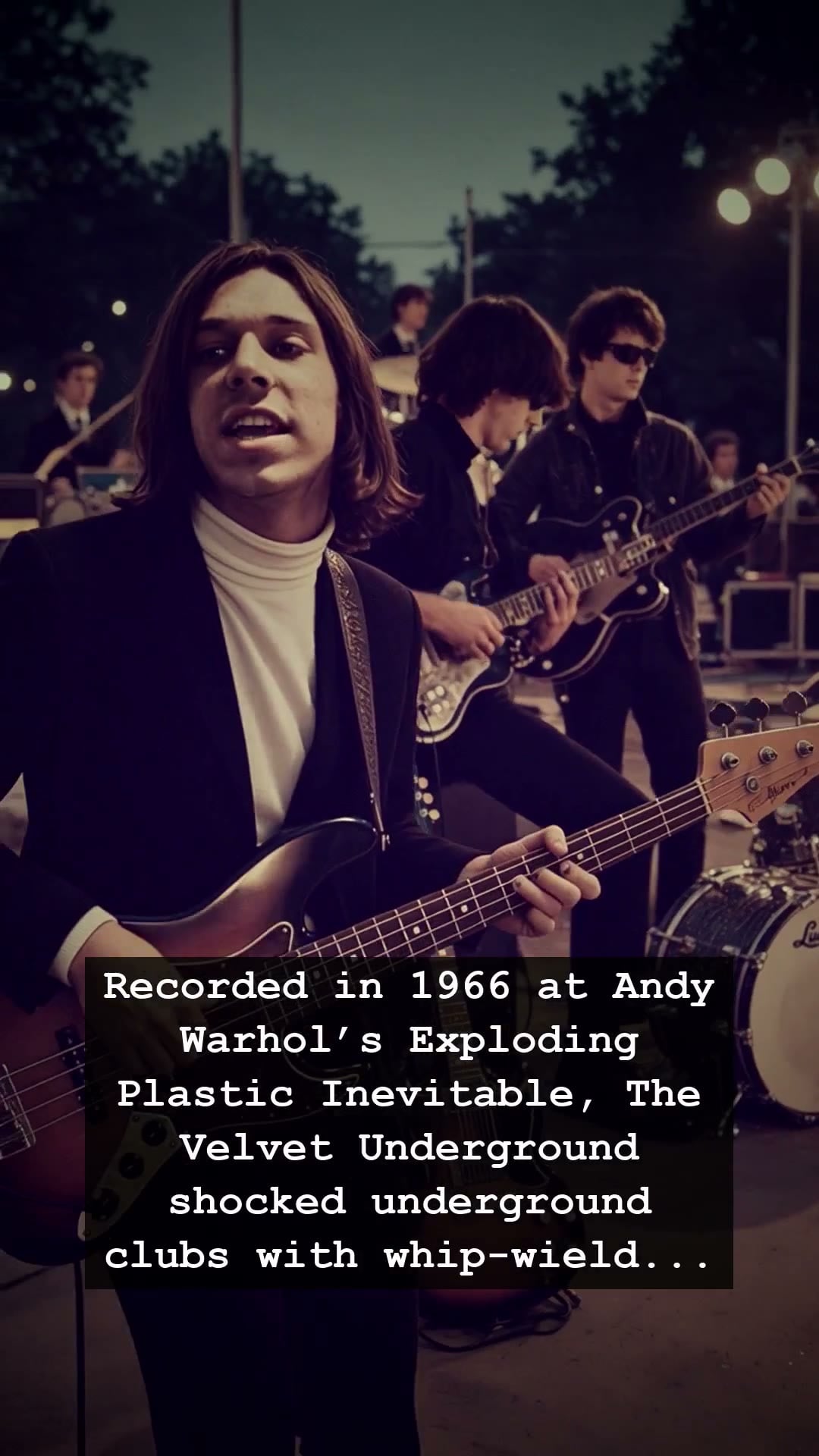
Imagine walking into a dimly lit New York City basement in 1966. You expect the standard upbeat pop of the era, the kind of tunes you would find on a glowing jukebox, but instead, you are met with a wall of dissonant sound and a blur of shadow. This was the world of The Velvet Underground, an avant-garde collective that did not just play music; they curated a visceral experience that shattered the cultural status quo. While the rest of the world was dancing to bubblegum melodies, Lou Reed and his bandmates were busy inventing the blueprint for art-rock in the sweaty, bohemian crucible of Andy Warhol’s Exploding Plastic Inevitable.
At the center of this sensory assault were the whip-wielding dancers and the frantic, experimental projections that defined the Velvet Underground performances. To the uninitiated, it was chaos—an overwhelming display of noise and rebellion that left many audience members baffled or even horrified. Yet, in that haze of high-volume feedback and drone, history was being written. The band was lightyears ahead of their time, stripping away the polished veneer of the mid-sixties to reveal the raw, unvarnished underbelly of urban life. They sang about the dark fringes of society, subjects that radio stations would never dare to touch, effectively turning their backs on mainstream fame to pursue an uncompromising artistic vision.
Behind the scenes, the friction within the band and their symbiotic relationship with Warhol added a layer of profound tension to their work. The Velvet Underground lived at the intersection of high art and low life, navigating a world where brilliance often collided with self-destruction. Their debut album, famously adorned with a peelable banana, would eventually become one of the most influential records in music history, though it initially sold almost nothing. It is a recurring tragedy of rock and roll that the most revolutionary art often goes misunderstood by the very generation it aims to transform.
Decades later, the legacy of the Velvet Underground resonates through the halls of music history with an undeniable force. They proved that you do not need technical perfection to move the needle of culture; you simply need authenticity and the courage to be discordant. From the gritty texture of their lyrics to the haunting experimentation of their compositions, they provided the essential DNA for the punk, post-punk, and alternative movements that followed in the seventies and eighties. They turned the act of music-making into a performance piece that challenged the audience to rethink what a song could actually be.
Today, we look back at those nights in 1966 not as failures, but as the quiet ignition of a massive cultural explosion. The Velvet Underground remains the quintessential cult band—a band whose records were bought by few, but those few went on to start their own bands. As you listen to those classic tracks on your headphones today, try to imagine the smoke, the lights, and the feeling of witnessing a revolution that you didn’t yet realize was happening. Even if you weren’t there, the echoes of their sonic defiance are still very much alive.