
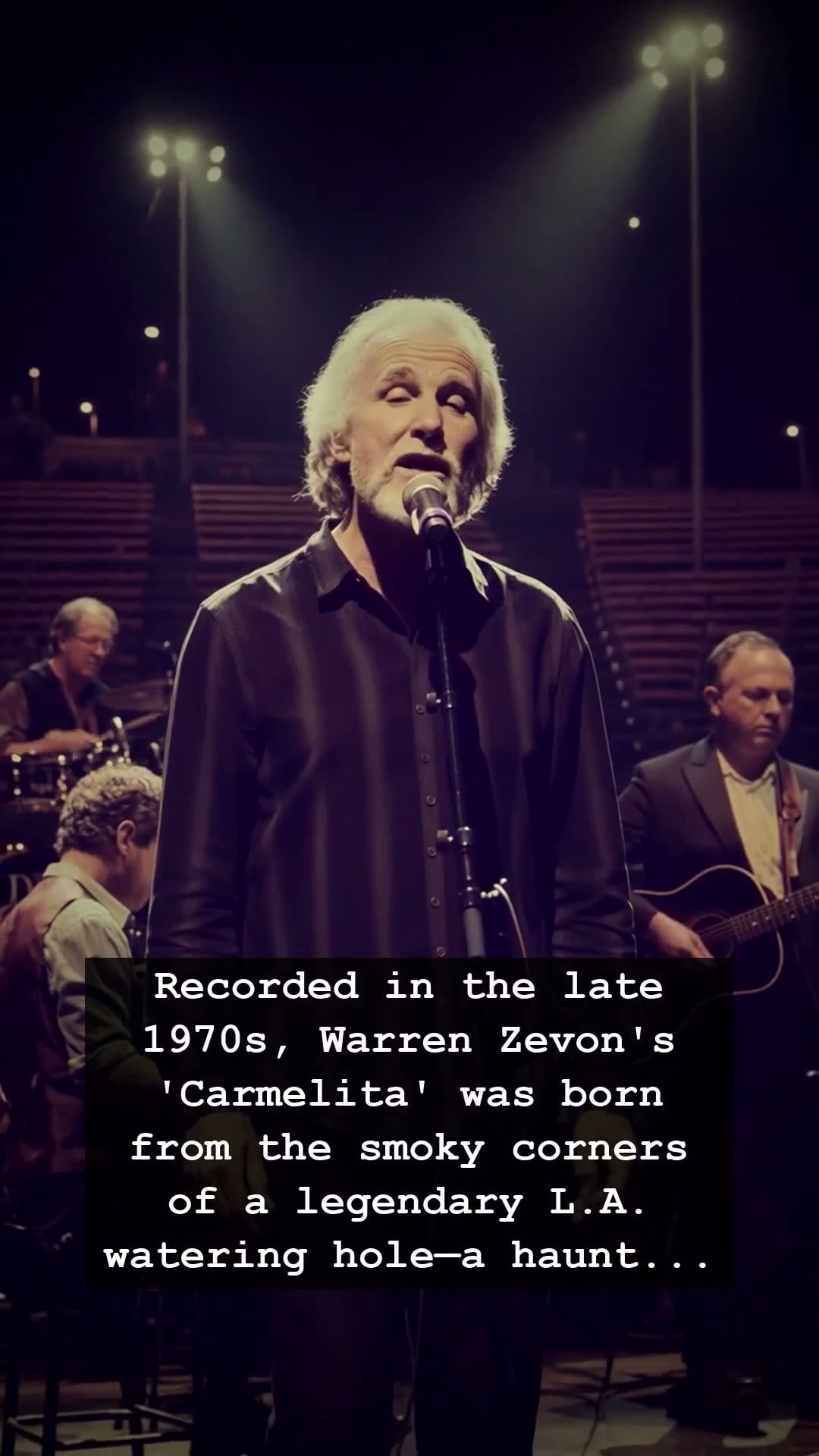
The year was 1976, and the neon lights of Los Angeles were flickering with a desperation that only the truly lost could understand. In the smoky, dimly lit corners of a legendary L.A. tavern, a man sat hunched over a glass, nursing more than just a drink. That man was Warren Zevon, a songwriter whose genius was matched only by his demons. While the rest of the world was dancing under the glitter balls of disco or drifting into the soft-rock haze of the era, Zevon was capturing something far darker and infinitely more human. From these shadows, he forged Carmelita, a song that remains one of the most haunting portraits of addiction and longing ever put to tape.
To understand the gravity of Carmelita, one must look at the landscape of the late seventies. This was a time when the myth of the rock star often collided violently with the grim reality of the streets. Warren Zevon walked that thin line every single day. While the record labels were chasing hits for MTV, Zevon was busy chronicling the wreckage of his own life. The lyrics of Carmelita—referencing a fix, the Mexican radio, and the desperate yearning for a woman who represented both salvation and destruction—were not mere storytelling tropes. They were visceral, autobiographical fragments pulled from his time spent navigating the grime of the city after the golden age of the sixties had faded into a cold, hard hangover.
There is a specific, jagged edge to the way Warren Zevon delivers the lines in this track. It feels like a transmission from a man who had seen too much and was running out of places to hide. The piano chords are sparse and lonely, mimicking the emptiness of a room at dawn. For those of us who grew up in the era of the Walkman, listening to this on a cassette tape felt like a clandestine act. You weren’t just listening to a song; you were eavesdropping on a private, agonizing confession. The track stands as a testament to Zevon’s uncanny ability to turn his personal suffering into a melody that felt universal.
Why does Carmelita continue to resonate decades later? Perhaps it is because it lacks the polish and artifice of so much modern music. It is raw, unfiltered, and deeply uncomfortable—much like the artist himself. Warren Zevon was a complicated genius, a man who possessed a biting wit and a profound sense of mortality. When you hear him sing about the ‘blood-red’ California sunset and the chains of addiction, you are hearing the heartbeat of a man who understood that true art requires the artist to bleed on the page. It is a bleak, beautiful masterpiece.
Today, we look back at the legacy of Warren Zevon with a mixture of reverence and melancholy. He survived the turbulence of the seventies and eighties, only to face his final act with the same unflinching honesty that characterized his music. Carmelita serves as a reminder that behind every legendary hit is a human being, wrestling with ghosts that the audience might never fully understand. Next time you find yourself alone with a record, let the haunting melody of Carmelita drift through the room, and take a moment to honor the man who found the light in the deepest, darkest corners of L.A.