
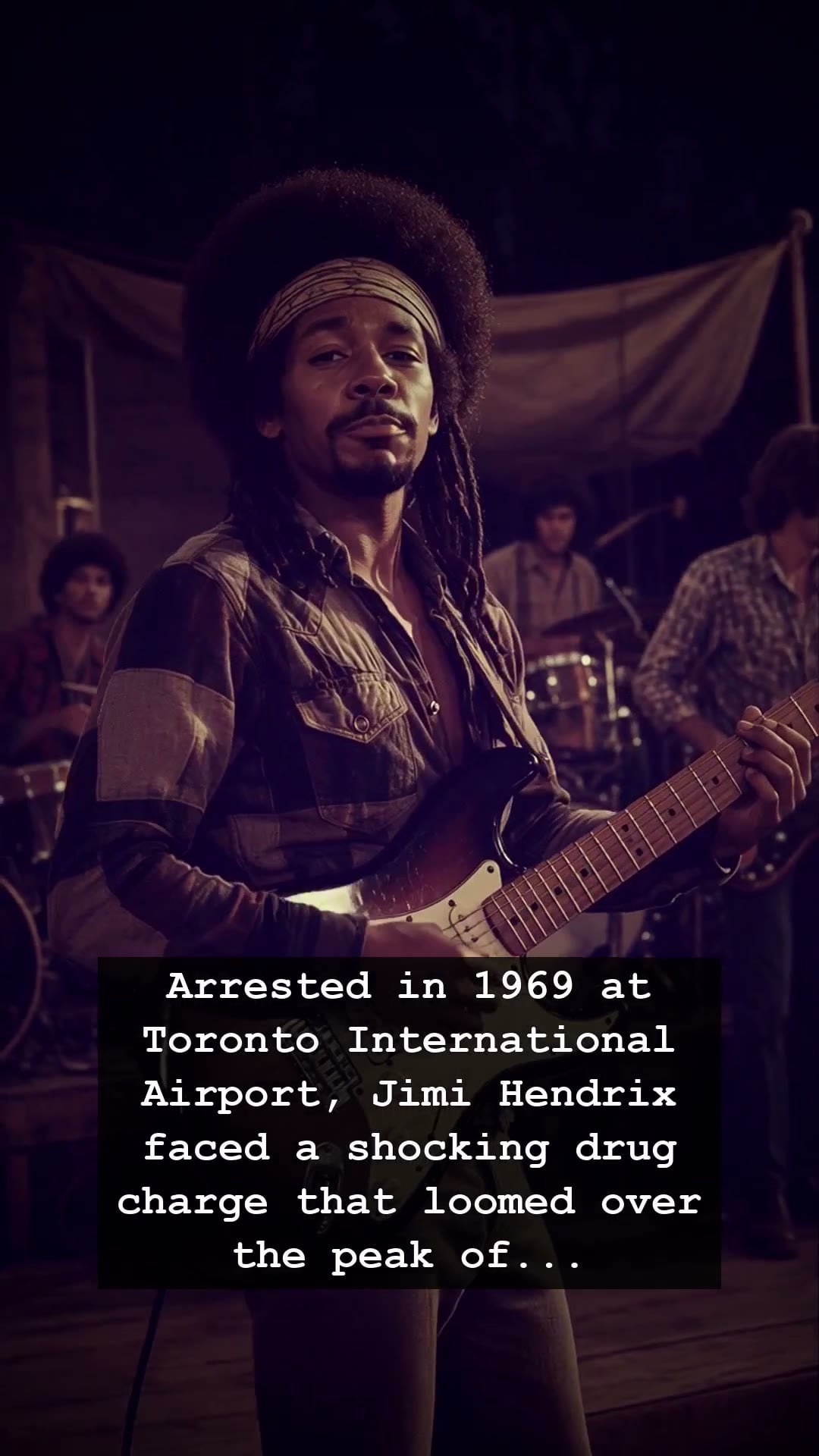
It was May 1969, a pivotal moment in the timeline of rock and roll. The world was vibrating with the revolutionary electricity of the late sixties, a time when the Jukebox culture was evolving into the sprawling madness of stadium tours and Woodstock-bound dreams. Amidst this cultural upheaval, Jimi Hendrix was the undisputed high priest of the electric guitar, a man who channeled the sound of the cosmos through a Fender Stratocaster. Yet, as he touched down at Toronto International Airport, the trajectory of his legendary career was nearly silenced forever by a single, heart-stopping moment at customs.
As the officers rifled through his belongings, the air grew thick with tension. To the outside world, Jimi Hendrix was an icon of psychedelic transcendence, but to the authorities, he was a target. The contents of his luggage—a small amount of narcotics—sparked a frantic legal firestorm that threatened to land the guitar virtuoso in a prison cell for years. This wasn’t just a routine check; it was a high-stakes standoff that could have extinguished one of the brightest flames in musical history at its absolute peak. The world was on the edge of its seat, waiting to see if their guitar hero would be grounded permanently.
This incident highlights the often-brutal collision between the counterculture of the 1960s and the rigid legal structures of the era. Jimi Hendrix was constantly living on the razor’s edge, balancing the immense pressure of his meteoric rise with the personal demons that fame so often feeds. For many fans who lived through this era, carrying a Walkman or listening to a scratchy vinyl record, Jimi represented a dangerous kind of freedom. His struggle in Toronto serves as a stark reminder that behind the velvet-clad stage persona and the mind-bending feedback loops lay a human being constantly haunted by the shadows of his own superstardom.
What makes the 1969 arrest so chilling is how easily the narrative could have shifted from legend to tragedy. Instead of a lost career, Hendrix continued to push the boundaries of sound, leaving behind a legacy that still dictates how we perceive modern music. The incident ultimately became a footnote in his brilliant, albeit brief, journey through the music industry. It was a fleeting, harrowing encounter that proved even the most ethereal artists were beholden to the cold, hard reality of the world they inhabited, a world that was often eager to pull them back down to earth.
Decades later, the legend of Jimi Hendrix remains untouched by the threats that surrounded his short life. We look back at these moments not just to uncover the drama, but to understand the fragile reality of our heroes. As the echoes of his guitar continue to resonate through time, we are reminded that he was a man who lived loudly and burned bright, escaping the clutches of disaster just long enough to change the world forever. His music remains our constant companion, a timeless reminder of a golden age that refused to be silenced.